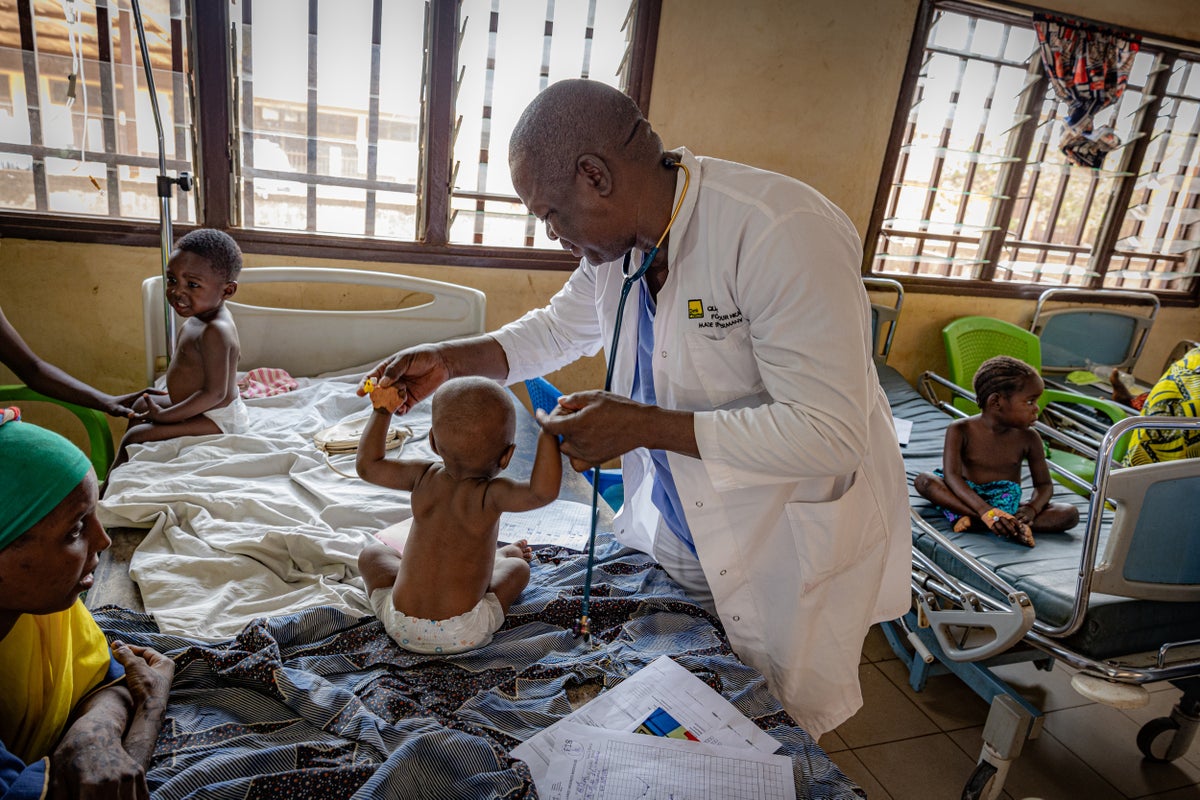
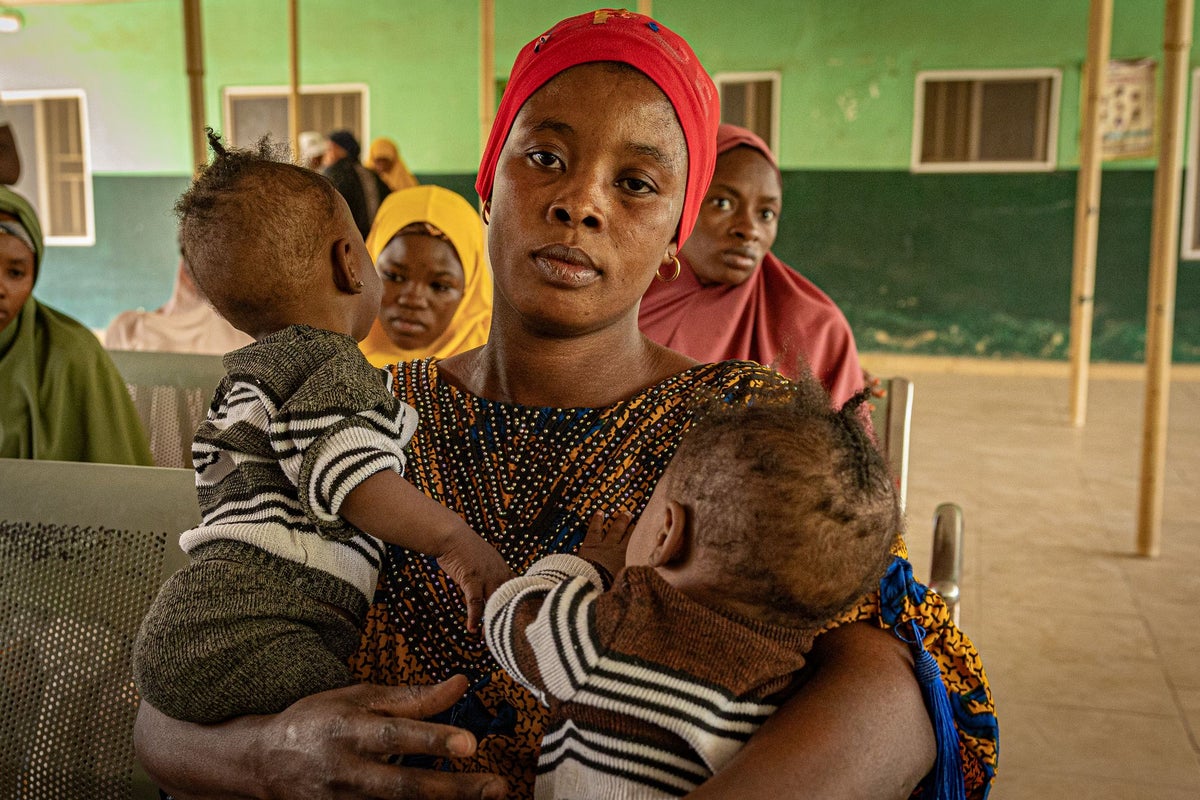
The dirt road between eastern Democratic Republic of Congo and western Uganda is a red ribbon of dust that gets into everything. It settles in the creases of your knuckles, stains the hemlines of shirts, and hangs in the humid air long after a truck has rumbled past. For the people living along this border, the dust is just part of life. So is the crossing. Families farm on one side and sleep on the other. Traders push heavy bicycles loaded with green bananas across the invisible line every morning.
But lately, there is a ghost on the road. For a closer look into similar topics, we suggest: this related article.
When Ebola breathes down the neck of these communities, the border changes. It stops being a line on a map and becomes a checkpoint of pure survival. We treat outbreaks like statistics on a spreadsheet—case counts, mortality rates, viral strains. But if you sit at the Mpondwe border post and watch a mother look into the eyes of a health worker holding an infrared thermometer, you realize this isn't a medical report. It is a tightrope walk over a chasm.
The virus does not care about national sovereignty. It cares about touch. For further background on this topic, detailed analysis is available on Medical News Today.
The Sound of a False Alarm
To understand the sheer weight of what is happening in Congo and Uganda, you have to understand the silence that comes before the panic.
Consider a hypothetical tea trader named Alphonsine. She doesn't exist as a single tracked patient, but she represents thousands who do. Alphonsine wakes up with a headache. In this part of the world, a headache usually means malaria. Or exhaustion. Or dehydration from working under a merciless sun. You swallow some paracetamol and you keep walking because if you don't work, your children don't eat.
But then the fever spikes. The muscles ache with a deep, grinding agony.
This is where the terror of Ebola differs from almost any other disease. It exploits human kindness. If you have malaria, your sister wipes your brow. If you have typhoid, your husband holds your hand. But if this fever is the Zaire or the Sudan strain of Ebola, that very act of love becomes a death warrant. The virus transforms the basic instinct of human care into its primary vector of transmission.
The current situation across the Congo-Uganda border is a complex dance with this specific terror. Eastern Congo has been a battleground for the virus for years. The 2018–2020 outbreak in North Kivu and Ituri provinces was the second-largest in recorded history, claiming over 2,200 lives. The region is scarred by that memory. It is also scarred by decades of geopolitical conflict, which makes fighting a virus feel less like a medical campaign and more like a war on multiple fronts.
When cases bubble up in Congo, Uganda goes on high alert. The border is porous, a sieve of footpaths through thick brush. You cannot lock down a forest.
The Two Faces of the Killer
Medical texts love to categorize. They tell us that the Zaire strain is the most lethal, often carrying a mortality rate hovering around 60 to 90 percent if left unchecked. They tell us the Sudan strain, which historical data shows has caused major disruptions in Uganda, is slightly less deadly but far harder to counter because the tools we built for Zaire do not work against it.
Let us pull back the curtain on what that actually means on the ground.
During the massive Zaire outbreaks, scientists deployed Ervebo, a highly effective vaccine. It was a triumph of modern medicine. When a case was found, health teams used "ring vaccination"—vaccinating every contact, and every contact of those contacts, creating a human firewall around the infected.
But when the Sudan strain reared its head in Uganda during a recent outbreak, the firewall vanished. Ervebo does nothing against the Sudan variant. Health workers were forced back to the old ways, the brutal ways: isolation, tracking, and waiting.
Imagine being a doctor in a rural clinic, watching a patient bleed from their gums, knowing the modern shield in your refrigerator is entirely useless against the ghost inside this specific room. You are left with supportive care—intravenous fluids, balancing electrolytes, treating secondary infections—and hoping the patient's immune system can win a race against time.
The confusion among local populations is entirely understandable. People ask: You gave my neighbor a jab last year and the sickness stopped. Why can't you give me one now? When the answer is a technical lecture on viral glycoproteins and genetic lineages, trust breaks down. Suspicion grows in the fertile soil of fear.
The Geography of Rumor
In the cities of the global north, a health crisis is managed through press releases and television broadcasts. In the villages along the Rwenzori Mountains, it is managed through the market square.
The real problem lies elsewhere, far beneath the biological mechanism of the virus. It is found in the deep-seated distrust of authority. For decades, the people of eastern Congo have seen outsiders only in uniforms—rebel groups, government soldiers, or international workers who arrive in white SUVs, stay in secure compounds, and leave when the funding dries up.
Suddenly, people in yellow hazmat suits arrive. They tell you that you cannot bury your grandmother according to traditions that have kept your community together for generations. They tell you that washing the body of the deceased—an act of profound respect and religious duty—will kill you. They take the sick away to isolation tents behind plastic sheeting. Sometimes, the sick only return in body bags filled with chlorine.
If you do not factor in this human grief, you cannot understand why people run away from treatment centers.
Health workers are not just fighting a filovirus; they are fighting the human heart's resistance to being managed. When Uganda rushed to contain cases filtering through transit routes, the primary weapon wasn't just isolation units. It was the painstaking work of village elders, religious leaders, and traditional healers.
Look at how the numbers change when a community is listened to rather than lectured. In past outbreaks, when burial teams allowed families to watch from a safe distance, to pray over the grave, and to place a cloth over the coffin without touching the body, resistance dropped. The compliance rates skyrocketed.
Compliance is a cold word. Let's call it what it is: compromised grief.
The Price of Vigilance
The stakes extend far beyond the immediate horizon of the isolation wards. When an outbreak occurs, the economic arteries of these regions choke.
Consider what happens next: the trucks carrying fuel from the Kenyan coast through Uganda into the heart of Congo begin to back up at checkpoints. Drivers must wait hours for temperature checks and blood tests. Perishable food rots in the heat. The price of salt, soap, and medicine rises in the markets of Beni and Butembo.
A quarantine is not just a medical pause; it is an economic strangulation for people who live hand-to-mouth. The choice often becomes: risk the fever, or watch your family starve today.
That is the calculation no mathematical model can properly capture. It is a choice made in mud-brick homes by candlelight.
The international community watches these events with a strange, detached anxiety. There is a sudden influx of emergency funding, a flurry of activity from the World Health Organization, and a wave of media attention that treats the region like a dark laboratory. Then, as the line on the graph trends downward, the cameras pack up. The funding stops.
The local clinics are left with empty shelves, broken thermometers, and staff who haven't been paid in months.
This cycle of panic and neglect is the true tragedy of global health. We treat an outbreak like a fire to be put out, rather than realizing the ground itself is dry and prone to sparks. Uganda’s health system has grown remarkably resilient precisely because it has been forced to fight these battles repeatedly. Their laboratory capacity, their rapid response teams, and their epidemiological surveillance are among the finest on the continent. But resilience is an exhausting state of being.
The Long Road Back
The fever eventually recedes. The isolation tents are dismantled, the yellow plastic fencing is rolled up, and the red dust reclaimed by the wind.
But an Ebola survivor does not simply walk back into their old life. The stigma clings to them like a second shadow. Neighbors look away when they pass in the market. The marketplace stall they owned remains empty because people are afraid the coins they touch will carry the rot. Even their own families sometimes hesitate before sharing a meal.
There is also the physical toll—the joint pain that never really goes away, the chronic fatigue, the blurred vision that robs a farmer of their ability to see the weeds among the crops.
We must stop looking at the Congo and Uganda outbreaks as isolated medical anomalies to be contained behind geographic walls. They are mirrors reflecting our collective vulnerability. The people holding the line at the Mpondwe border post, the nurses sweating inside heavy layers of protective gear in thirty-degree heat, the community leaders dispelling rumors in small chapels—they are not just protecting their villages.
They are holding the line for the rest of us.
The sun sets behind the Rwenzori peaks, casting long, dark shadows across the red dirt road. A young girl walks home from the well, a yellow jerrycan balanced perfectly on her head. She passes a health post where a solitary solar-powered light bulb has just flickered on.
A medical officer sits at a wooden table, his logbook open, waiting for the next traveler to step out of the dark.