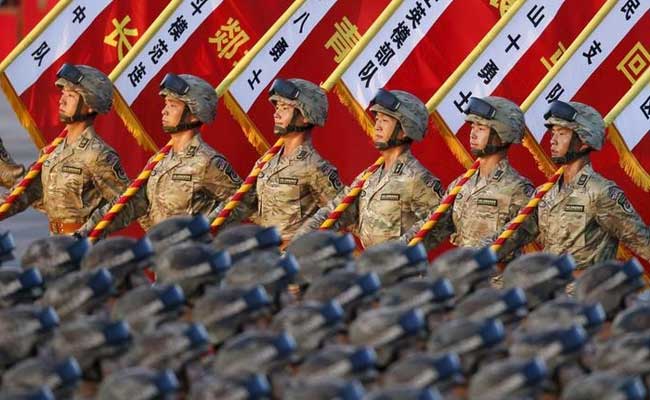
The People's Liberation Army is no longer the force India spent decades preparing to fight. Across the high-altitude friction points of the Himalayas, Beijing has quietly transformed its military footprint from a seasonal presence into an entrenched, permanent apparatus. New Delhi can no longer afford to treat these border skirmishes as isolated territorial disputes. They are symptoms of a systemic doctrine overhaul designed to outpace Indian strategic depth through sheer infrastructure dominance and technological integration.
Decades of diplomatic handshakes and confidence-building measures masked a brutal operational reality. While Indian policymakers debated the nuances of bilateral trade and disengagement protocols, Chinese planners engineered a dual-use logistics network that alters the Himalayan military equation entirely. This is not merely about troop counts or artillery placement. This is about structural velocity, the capacity to shift mass across the roof of the world faster than defenders can react.
The Logistics Engine Driving Beijing Forward
Look past the diplomatic communiques and examine the macadam. For years, the conventional wisdom inside Indian security circles held that the Tibetan Plateau was an inhospitable barrier for any attacking force. Thin air, frozen ground, and precarious supply lines worked to New Delhi's advantage. That geographical shield has dissolved.
Beijing poured billions of yuan into asphalt, rail lines, and underground reinforced bunkers directly behind the Line of Actual Control. High-speed highways now snake through valleys that once took days to traverse by foot or pack animal. Dual-use civilian villages pop up with alarming regularity along disputed sectors, housing militia-backed populations designed to stake legal and physical claims on contested soil.
When a military can move a brigade-sized element across the plateau in hours rather than weeks, the concept of a front line changes. India faces a adversary capable of choosing the time, place, and intensity of a confrontation while keeping defenders perpetually stretched across a massive, jagged perimeter.
+-------------------------------------------------------------------------+
|                  THE STRATEGIC SHIFT ALONG THE BORDER                   |
+-----------------------------+-------------------------------------------+
| Traditional PLA Posture     | Modern PLA Posture                        |
+-----------------------------+-------------------------------------------+
| Seasonal deployment cycles  | Year-round, hardened permanent garrisons  |
| Vulnerable supply routes    | Dual-use rail, all-weather highways       |
| Infantry-heavy formations   | Mechanized, drone-integrated brigades     |
| Centralized command         | Theater-command joint operations          |
+-----------------------------+-------------------------------------------+
This infrastructure surge underpins a deeper doctrinal evolution. The Western Theater Command is no longer an afterthought in Beijing's military hierarchy. It acts as the testing ground for integrated joint operations, combining rocket forces, electronic warfare units, and high-altitude drone squadrons under a single command structure.
The Technological Asymmetry Underground and Overhead
Altitude strips away advantages. In the thin air of Ladakh and Arunachal Pradesh, traditional air power loses payload capacity, engines struggle, and radar horizons shrink due to mountainous terrain. The PLA studied these vulnerabilities and built solutions into the bedrock itself.
Deep inside the mountain ranges, underground aircraft hangars and hardened command bunkers protect assets from preemptive strikes. Fiber-optic communication lines lace the valleys, making command-and-control networks immune to traditional atmospheric jamming. Meanwhile, the deployment of specialized high-altitude unmanned aerial vehicles gives Beijing persistent, 24-hour surveillance over Indian supply lines, forward posts, and troop rotations.
India has made commendable strides in closing this gap. Mountain strike corps have been raised, indigenous light tanks are rolling off production lines, and emergency procurement has filled critical ammunition shortages. Yet, the pace of acquisition remains mismatched against an industrial base that operates on state-directed war footing.
Purchasing a few dozen foreign drones off the shelf solves an immediate tactical need. It does not match an adversary that manufactures thousands of standardized loitering munitions domestically every month. The gap is no longer about raw courage or soldier-for-soldier capability. It is about industrial scale and technological integration at high altitude.
The Nuclear and Grey-Zone Dilemma
Compounding the conventional imbalance is the muddy reality of grey-zone warfare. The PLA prefers to nibble rather than bite. By using coordinated swarms of grazers, civilian militias, paramilitary border guards, and rapid psychological operations, Beijing alters facts on the ground without crossing the threshold that would trigger a full-scale conventional war.
India finds itself trapped in a strategic paradox. A heavy military response risks escalating a localized brawl into a regional conflagration with a nuclear-armed neighbor. Doing nothing invites gradual territorial erosion, with thousands of square kilometers of patrolling rights slipping away a few square miles at a time.
This strategy of incremental pressure relies on the assumption that India's economy, dependent on critical electronic and chemical imports from China, cannot sustain a prolonged high-intensity confrontation. Beijing calculates that New Delhi's leaders will choose economic stability over territorial intransigence, trading away distant ridges for short-term peace.
Breaking this cycle requires more than defensive reinforcement. It demands a hard-headed assessment of economic interdependencies and an accelerated push toward domestic defense manufacturing that cuts out bureaucratic red tape. When the cost of incremental aggression outweighs the benefits, the calculus on the other side of the mountain shifts. Until then, the border remains an open wound, bleeding strategic depth one ridge at a time


