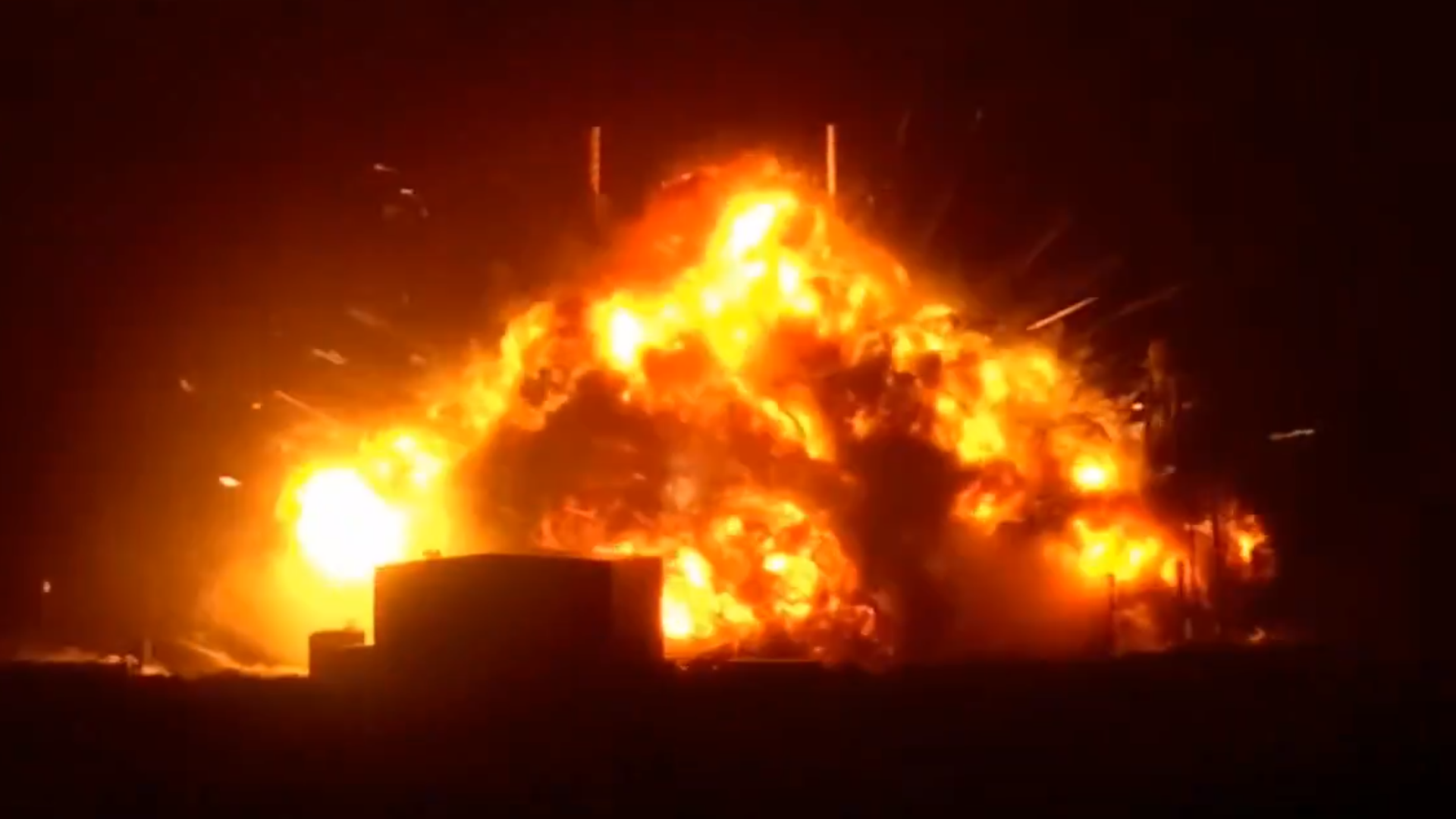
Exploding a multi-billion-dollar space vehicle on live television looks like an unmitigated disaster to the untrained eye, but in modern aerospace engineering, a spectacular fireball is often the shortest path to success. When a massive rocket disintegrates during a test flight, the public sees failure, while engineers see a goldmine of data. This counterintuitive reality is reshaping the modern space race. By pushing hardware to its absolute breaking point, aerospace companies can identify critical design flaws faster and cheaper than they ever could through years of cautious computer modeling.
The philosophy of iterative development relies on a simple premise. You build, you test, and you intentionally break things.
For decades, traditional space programs operated under a different mandate. Government-funded agencies could not afford public failures. A single high-profile explosion could jeopardize congressional funding, leading to a culture of extreme risk aversion. Engineers spent years running simulations and reviewing blueprints to ensure a rocket would work perfectly on its very first flight. This approach produced highly reliable vehicles, but it also resulted in astronomical costs and decades-long development cycles.
The new aerospace doctrine turns this model upside down. By manufacturing rockets quickly and relatively cheaply, companies can afford to treat early hulls as disposable prototypes.
When a prototype ruptures mid-flight, the sudden loss of telemetry provides exact telemetry on structural limits. Computer models are educated guesses; a catastrophic hull breach is concrete fact. Engineers learn precisely how much pressure a fuel tank can withstand, how extreme vibration affects guidance systems, and how well thermal shielding handles the friction of atmospheric reentry.
This aggressive testing methodology hinges on the concept of hardware-rich development. If you have ten more prototypes already sitting in a factory line, losing one during a high-altitude test is not a program-ending catastrophe. It is merely an automated stress test. The data gathered during the final seconds of a doomed flight is immediately funneled back into the production line, allowing engineers to modify the next vehicle before the smoke has even cleared from the launchpad.
This rapid feedback loop accelerates innovation at a pace that traditional engineering cannot match.
Consider the sheer volume of variables involved in launching a heavy-lift vehicle. The transition from subsonic to supersonic speed creates intense aerodynamic stress. Cryogenic propellants must flow at massive volumes through complex plumbing while experiencing extreme gravitational forces. Predicting how these systems interact through software alone is notoriously difficult. A physical test forces every component to interact in the real world, revealing unforeseen anomalies that no simulator could predict.
However, this high-risk strategy is not without its critics or its downsides.
The environmental impact of frequent mid-air detonations raises valid concerns. Falling debris, even when restricted to designated exclusion zones over oceans, presents cleanup challenges and potential hazards to marine life. Furthermore, local communities near launch facilities must endure the sonic booms and ground tremors associated with massive engine ignitions, leading to regulatory scrutiny and legal battles over environmental permits.
Regulators find themselves in a difficult position. The Federal Aviation Administration must balance public safety with the mandate to encourage domestic technological advancement. Every catastrophic anomaly triggers a mandatory mishap investigation, grounding the fleet until the root cause is identified and corrected. While these investigations are necessary, they can introduce bureaucratic bottlenecks that threaten to slow down the very speed that iterative testing is supposed to provide.
There is also the financial calculus to consider. Iterative development requires massive upfront capital to build the infrastructure capable of mass-producing giant rockets. A company must possess the financial stamina to absorb repeated, highly visible losses without panicking investors or clients who rely on them to deploy satellites.
The true metric of success in this new era is not whether a rocket explodes, but how quickly the engineering team adapts to the failure. If a vehicle fails for the same reason twice, the system is broken. If it fails for a completely new reason each time, it means the engineering team is systematically eliminating weaknesses, moving closer to a mature, reliable design with every piece of twisted metal.
The ultimate destination for these heavy-lift vehicles extends far beyond low Earth orbit. To establish permanent bases on the Moon or to send humans to Mars, the cost of putting mass into space must drop by orders of magnitude. Achieving that goal requires fully reusable rockets that can launch, land, refract, and launch again within days. Achieving full reusability is an incredibly complex engineering challenge that cannot be solved by playing it safe.
Every explosion on a test range is a paid invoice for critical engineering data. The fiery spectacles that dominate news headlines are not setbacks. They are the scaffolding upon which the future of interplanetary transit is being built, one catastrophic failure at a time.