Nigeria is witnessing a violent transformation of its rural geography as the line between self-defense and ethnic cleansing disappears. In the central and northern reaches of the country, local vigilante groups have shifted from being community watchmen to active combatants in a dirty war against pastoralist herders. This is not merely a flare-up of ancient tribal grievances. It is the direct result of a vacuum left by a federal government that has surrendered its monopoly on violence. When the state fails to protect its citizens from kidnapping and banditry, the citizens do not simply suffer in silence. They arm themselves, they simplify their enemies, and they strike.
The current crisis is built on a foundation of competition for disappearing resources, but the catalyst is the explosion of the kidnapping industry. For years, nomadic Fulani herders and sedentary farming communities have clashed over grazing routes and water. Climate change pushed the herders further south, encroaching on established farmland. However, the introduction of high-stakes criminal enterprise changed the math. Banditry is now a multi-million dollar business in Nigeria. Because many of the high-profile kidnapping gangs operating in the bush are composed of ethnic Fulani, the entire pastoralist population has been branded as a fifth column for insurgents.
The Evolution of the Local Hunter
Vigilantism in Nigeria used to be about protecting the village gate from petty thieves. Today, these groups are paramilitary organizations. In states like Plateau, Benue, and Kaduna, "volunteer" guards carry sophisticated weapons, often with the quiet nod of local authorities who lack the manpower to patrol the backcountry. These men are often motivated by the trauma of seeing their families abducted or their harvests burned.
The problem with outsourcing security to angry men with a personal stake in the conflict is that nuance dies first. To a farmer who has just buried a neighbor killed in a midnight raid, every person moving with cattle in the forest is a suspect. This has led to "pre-emptive" strikes. These are raids where vigilantes enter herder settlements—known as rugas—and kill indiscriminately. They justify these actions as a way to "smoke out" bandits, but the reality is a cycle of reprisal that creates more recruits for the very gangs they claim to fight.
The Economic Engine of Instability
We have to look at the money to understand why this won't stop. Nigeria’s economy is struggling with record inflation and a devalued currency. In this environment, cattle are more than animals; they are mobile banks. When a vigilante group raids a herder camp, they aren't just seeking justice. They are often seizing assets. This is the dark underbelly of the "defense" movement.
Conversely, the kidnapping gangs use the resentment of displaced herders to bolster their ranks. When a young man loses his family’s herd to a vigilante raid, and the police offer no recourse, the invitation to join a forest gang becomes an economic necessity. The bandits offer a weapon, a sense of belonging, and a share of the ransom. The "jihadist" label often applied to these groups is frequently a mask. While groups like ISWAP and Boko Haram do attempt to capitalize on the chaos, much of the violence is driven by raw, secular greed and the desperate need for survival in a collapsing rural economy.
The Ghost of the Professional Soldier
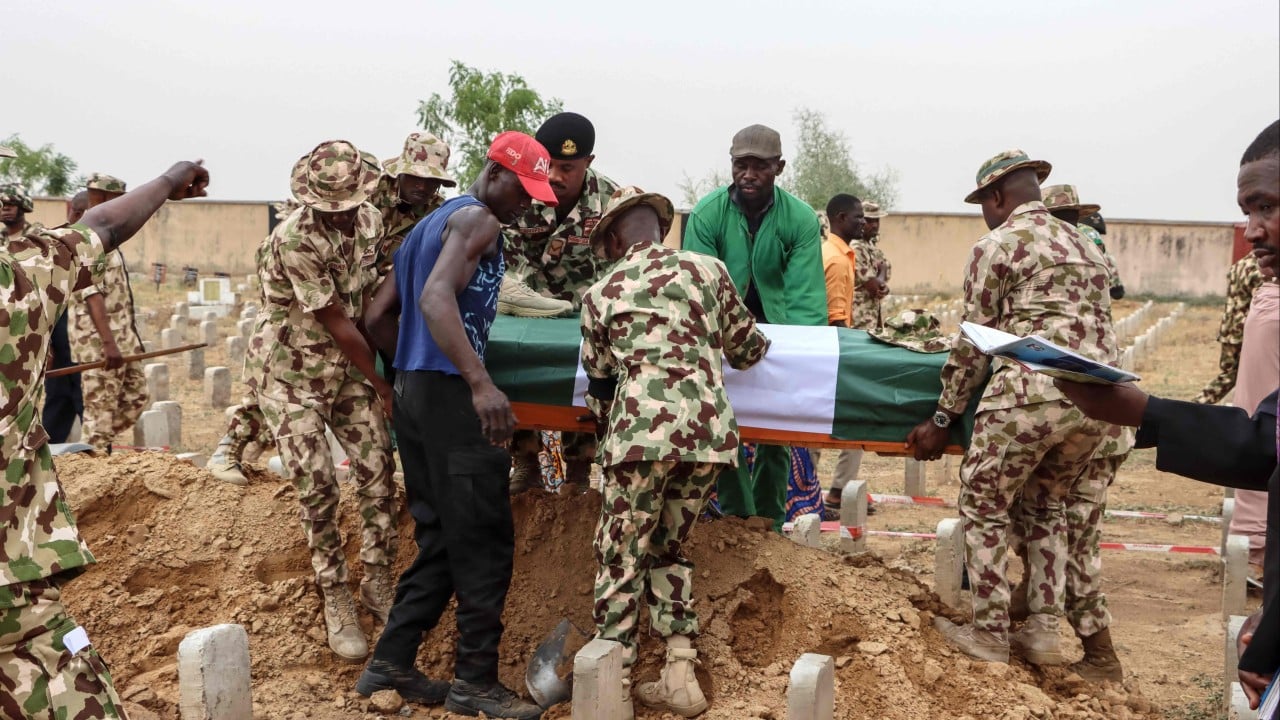
The Nigerian military is currently deployed in nearly every state of the federation. This is a terrifying statistic for a democracy. The army is overstretched, fatigued, and increasingly viewed with suspicion by the locals they are sent to protect. In many instances, the military arrives only after the smoke has cleared, performing what locals mockingly call "body counting."
The lack of trust in the formal security sector is absolute. There are documented cases where villagers have refused to give information to the police, fearing that the officers are on the payroll of the kidnappers. Instead, they funnel their intelligence—and their money—to the vigilantes. This creates a parallel power structure. The local warlord becomes more relevant than the police commissioner.
The Problem with Ethnic Profiling
By turning "herder" into a synonym for "terrorist," the vigilante movement has alienated the very people who could provide the best intelligence on the criminal gangs. Not all herders are bandits, but the bandits almost always hide in the vast, ungoverned spaces where the herders live. When vigilantes kill innocent pastoralists, they close off the possibility of cooperation.
The gangs thrive in this polarization. They want the herders to feel that the state and the farming communities are their mortal enemies. It forces the nomadic population into the arms of the criminals for protection. This is a classic insurgency tactic: provoke the state or its proxies into overreacting against a civilian population to drive that population into the rebellion.
A Legal No Man's Land
Nigeria’s legal system has no clear framework for these "state-sanctioned" vigilante groups. In some states, they are given uniforms and vehicles by the governor. In others, they are technically outlaws. This ambiguity is a feature, not a bug. It allows the government to claim it is "taking action" without having to take responsibility for the human rights abuses that inevitably follow.
When a vigilante group executes a suspect without trial, there is rarely an investigation. The state is too relieved that someone else is handling the problem to care about the methodology. This erosion of the rule of law is a one-way street. Once you tell a population that they must kill to stay safe, you cannot easily convince them to lay down their arms and trust a judge again.
The Regional Spillover
This isn't just a Nigerian problem. The porous borders with Niger, Chad, and Cameroon mean that weapons and fighters flow freely through the Sahel. The violence in the Middle Belt is part of a larger regional collapse of order. The kidnapping gangs are increasingly sophisticated, using drones for surveillance and cryptocurrency for ransom payments. They are evolving faster than the state.
The response from the international community has been largely focused on the "jihadist" threat in the Northeast, but the "banditry" in the Northwest and Middle Belt is currently killing more people and displacing more families. It is a war for the heart of the country’s food basket. If the farmers cannot plant and the herders cannot move, the result is a famine that no amount of foreign aid will be able to fix.
The Collapse of the Traditional Authority
In the past, local emirs and community chiefs could negotiate peace. They held the moral authority to settle land disputes. That authority has been gutted. The young men with the AK-47s no longer listen to the old men in the palaces. The vigilante commanders and the gang leaders are the new elite. They have the guns, they have the money, and they have the loyalty of a generation that has grown up seeing nothing but state failure.
The Illusion of the Quick Fix
There is a tendency in the capital, Abuja, to announce "new operations" every few months. These have grand names and involve parades of armored vehicles. They rarely work. You cannot defeat a decentralized, forest-based criminal network with conventional military sweeps that last two weeks. As soon as the soldiers return to the barracks, the bandits return to the road.
The solution requires a fundamental rebuilding of the local police force—not the federalized, top-heavy police currently in place. It requires a land-use policy that addresses the reality of a shrinking environment. Most importantly, it requires the courage to disarm the vigilantes while simultaneously proving that the state can actually protect the people.
Nigeria is currently trapped in a loop where the remedy is as toxic as the disease. Every time a vigilante kills a herder in the name of safety, he seeds the next decade of conflict. The country is not just fighting a war against bandits; it is fighting a war against the consequences of its own institutional decay.
The state must regain its monopoly on force or admit that it has become a collection of warring fiefdoms held together by a flag and a prayer.
Reach out to your local representatives and demand a transparent audit of state-funded security outfits.