The squeak of wrestling shoes on vinyl has a distinct, clinical pitch. It echoes differently inside the FBI Academy gym at Quantico than it does in a storefront gym in Las Vegas or a humid basement in Dagestan. At Quantico, the air is thick with the scent of institutional floor cleaner, starched laundry, and the heavy, unspoken pressure of a federal badge.
Then the sweat hits the floor.
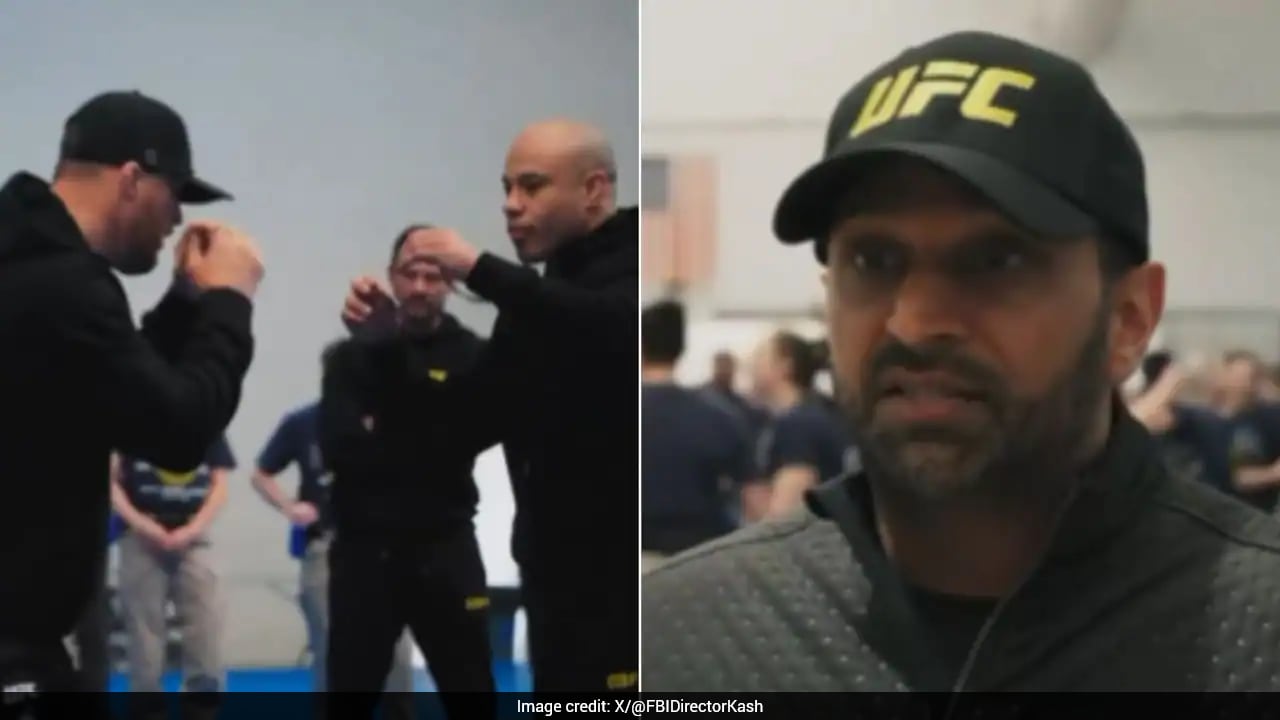
When a group of elite mixed martial artists walked through the heavily guarded gates of the Special Agent Academy, the culture clash was palpable. On one side stood the trainees: men and women who survived brutal academic vetting, background checks that dug into their childhood friendships, and fitness standards designed for tactical efficiency. On the other side stood human weapons. Jorge Masvidal, a man who built a career on backyard brawls before conquering the global stage. Justin Gaethje, the interim lightweight champion known for treating his own skull as a defensive shield. Renzo Gracie, royalty in a lineage that turned grappling into a global religion.
They did not meet to shake hands and exchange plaques. They met to bleed.
The Friction of Two Worlds
To understand why this matters, look past the political theater. Yes, FBI Director Kash Patel orchestrated the partnership, his ties to UFC chief Dana White opening a direct line between the J. Edgar Hoover Building and the Octagon. Yes, Washington is buzzing about the upcoming cage matches on the White House South Lawn, complete with rumors of dirt bikes flipping over the grass. The media focuses on the optics, the taxpayer dollars spent on flights, and the sheer audacity of building a cage called "The Claw" outside the Oval Office.
But on the mats, the politics died.
Imagine a young agent-in-training. Let us call him Miller. Miller is twenty-six, a former college athlete with a pristine record and a firearm accuracy score that approaches perfection. He understands the mechanics of an arrest. He knows the legal parameters of force. But as he squares up against someone like Chris Weidman or Michael Chandler, the theoretical framework of law enforcement evaporates.
In standard federal defensive tactics training, everything is serialized. Step A leads to Step B. If a suspect resists, apply Hold C. Mixed martial arts operates on chaos. It is a sport where every action is met with an unpredictable, violent reaction.
When the seminar began, the fighters did not teach esoteric, cinematic moves. They focused on the brutal economy of human leverage. They showed how a body behaves when the oxygen is cut off. They demonstrated how a man can use the cage wall—or, in an agent's case, a brick alleyway or a car door—to completely nullify a suspect's size advantage.
Consider what happens next: a trainee attempts a standard takedown. To their surprise, the fighter does not fall. Instead, the fighter shifts three inches, locks a wrist, and suddenly the trainee is staring at the ceiling, wondering how a human body can move that fast without making a sound.
The Real Cost of Hand-to-Hand
The bureau has faced criticism for this initiative. Detractors call it a fantasy camp for sports-obsessed executives, a superficial distraction from the complex digital and geopolitical threats the country faces in the modern era. They argue that a special agent is far more likely to analyze a blockchain ledger than to require a guillotine choke.
They are right, until they are wrong.
The reality of field operations is that when a situation goes bad, it goes bad in milliseconds. A routine surveillance detail turns into a physical struggle in a crowded parking lot. A warrant execution becomes a frantic wrestle for a weapon in a dark hallway. In those moments, the agent does not need a policy manual. They need the muscle memory of a predator.
The UFC athletes brought a specific flavor of psychological conditioning to Virginia. In a professional fight, panic is a death sentence. When an athlete is trapped beneath a two-hundred-pound wrestler who is raining down elbows, the heart rate spikes, the vision narrows, and the brain screams for an escape. The fighters taught the agents how to breathe through that panic. They turned the gym into a laboratory of controlled stress.
The human element of this collaboration lies in the mutual realization of vulnerability. The agents discovered that these legendary fighters are not mythical monsters; they are meticulous technicians who treat human anatomy like a chess board. The fighters, conversely, realized that the clean-cut men and women in Quantico jackets carry a quiet, terrifying resolve. They are not fighting for a championship belt or a pay-per-view bonus. They are training for the day they have to make it home alive to their families, or ensure that a violent fugitive does not make it to theirs.
Beyond the Spectacle
Roughly three hundred agents cycled through the sessions. The mats at Quantico are now scarred with new scuff marks. The bruises on the shins of the bureau’s top brass will fade long before the upcoming June bouts in Washington, but the philosophical shift inside the academy will linger.
Law enforcement has spent decades trying to sanitize the reality of physical violence with acronyms and clinical terminology. We talk about "subject management" and "compliance techniques." What the fighters did was strips away the jargon. They reminded the world's premier law enforcement agency that at its absolute core, physical conflict is an ugly, exhausting, and deeply human endeavor.
The seminar ended not with a speech, but with the collective, heavy breathing of exhausted individuals sitting on vinyl mats, nursing sore ribs and jammed fingers. There was no political spin in that room. There was only the shared understanding that when the stakes are absolute, the only thing that saves you is the work you did when nobody was watching.