The Predictable Tragedy of the Pedestrian Zone
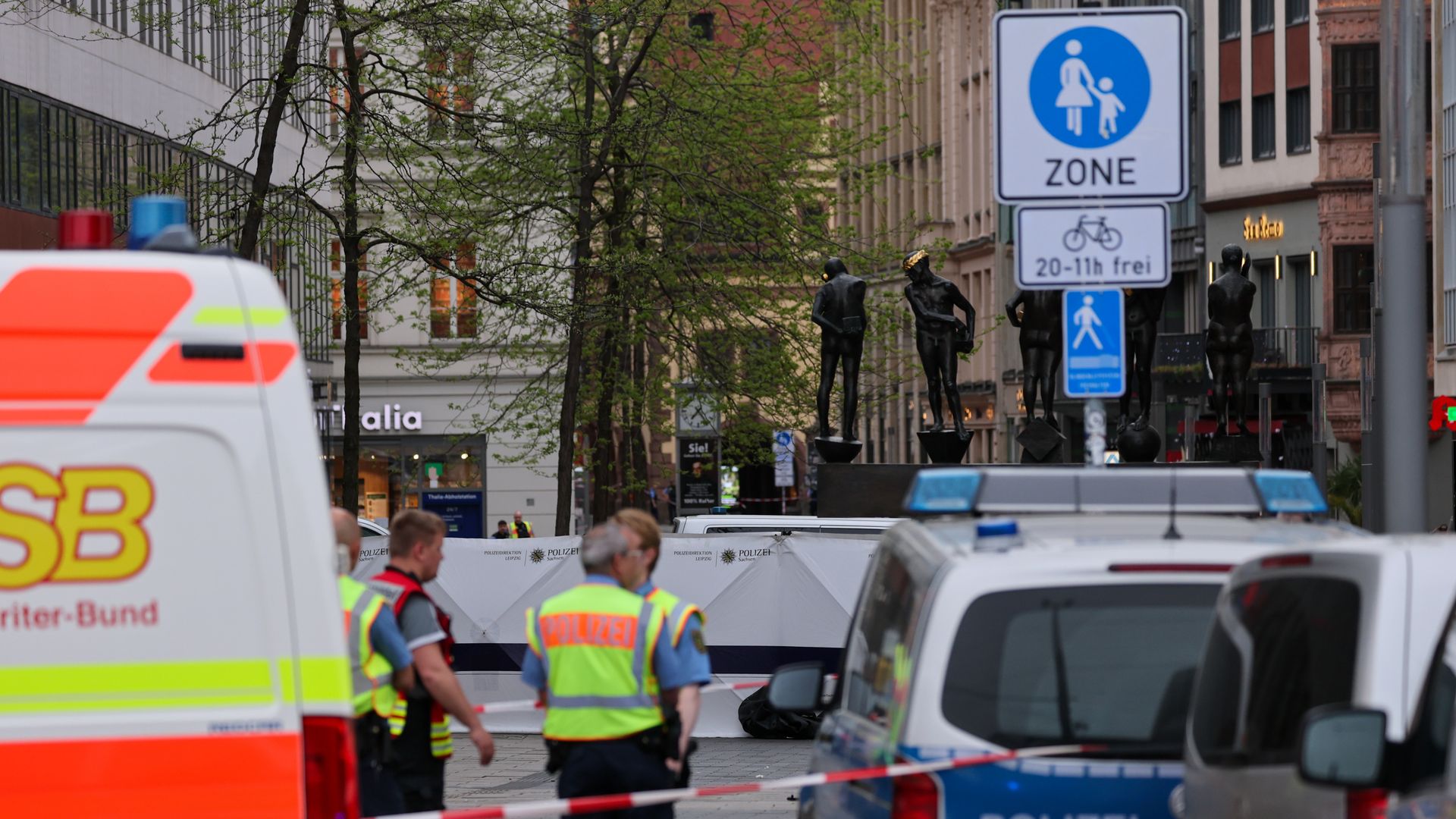
The headlines are always the same. "Car ploughs into crowd." "Tragic accident in city centre." Two dead in Germany. Three in France. Five in the States. The media treats these events like lightning strikes—unpredictable, atmospheric, and entirely beyond our control.
They are lying to you. You might also find this related story useful: The Weight of Dust in Kharkiv.
These aren't accidents. They are the logical conclusion of a broken urban design philosophy that prioritizes the "rights" of a two-ton kinetic weapon over the biological reality of a human ribcage. When a vehicle enters a pedestrian-heavy zone and people die, the fault doesn't lie with a "rogue driver" or a "mechanical failure." The fault lies with the planners who thought a painted line on the asphalt was enough to keep a distracted or malicious operator from turning a sidewalk into a bowling alley.
We don't need more "thoughts and prayers." We need to stop pretending that cars and people can coexist in the same 4D space without a body count. As extensively documented in recent articles by Associated Press, the implications are worth noting.
The Myth of Driver Responsibility
The standard narrative focuses on the individual. Was he drunk? Was he radicalized? Was he having a medical emergency?
It’s a distraction.
If your safety system relies on 80 million individual drivers having a perfect mental health day, your system is a failure. Humans are erratic, fragile, and prone to catastrophic errors. Engineering for "responsibility" is like building a dam out of tissue paper and hoping the river decides to be nice.
In the engineering world, we talk about passive safety versus active safety.
- Active Safety: A driver sees a person and hits the brakes.
- Passive Safety: A physical bollard prevents the car from ever reaching the person.
The modern city is obsessed with active safety. We install signs. We paint "Slow" on the ground. We rely on the social contract. But the social contract doesn't stop a heart attack at 50 mph. It doesn't stop a brake failure. It certainly doesn't stop someone who has decided to use their SUV as a battering ram.
Stop Blaming the Driver Start Blaming the Bollard
Look at the site of any recent vehicle-ramming incident. You will see "open concepts" and "seamless transitions" between the road and the plaza. Urban designers love this. It looks great in a portfolio. It wins awards for "accessibility."
It is also a death trap.
If a car can physically reach a crowd, it eventually will. True safety isn't found in a speed limit sign; it’s found in a $5,000 piece of reinforced steel anchored three feet into the concrete. We have the technology to make every pedestrian zone in Europe and North America impenetrable to vehicles. We choose not to because we find the aesthetics "hostile" or the cost "prohibitive."
Is two lives the price of a pretty view? Apparently, the city councils think so.
The Cost of Convenience
The pushback against physical barriers usually comes from two camps: emergency services and local businesses.
- The Fire Department Argument: "We need wide turns and clear paths for the trucks."
- The Business Argument: "How will we get our deliveries if the street is blocked off?"
These are solved problems. Retractable bollards, automated gates, and timed access windows have existed for decades. The "convenience" we are protecting is actually just laziness. We would rather risk a mass-casualty event than ask a delivery driver to walk a crate of beer forty feet from a designated loading zone.
I have seen municipalities spend millions on "smart city" sensors that track foot traffic while completely ignoring the fact that a distracted tourist in a rented Mercedes could wipe out fifty of those data points in three seconds. We are high-tech in our surveillance and Stone Age in our protection.
Kinetic Energy Doesn’t Care About Your Politics
Let’s talk about the physics. $KE = \frac{1}{2}mv^2$.
When you double the mass of a vehicle, you double the energy. When you double the speed, you quadruple the energy. A standard modern SUV weighs nearly 5,000 pounds. In an urban center, that is a land-missile.
The "lazy consensus" in urban planning suggests that if we just lower the speed limit to 20 mph, everything will be fine. It’s a comforting thought, but it ignores the reality of mass. Even at low speeds, a 2.5-ton vehicle hitting a human body results in catastrophic internal trauma.
The only solution is total separation.
The Hard Truth About Vision Zero
Every major city has a "Vision Zero" plan. They want zero traffic fatalities by 2030 or 2040. They publish glossy brochures filled with pictures of bicycles and sunshine.
But Vision Zero is a facade if it doesn't include the mass-removal of cars from dense pedestrian cores. You cannot have "Safe Streets" and "Unlimited Car Access" in the same sentence. They are diametrically opposed concepts.
If you want to stop people from being killed by cars in Germany, London, or New York, you have to stop the cars from being there. Period. No "except for residents." No "except for taxis." If a human is walking, a car shouldn't be within striking distance.
The False Security of Technology
Some tech-evangelists will tell you that Autonomous Emergency Braking (AEB) and Self-Driving cars will solve this.
They are wrong.
AEB systems are notoriously unreliable in dense urban environments where "clutter" (pedestrians) confuses the sensors. Furthermore, software can be overridden, sensors can be obscured by mud or rain, and hardware can be hacked. Relying on a silicon chip to save a toddler's life when you could just use a concrete wall is the height of tech-sector arrogance.
We don't need a smarter car. We need a shorter leash.
The Hierarchy of Death
Why do we tolerate this? If two people were killed by a falling brick in a city square, the building would be condemned, the area cordoned off, and the owners sued into oblivion.
But when a car does it? It’s "an unfortunate incident." It’s "a tragedy."
We have normalized vehicular violence to the point of invisibility. We have accepted that the price of modern mobility is a certain number of crushed skulls per year. We treat the car like a natural force of nature rather than a choice we make every morning when we design our streets.
I’ve worked in infrastructure for fifteen years. I’ve seen the reports. We know exactly where the "hot spots" are. We know which corners have the highest probability of a "lane departure." And yet, we wait until the bodies are in the street before we even consider installing a barrier.
The Actionable Reality
If you are a resident of a city that claims to care about safety, look at your main square.
- Are there permanent, K-rated bollards protecting the crowds?
- Are the sidewalks separated from the road by more than just a six-inch curb?
- Can a truck driver fall asleep and veer into a café?
If the answer to that last question is "yes," then your city hasn't "suffered a tragedy." Your city has committed negligence.
The "accidents" in Germany will happen again next week. And the week after. Not because humans are bad, but because we have built a stage where a single mistake is fatal.
Stop asking why the driver crashed. Start asking why the car was allowed to reach the crowd in the first place.
If you aren't building walls, you're just waiting for the next funeral.