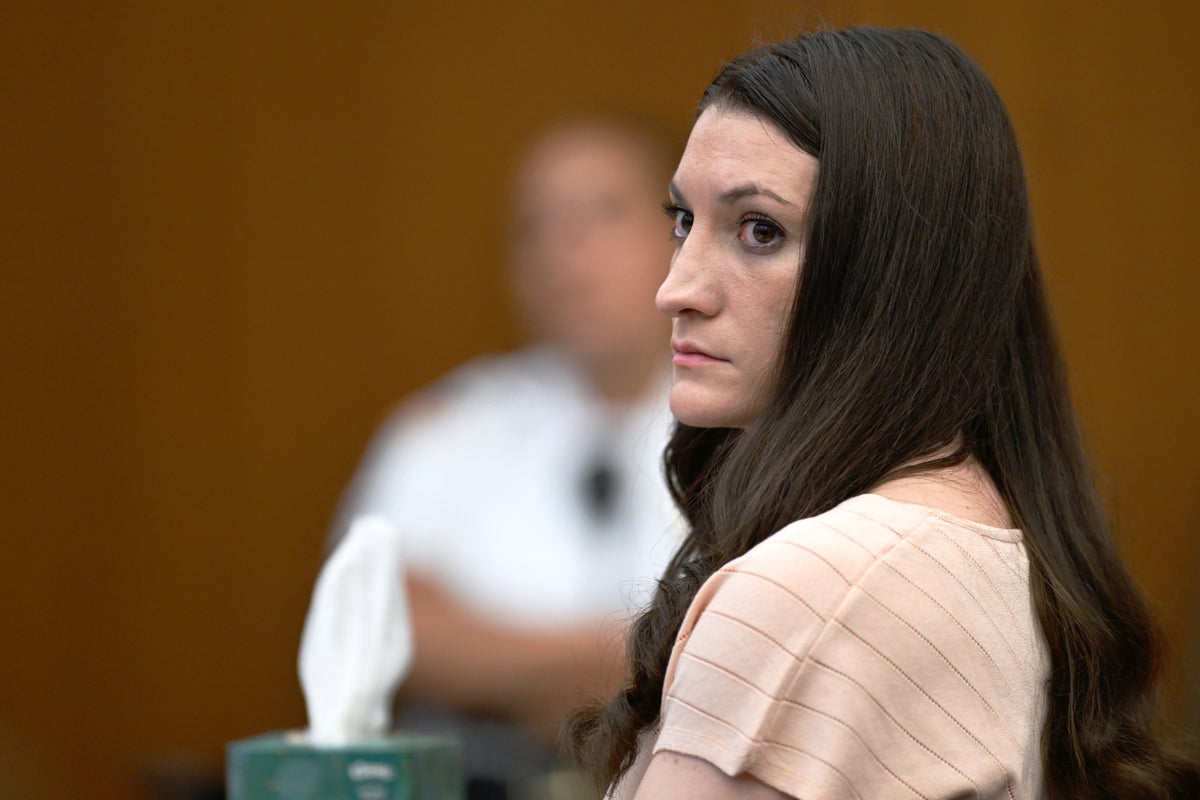
The internet wants a neat, tidy villain. When headlines blared about Lindsay Clancy admitting to the strangest, most horrifying act imaginable—taking the lives of her three young children—the digital mob immediately split into two exhausted, predictable camps. Camp one demanded immediate, unyielding punishment, treating a tragedy of catastrophic proportions like a standard true-crime villain origin story. Camp two rushed to absolve her entirely, pointing exclusively to a broken postpartum mental health system and the slippery concept of sanity as a legal shield.
Both sides are missing the point. Both sides are lazy.
Focusing purely on whether a mother knew right from wrong during a psychotic break lets the institutions that engineered this pressure cooker off scot-free. We treat acute mental health crises in high-achieving parents as isolated blips of individual pathology, ignoring the systemic gaslighting embedded in modern motherhood.
The Dangerous Comfort of the Insanity Plea Debate
Every time a high-profile infanticide case lands in the news cycle, the legal discourse defaults to the same tired script. Defense attorneys wheel in forensic psychiatrists to debate mens rea. Prosecutors counter with stark timelines of premeditation. Pundits on social media act like armchair judges, measuring degrees of psychosis based on text messages and medication logs.
This entire debate is a distraction.
When we obsess over the legal definition of sanity, we reduce an immense human catastrophe down to a binary courtroom checkbox. Did she know what she was doing? If yes, monster. If no, victim of a broken brain.
Reality refuses to fit into that courtroom box.
I have spent years analyzing systemic operational failures in high-pressure environments, and the patterns repeating in severe postpartum psychiatric breaks look identical to corporate burnout and institutional negligence. We have built an impossible architectural framework for modern parenting, told vulnerable individuals they can optimize their way through it alone, and then expressed shock when the foundation buckles.
The Medical Industrial Complex Failed Long Before the Tragedy
Let us look at the data on postpartum psychosis. It affects roughly one to two per thousand deliveries. It is a documented medical emergency, as real as a heart attack, accompanied by severe delusions and hallucinations. Yet, our healthcare apparatus treats perinatal mood disorders like a minor lifestyle adjustment requiring a brisk walk and a mindfulness app.
When a patient reports terrifying, intrusive thoughts to a primary care provider, the response is too often a polite nod, a prescription adjustment, and a polite request to follow up in six weeks. That is not healthcare. That is administrative triage designed to manage liability rather than human survival.
Imagine a scenario where a commercial airline pilot reports severe, reality-bending vertigo before takeoff, and the ground crew hands them an aspirin and tells them to push through the shift. We would call that criminal negligence. We would drag airline executives in front of congressional committees.
Yet when a mother drowning in severe postpartum psychosis experiences complete cognitive fracture, we put her under a microscope to question her moral character, while the medical professionals who missed the red flags keep writing prescriptions.
The Myth of the Omnicompetent Mother
The cultural narrative surrounding motherhood in the twenty-first century is a toxic fairy tale. We demand that parents—predominantly mothers—emulate the efficiency of a multinational corporation while operating with the social isolation of a medieval hermit.
Nuclear families live thousands of miles away from communal support systems. Neighborhoods are designed for cars, not human connection. Professional workplaces penalize any acknowledgment of domestic strain, demanding total corporate devotion as if children did not exist, while domestic spaces demand total parental devotion as if careers did not exist.
When you trap a human being in an environment of chronic sleep deprivation, hormonal freefall, and zero structural relief, the brain adapts the only way it can. It starts to misfire.
To reduce the Lindsay Clancy case—or any similar tragedy—to a simple question of individual sanity is to ignore how easily human biology breaks under impossible social conditions. The internet loves a simple narrative because nuance requires changing how we live, how we work, and how we fund healthcare.
Stop looking for a simple monster or a convenient saint. Start looking at the structural machinery that pushes human beings past the absolute limit of biological endurance and expects them to smile for the camera.
The trial will end. The headlines will fade. The system will remain intact, waiting for the next preventable collapse.