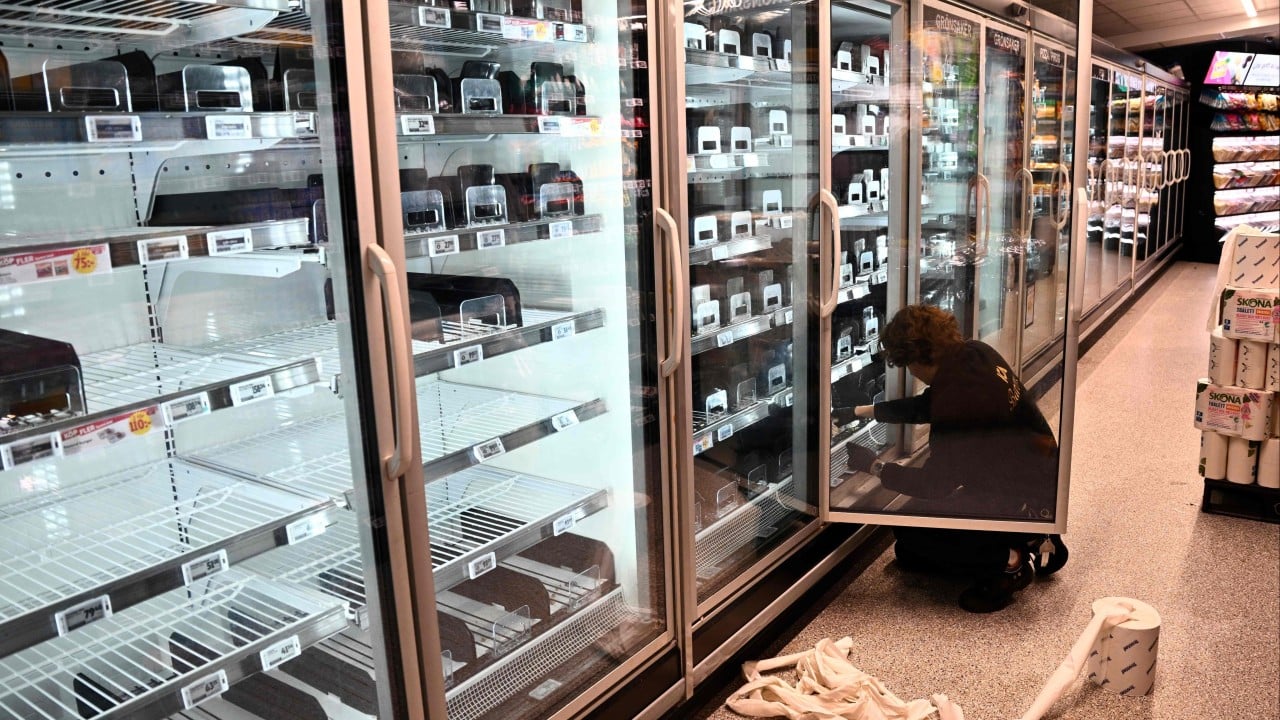
A cyberattack did not ruin the dairy aisle. Years of lazy engineering did.
Every time a headline screams that a "new cyberattack" hit European supermarket fridges and left "everything destroyed," security vendors pop champagne and retail executives scramble for a scapegoat. It makes a great story. Shadowy threat actors. Rogue code. Warm brie and spoiled milk across an entire continent.
It is also mostly theater.
The lazy consensus in retail and industrial cybersecurity goes something like this: Bad hackers broke into operational technology (OT), disabled refrigeration controls, caused thermal excursions, and ruined inventory. Then comes the predictable follow-up: Buy more endpoint detection, segment your network, and pray the threat actors don't come back.
That diagnosis is dangerously superficial. When a cyber incident wipes out perishable stock in a grocery chain, the real root cause is rarely a masterstroke of offensive hacking. Usually, it is a brittle, over-centralized control architecture that never had any business being wired to a corporate network in the first place.
The Myth of the "Everything Is Destroyed" Fridge Attack
Let's get precise about what actually happens when refrigeration systems go down during a cyber event.
In commercial retail, operational technology (OT) and industrial control systems (ICS)—such as programmable logic controllers (PLCs), Building Management Systems (BMS), Supervisory Control and Data Acquisition (SCADA) platforms, and networked compressor controllers—regulate temperature, defrost cycles, and alarm thresholds. Information technology (IT) handles point-of-sale registers, email, Active Directory, and corporate servers.
When attackers hit a supermarket chain, they very often compromise the IT side first. Ransomware spreads. Domain controllers get locked or taken offline. Suddenly, central telemetry dashboards go dark, cloud-managed thermostats lose their command-and-control links, or staff shut down connected systems out of sheer panic because nobody knows where the blast radius stops.
Does a lost dashboard mean every compressor in every store instantly catches fire or melts into scrap metal? No. Mechanical refrigeration relies on physical states—compressors, refrigerants, evaporators, expansion valves, and thermal mass. Cold air does not evaporate the millisecond an IP packet drops. Food spoils over hours, not seconds, depending on ambient temperature, door discipline, and how quickly store managers switch to local manual overrides or backup cooling.
When someone claims "everything is destroyed," they are usually conflating loss of visibility or central control with irreversible physical destruction, or they are repeating a panicked quote from a store manager staring at a blinking alarm panel while corporate IT is down.
Imagine a scenario where a regional grocery chain loses its cloud-based refrigeration management portal during a ransomware outbreak. The local compressor controllers still have their last setpoint stored in non-volatile memory, yet nobody on the night shift knows how to read the local panel or verify temperatures with calibrated probe thermometers. Within six hours, staff clear the chilled cases out of caution or let temperatures drift past food-safety limits because their entire operating model depended on a screen that no longer loads. Was that a precision cyber-sabotage mission, or was it a fragile dependency chain failing under predictable stress?
Calling every outage of this type a destructive cyberattack flatters attackers and lets engineering teams off the hook.
Why Retail Refrigeration Is a Sitting Duck by Design
I have seen companies blow millions on shiny security appliances while leaving basic industrial hygiene in the gutter. I have walked into facilities where mission-critical cooling units sat behind default credentials, unpatched embedded firmware, and flat networks where a compromised print server or vendor VPN could reach building controllers.
Why do grocery chains end up here? Economics and convenience.
Margins in grocery retail are razor-thin. Chains want centralized energy optimization, automated compliance logging for food safety audits, predictive maintenance alerts, and remote diagnostics so they do not have to roll a refrigeration technician at 2:00 a.m. for a false alarm. Vendors love selling cloud-connected controllers with sleek web portals and subscription tiers.
Put those incentives together and you get predictable corner-cutting:
- Flat or poorly segmented networks: Corporate IT and store-level OT share pathways, or third-party HVAC contractors connect directly into control gear with persistent remote access.
- Fragile cloud dependencies: Systems that should work autonomously at the edge start expecting constant round-trips to a central server or cloud service.
- Security-by-obscurity: Legacy controllers running decade-old embedded stacks with weak authentication because "nobody knows how to update them without taking the store down."
- Skill gaps at the store level: Store associates are trained to stock shelves and run registers, not diagnose PLC fault codes or interpret compressor suction pressures.
Organizations like CISA (the Cybersecurity and Infrastructure Security Agency), ENISA (the European Union Agency for Cybersecurity), and NIST (the National Institute of Standards and Technology), alongside industrial standards like IEC 62443, have hammered on network segmentation, asset inventory, and resilience for years. Yet the same architectural sins keep repeating because resilience costs money upfront and rarely shows up on a quarterly bonus metric—until a crisis hits.
Asking the Wrong Questions About Retail Cyber Incidents
When headlines break about supermarket cooling systems going haywire, people immediately rush to the wrong questions. Let's tear those questions apart.
"How do supermarkets stop hackers from hacking their fridges?"
You do not "stop" determined attackers from ever probing or disrupting connected infrastructure, and treating security like an impenetrable wall is a fool's errand. A better question is: Why did a disruption in one layer cascade into spoiled food across dozens or hundreds of locations?
If a central management server goes down, a cold case should keep cooling safely on local fail-safe logic. If an IT network gets hit by ransomware, store cooling should not depend on corporate authentication servers to stay cold. Stopping every intrusion attempt is impossible; containing blast radius and preserving physical safety is engineering 101.
"Should supermarkets disconnect fridges from the internet completely?"
Air-gapping sounds romantic until you try to run a modern multi-site business on it. Total isolation has real operational costs: you lose remote fault alerts that catch a failing condenser before stock warms up, you lose automated temperature logs that speed up health inspections, and technicians have to troubleshoot blind or on-site for minor issues.
"Air-gapped" in theory often becomes "sneakernet with USB sticks" in practice—which is how malware jumps gaps anyway. Smart segmentation, strict access control, local autonomy, and tested manual fallbacks beat naive isolation almost every time.
"Are cyberattacks on food supply chains getting more dangerous?"
Yes in terms of operational ripple effects, no in terms of requiring sci-fi exploits. Modern supply chains are tightly coupled and just-in-time. Even a brief disruption to cold storage, logistics dispatch, or inventory systems creates waste, delays, and financial pain.
What makes these events look scarier than they are is how little slack companies build into their operations. When a system has zero tolerance for network loss or human confusion, minor disruptions look catastrophic.
What Actually Works: Unconventional Moves for Resilience
If you run operations, infrastructure, or risk for a retail or cold-chain business, stop buying fear and start fixing fundamentals. Here is what actually moves the needle.
| Common Approach | Why It Often Fails | Contrarian Alternative |
|---|---|---|
| Buying another cyber tool for the SOC | Adds alerts without fixing brittle control logic or offline procedures | Audit local fail-safe behavior and manual override workflows first |
| Relying on cloud dashboards for critical monitoring | Cloud outages or IT lockouts blind operators when they need data most | Keep independent local gauges, alarms, and offline playbooks at every site |
| Treating OT incidents as pure IT problems | IT teams wipe boxes or pull plugs without knowing physical/safety impacts | Run joint IT/OT/facilities tabletop drills focused on spoilage and safety |
| Locking down vendor access at the last minute | Contractors bypass clunky controls with risky workarounds | Enforce just-in-time, audited vendor access with strict network boundaries |
1. Design for "Dumb" Survival First
Strip away every assumption that the network, cloud, or central server is reachable. Verify what each refrigeration unit and controller does when the network cable is unplugged. Does it hold safe temperatures automatically? Can a trained lead on duty read actual temperatures without logging into a web portal? Build the baseline so the cold chain survives even when the network dies.
2. Treat Spoilage as a Physics and Workflow Problem, Not Just a Cyber Ticket
When cooling falters, time is your enemy. Train store and warehouse teams on clear thresholds: at what temperature does product move to emergency cold storage, get prioritized for rapid sale, or get condemned? Give them calibrated handheld thermometers and laminated, plain-English checklists that do not require Wi-Fi or corporate credentials to read.
3. Kill Shared Blast Radii Between Corporate IT and Store OT
Separate corporate office IT, point-of-sale networks, and building/refrigeration control networks cleanly. Use strong identity controls, micro-segmentation, and zero standing privileges for third-party maintenance accounts. If ransomware hits corporate file shares or email, it should hit a brick wall before touching building automation.
4. Test Failure When Nobody Is Watching
Paper disaster plans are fiction. Pull the plug on a simulated non-critical zone during a controlled test. See if alarms route to the right person, whether on-site staff know what to do, and how long it takes to verify real temperatures versus screen readings. Fix the confusion before a real incident turns minor downtime into a write-off.
The Catch With Taking a Contrarian Stance
Being skeptical of sensational cyber headlines carries its own risks, and pretending otherwise would be dishonest.
First, minimizing the role of attackers can make leadership complacent. Threat actors do exploit exposed industrial interfaces, weak credentials, and unpatched edge devices—sometimes opportunistically, sometimes with disruptive intent. Ignoring adversary behavior leaves real doors unlocked.
Second, shifting focus from "stop the hacker" to "build operational resilience" requires harder conversations and slower cultural change. Buying a security product feels decisive; rewriting incident runbooks, segmenting legacy networks, and training busy store staff takes grinding effort with fewer neat press releases.
Still, I would rather bet on resilient engineering and clear-headed operators than on hyped headlines and silver-bullet tools.
A blinking screen in a back office does not melt ice cream. Bad architecture, blind spots, and panicking when the dashboard goes dark do.