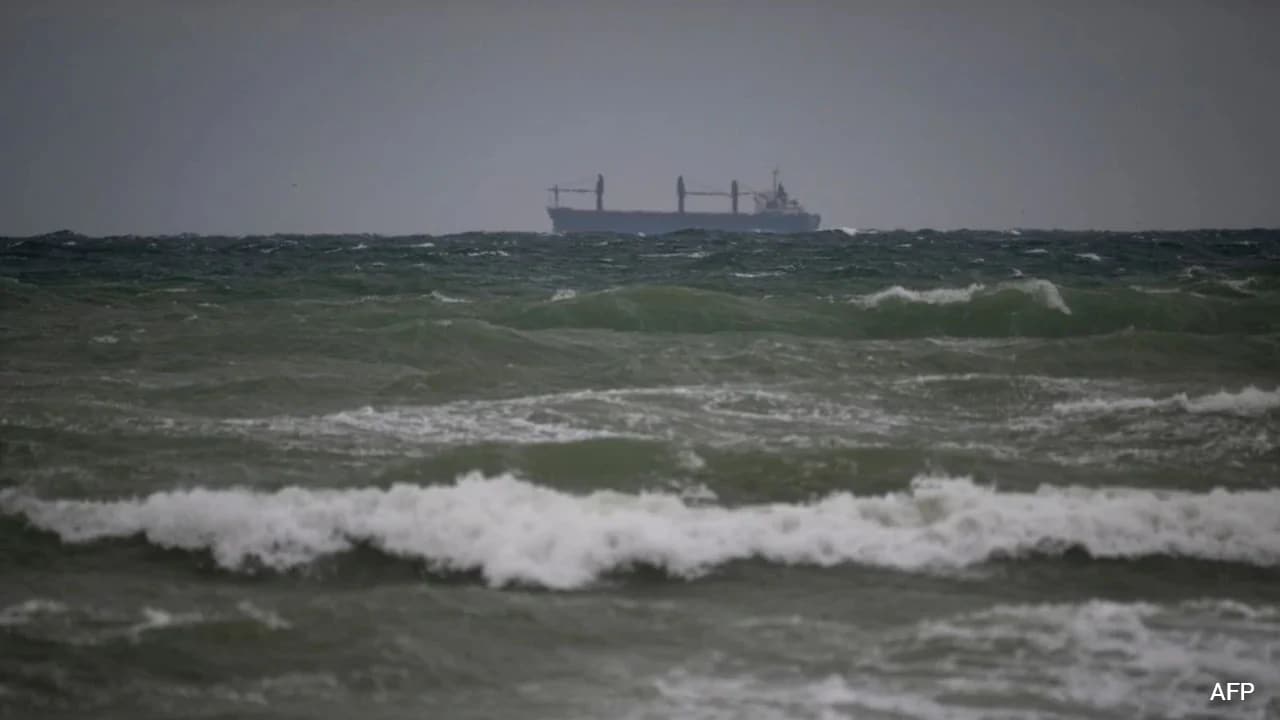
Seven crew members go missing after a vessel catches fire in the Black Sea, and the standard headlines immediately reach for the same comforting crutches. Bad luck. Rough seas. Aging hulls. A tragic twist of fate in a contested body of water.
Spare me.
Luck does not ignite engine rooms. Fate does not bypass fixed CO2 release valves. Weather does not turn a manageable machinery space flare-up into a missing-crew catastrophe in twenty minutes.
When a ship burns in the Black Sea—or anywhere else on commercial trade routes—the immediate reflex of conventional reporting is to treat the incident like a bolt of lightning out of a clear sky. Seven sailors missing becomes a story about grief and geography rather than engineering choices, maintenance shortcuts, crew fatigue, and bad operational habits that were already smoldering long before the first alarm sounded.
That lazy consensus lets shipowners, charterers, classification societies, and regulators off the hook before the smoke even clears. It frames maritime fire as an unavoidable hazard of a rough neighborhood instead of what it almost always is: a predictable failure chain that someone thought they could out-earn.
The Lazy Consensus Around Black Sea Maritime Fires
Read the typical breaking-news coverage of a vessel fire in the Black Sea and you can predict every paragraph before you finish the first sentence. There will be a nod to regional tensions or GPS interference. There will be a solemn line about treacherous waters. There will be a summary of search-and-rescue efforts and a placeholder quote about maritime safety being a top priority.
None of that is invented out of thin air. The Black Sea presents real operational friction—tight sea lanes, shifting security risks, variable port-state enforcement, and harsh seasonal conditions. Pretending those factors don't exist would be foolish.
The error lies in stopping there.
Treating context as cause is amateur analysis. A spark needs fuel, oxygen, and an ignition source; a fatal crew disappearance needs a breakdown in detection, containment, evacuation discipline, or rescue readiness. Pointing at the map explains why operating in the region is demanding. It does not explain why a specific ship burned out of control while seven people on board vanished.
I have spent years watching maritime operators treat safety equipment like paperwork and drills like theater. I have seen fleets spend millions on flashy fleet-monitoring dashboards while letting fuel-line lagging soak up oil, ignoring leaking flange shields, or signing off on maintenance checklists from a desk three time zones away. When a fire breaks out under those conditions, calling it "bad luck" isn't sympathy. It's a cover story.
Terms We Keep Mangling Before the Investigation Even Starts
Before arguing about what went wrong, we have to stop using maritime terms like sloppy shorthand. Words matter when lives disappear at sea.
A vessel fire is not a single event; it is a progression that moves through stages—incipient smoke, localized flame, flashover or structural spread, and loss of compartment integrity. Confusing the moment smoke is spotted with the moment a space becomes uninhabitable obscures where intervention succeeded or failed.
Missing crew members after a fire are not automatically casualties of the flames themselves. A crew member can be lost during rapid mustering in heavy smoke, during an ill-timed abandon-ship decision, in cold water after entering a liferaft or immersion suit improperly, or while re-entering a space without proper breathing apparatus. Lumping every missing sailor into "died in the fire" erases critical distinctions in emergency response.
Seaworthiness is another phrase people throw around like a light switch, as if a ship either has it or doesn't. In reality, seaworthiness is dynamic. A vessel can hold valid certificates on paper and still carry latent fire hazards—improperly routed electrical cables, uncleaned bilges, degraded boundary cooling, or an overworked crew running on six-on/six-off watches for months on end.
And risk in commercial shipping is routinely confused with probability. High-consequence fire events on working vessels may occur less frequently than minor mechanical breakdowns, yet when they do occur, the margin for error is razor-thin. Treating a low-frequency event as "unlikely to happen to us" is how crews end up facing an inferno with rusty muscles and half-trained reflexes.
Why People Ask the Wrong Questions After a Ship Catches Fire
Whenever a headline breaks about seven crew members missing after a vessel catches fire in the Black Sea, public curiosity clusters around predictable questions. Most of those questions point straight into a ditch.
"How could a fire spread so fast on a modern commercial ship?"
Wrong question. The better question is: which fire boundary failed, and who signed off on the compromise?
Modern steel hulls do not burn like matchsticks on their own. Fires gain lethal momentum when boundaries are breached—open fire doors wedged for convenience, unsealed cable transits, uninsulated hot surfaces next to atomized fuel or hydraulic spray, or ventilation systems kept running too long because someone hesitated to starve a compartment of air. Speed in a shipboard fire is rarely magic. It is usually a path of least resistance that was left wide open.
"Were the crew members trapped below deck?"
Sometimes, yes—and asking that question keeps the focus on the sharpest point of danger. Smoke in an enclosed steel corridor behaves nothing like smoke in a warehouse. It banks down from the overhead, blinds crew within seconds, strips away visibility of escape trunks, and turns heat into a physical wall.
Yet asking only whether someone was trapped misses the second half of the tragedy: what happens once a crew abandons ship or gets separated during smoke evacuation. A ship fire doesn't end at the bulkhead. It spills out onto the deck, into muster stations, and into the water.
"Is the Black Sea simply too dangerous for standard merchant shipping?"
No. That premise confuses heightened friction with inherent impossibility.
Thousands of transits happen across the Black Sea without turning into burning wrecks with missing sailors. Calling the entire basin uniquely fatal is lazy fatalism. The real test isn't whether a sea lane has hazards; every commercial waterway has hazards. The real test is whether an operator adjusts maintenance rigor, bridge and engine-room discipline, and crew rest standards to match the actual operating environment—or keeps running bare-bones margins and prays for calm weather.
The Mechanics of How a Manageable Fire Becomes Seven Missing Sailors
To see why the standard narrative falls short, look at the actual physics and human factors inside a shipboard emergency.
Imagine a scenario where a minor fuel or lube-oil leak hits a hot exhaust component in a machinery space. At minute one, it is a contained hazard with a clear suppression path. If remote quick-closing valves shut off fuel supply, if fixed fire-extinguishing systems discharge properly, and if boundary temperatures are monitored without sending untrained personnel blindly into a smoke-filled room, the vessel takes damage—and everyone goes home.
Now trace how that same scenario slides off the rails.
First comes hesitation. Crews trained on predictable drills sometimes freeze when real smoke looks thicker, hotter, and more chaotic than a textbook exercise. Seconds bleed away arguing over whether to shut down main propulsion or generators, or waiting to confirm the exact source before pulling a release lever.
Second comes smoke and disorientation. In a machinery space or accommodation block, heat rises while acrid smoke fills the upper space and creeps downward. Once visibility drops to zero, muscle memory is the only map a person has. If an escape route is blocked, altered, or unfamiliar to a recently joined crew member, panic sets in fast.
Third comes command strain. A master or chief engineer handling an active fire has to juggle firefighting tactics, propulsion or electrical stability, distress communications, and headcounts all at once. Without rock-solid muster discipline—clear roles, immediate headcounts before leaving spaces, and strict rules against solo search-and-rescue into unventilated hazards—people can become unaccounted for before anyone even realizes they didn't make the muster point.
Fourth comes abandonment under pressure. If heat escalates or blackout hits, the decision to launch survival craft or enter the water happens under intense adrenaline and poor lighting. Even when search-and-rescue assets respond promptly, finding people in open water—especially if they entered without personal locator beacons, strobe lights, or intact thermal protection—is a brutal race against hypothermia and wave action.
Look at international maritime safety frameworks from bodies like the International Maritime Organization (IMO) and loss-prevention analyses from major protection and indemnity (P&I) clubs and classification societies such as Lloyd's Register or DNV. Across decades of casualty investigations, the recurring lesson is remarkably consistent: hardware failures rarely act alone. They interlock with human decision-making, maintenance culture, and emergency readiness.
Where My Contrarian Take Has Real Blind Spots
Pushing back against "bad luck" does not mean swinging blindly to the opposite extreme and blaming every crew member or every shipowner with a broad brush. That would just be another lazy shortcut.
There is a real downside to treating every maritime fire strictly as a failure of preparation or management. First, incomplete facts early on can turn sharp analysis into armchair Monday-morning quarterbacking. When a vessel is burning at sea and seven people are missing, investigators often spend weeks or months piecing together voyage data, recovered records, and witness accounts. Declaring exact root causes before evidence is verified is reckless.
Second, over-indexing on blame can obscure genuine operational constraints. Crews sometimes sail under intense commercial pressure, tight turnaround schedules, complex multinational manning, and geopolitical friction that individual seafarers did not create. A sailor following orders in a failing system is not the same thing as an executive cutting maintenance budgets to pad quarterly margins.
Third, even well-run operations face edge cases. An unusual mechanical failure, a sudden shift in wind or sea state during rescue, or a chain of unlucky timing can still test a disciplined crew to its limit. Acknowledging that edge cases exist doesn't validate fatalism; it keeps analysis honest.
Stop Treating Safety Like Compliance—Do This Instead
If you run shipping operations, insure cargo, charter tonnage, or cover maritime affairs, stop waiting for the next press release to pretend you care about fire safety. Most of what passes for "safety culture" in commercial shipping is just box-checking dressed up in high-visibility vests.
Here is what actually moves the needle when the stakes are lives at sea:
- Audit maintenance by physical reality, not paperwork. Pick a vessel at random and walk the engine room and accommodation spaces with someone who actually knows how fires start and spread. Check insulation integrity around hot surfaces, look for oil residue near pressurized lines, test quick-closing valves physically rather than trusting last month's logbook, and verify that fire dampers and doors aren't rigged open.
- Run unannounced, messy drills—not rehearsed scripts. Announced drills where everyone knows the scenario at 09:00 on a calm Tuesday build muscle memory for that Tuesday. Run drills with partial communications loss, simulated heavy smoke, or a missing team member so officers practice real headcount control and calm decision-making under stress.
- Fix fatigue before it picks the crew off. Exhausted seafarers make slower judgments, miss early cues, and struggle during high-stress emergencies. Treat chronic fatigue as a direct safety hazard—and a direct liability—rather than a normal part of contract life.
- Invest in individual visibility and tracking for abandon-ship scenarios. When people end up in the water after a fire or abandonment, finding them fast is everything. Equipping crew gear consistently with reliable personal distress beacons, retroreflective materials, and lights turns a needle-in-a-haystack search into a targeted recovery.
- Demand root-cause honesty after every near-miss. Minor engine-room smoke events, electrical hot spots, and failed drills are free lessons if you dissect them honestly. If your organization treats near-misses as embarrassments to bury instead of data to fix, you are just rehearsing for a bigger disaster.
Seven missing crew members in the Black Sea is a gut punch that demands more than solemn clichés about fate. Fires don't sneak onto ships out of nowhere—they feed on neglect, hesitation, and excuses, and they collect their bill when everyone else is still looking at the weather forecast.