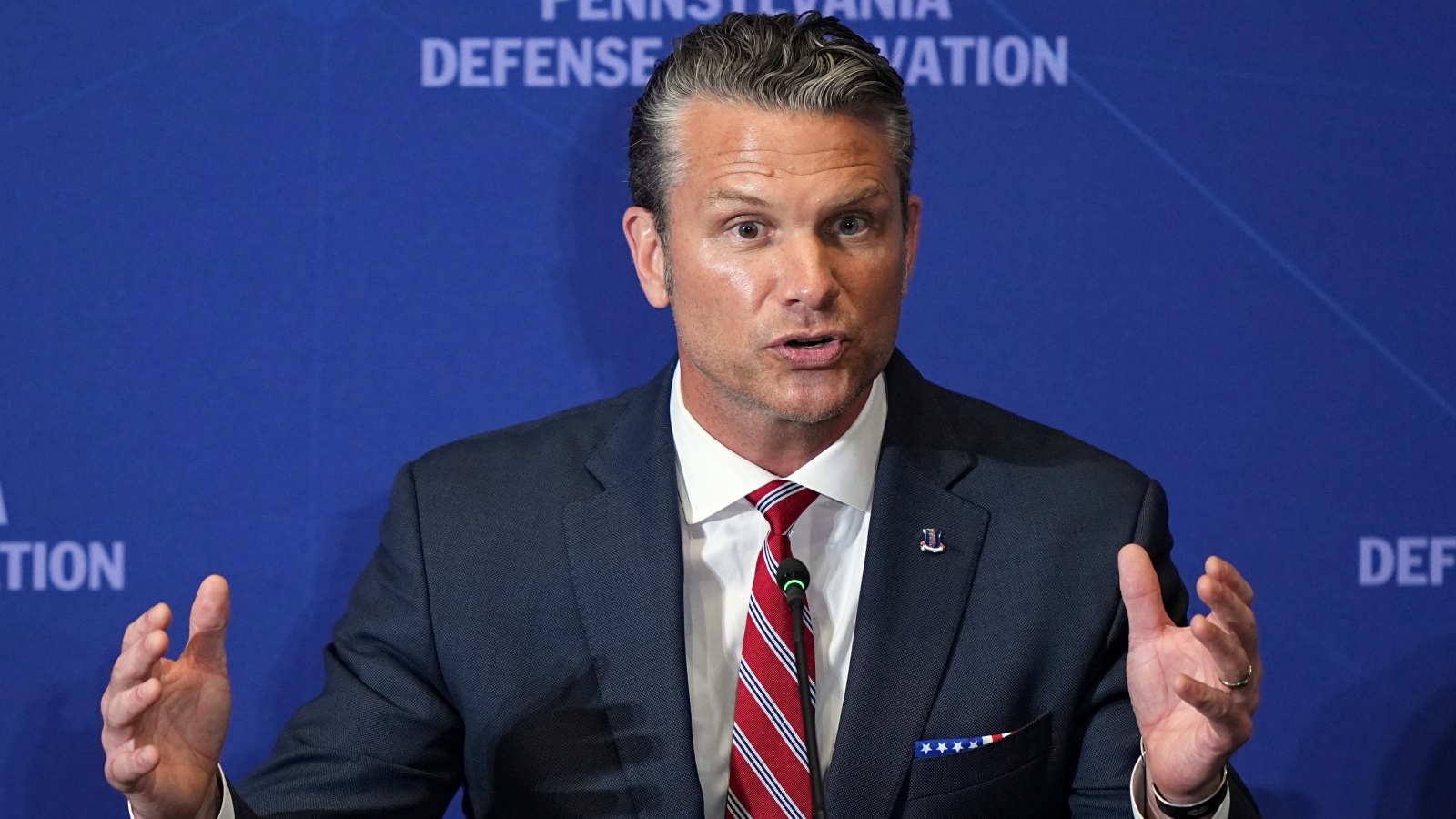
The United States military will begin subjecting every active-duty service member aged 30 and older to mandatory annual testosterone screenings. Defense Secretary Pete Hegseth announced the sweeping directive, frames it as an operational readiness initiative designed to combat what he defines as a decline in the physical and mental capabilities of the American warfighter. While service members younger than 30 can opt in to the program voluntarily, those above the threshold have no choice but to have their hormone levels recorded during their annual periodic health assessments. Any subsequent hormone replacement therapy remains strictly optional.
This sudden injection of hormone diagnostics into the Pentagon administrative machine marks a profound shift in how the state manages the biology of its soldiers. It moves the military from a defensive posture of treating active disease to an aggressive, government-funded campaign of biological optimization.
The Radical Directive of the High T Department
In a video announcement distributed across social media networks, Hegseth openly branded the defense establishment the "High-T Department". He laid out a vision where biochemical intervention serves as the bedrock of military lethality. The defense secretary argued that the unrelenting pressures of the modern battlefield demand a biological foundation that standard physical training can no longer guarantee.
To understand how a major state institution arrived at a point where it mandates blood-draw hormone monitoring for hundreds of thousands of personnel, one must look beyond standard defense doctrine. The policy mirrors a broader cultural fixation that has captured sections of the American political structure. Figures like Health and Human Services Secretary Robert F. Kennedy Jr. have frequently alleged a systemic crisis of declining testosterone in American males. Influencers and alternative media commentators heavily promote "T-maxxing" and direct-to-consumer hormone clinics as a cure-all for societal and physical malaise.
By embedding this cultural trend into official Pentagon policy, the current administration is executing a massive, real-world experiment on the active-duty force.
The military has long experimented with ways to alter the physiological limits of its soldiers. During World War II and the Vietnam War, amphetamines were distributed to keep troops alert during prolonged combat operations. Later, the Air Force utilized modafinil to maintain the cognitive faculties of pilots on long-range bombing missions. What makes this new testosterone policy distinct is its focus on baseline endocrine health during peacetime garrison duty. The policy shifts the goal from temporary tactical endurance to the permanent elevation of a hormone level.
Medical Reality Versus Political Fixation
Elite medical organizations view the mandate with severe skepticism. The American Urological Association issued a swift statement noting that a diagnosis of testosterone deficiency cannot and should not be based on a single blood test. True clinical deficiency requires a combination of low serum hormone levels measured across multiple mornings alongside explicit physical symptoms, such as severe fatigue, muscle wasting, or profound bone density loss.
The Pentagon has yet to release explicit clinical guidelines defining what constitutes a deficient level under this new directive. Testosterone levels in healthy adult males fluctuate wildly based on sleep cycles, diet, acute stress, and the exact time of day the blood is drawn. A single test taken after a grueling 24-hour shift or a period of intense field exercises will almost certainly show a temporary, artificial dip.
Military medical personnel face an impending administrative and diagnostic nightmare. If a 32-year-old infantry sergeant registers a low reading during a routine physical, the military health system is obligated to offer a path forward. Yet, treating a number on a lab report rather than a clear medical pathology violates basic clinical tenets.
Furthermore, military training itself actively suppresses testosterone. Data presented to a Food and Drug Administration panel demonstrated that high operational tempos and chronic deployment stress drive down natural hormone production. Major Theodore Crisostomo-Wynne, a urologist at Madigan Army Center, noted that the intense environment service members endure can cause both acute and long-term endocrine suppression.
The institutional contradiction is striking. The military intends to test for a deficiency that its own grueling operational schedule helps create, then proposes fixing it with exogenous hormones rather than addressing the structural burnout affecting the force.
The Cost of Optimizing the Warfighter
The financial and logistical burden of this mandate will land squarely on the Defense Health Agency and the Tricare insurance system. Standard testosterone replacement therapy involves a lifetime commitment. Once an individual begins taking synthetic testosterone, the body drops its own natural production, often permanently.
Consider the sheer scale of the population involved. There are hundreds of thousands of active-duty troops over the age of 30. If even a small percentage of those screened register below the eventual Pentagon baseline and choose to accept treatment, the demand for regular hormone injections, topical gels, and subsequent blood monitoring will skyrocket.
This creates a massive recurring cost for a medical system already strained by primary care shortages. The policy also introduces a web of medical readiness complications. Personnel on hormone replacement therapy require consistent access to their medication. During prolonged deployments to remote areas, keeping thousands of soldiers supplied with temperature-sensitive vials or patches presents a significant supply chain vulnerability. If a unit's supply line is disrupted, those dependent on therapy will experience a sudden crash in hormone levels, leading to severe fatigue, mood disturbances, and a sharp drop in physical performance.
The defense establishment has not clarified whether troops undergoing voluntary hormone therapy will face deployment restrictions or be classified as non-deployable during the initial phases of their treatment.
The Gender Disparity on the Modern Battlefield
The "High-T" framing deliberately ignores a significant portion of the active force. More than 231,000 women serve on active duty in the United States military. Hegseth's video announcement and the initial policy documentation fail to outline how female service members will be evaluated under this program, or if their distinct endocrine systems will be monitored at all.
This omission stands out sharply against other recent personnel directives. The Pentagon recently ordered the military to implement strict physical fitness standards for ground-combat roles based entirely on the highest historic male standards. By pushing a biochemical initiative focused entirely on male physiology while simultaneously demanding that women meet male physical benchmarks in combat specialties, the policy creates an uneven playing field.
The political irony is also impossible to ignore. The current administration has consistently attacked the use of gender-affirming hormone therapies, labeling the administration of hormones for identity purposes as a medical failure. Yet, the Pentagon is now preparing to utilize the exact same category of pharmaceutical interventions to modify the bodies of its troops to fit an idealized standard of masculine martial capability.
Hormones are being weaponized as tools of statecraft and culture. When used by civilians to align their bodies with their gender identity, they are restricted. When used by the state to manufacture an aggressive, highly physical warfighter, they are institutionalized and funded.
The Administrative Burden
Military physicians already operate under immense pressure. They are tasked with maintaining a force ready to deploy at a moment's notice while managing the bureaucratic demands of a massive government bureaucracy. Introducing mandatory hormone screening adds a highly volatile variable to their daily workload.
Doctors will find themselves caught between institutional pressure to maximize unit lethality metrics and their ethical duty to avoid over-prescribing controlled substances. Testosterone is a Schedule III controlled substance due to its potential for abuse and its long-term health risks, which include cardiovascular strain, elevated red blood cell counts, and potential fertility loss.
If the military creates an environment where a high testosterone score is viewed as an informal requirement for promotion or selection into elite units, troops will inevitably feel pressured to opt in to treatments they do not medically require. The line between voluntary therapy and career necessity will blur.
The policy ignores the root causes of military attrition and physical decline. Troops are not struggling to meet the demands of modern combat because of an inherent biological failure. They are struggling because of repeated deployments, inadequate sleep, poor nutrition options in the field, and a culture that treats physical burnout as a lack of discipline.
By looking for a solution in a vial of testosterone, the Pentagon is opting for a pharmaceutical patch instead of fixing the broken machinery of the institutional military machine. The results of this mandatory screening program will ripple through the ranks for a generation, transforming the military medical system into an assembly line for hormonal modification.