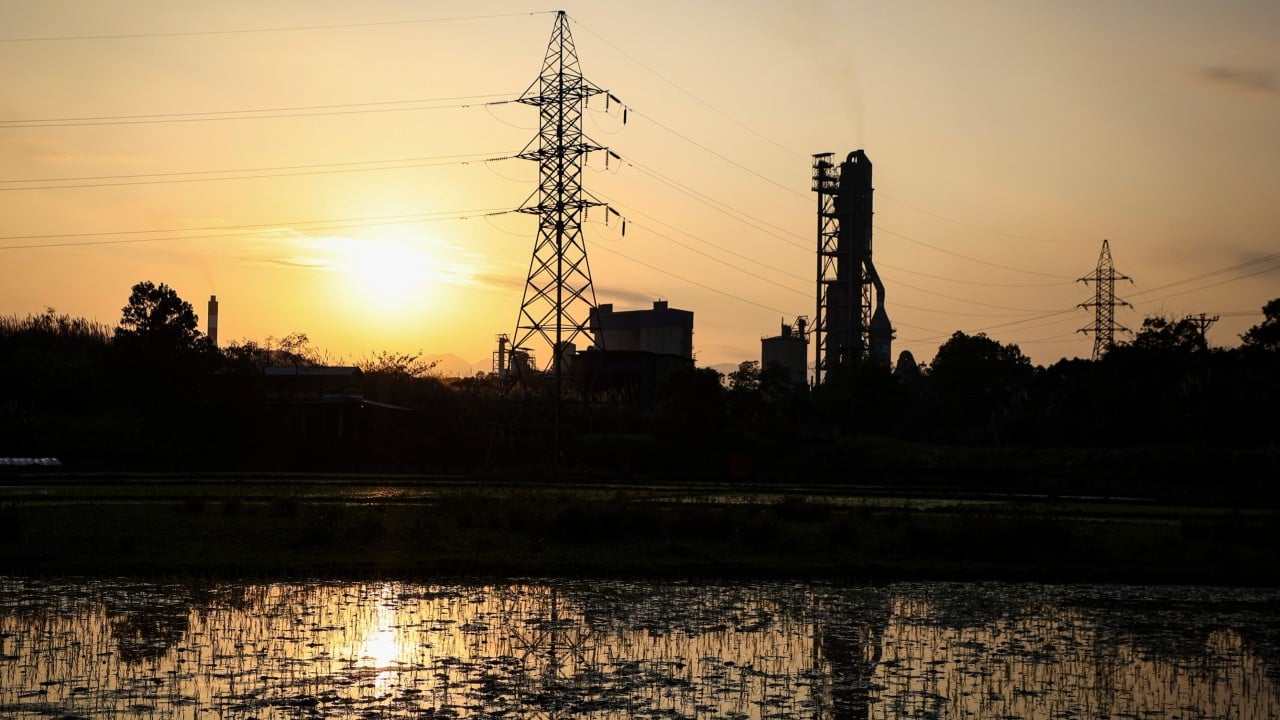
The coffee in Jakarta cools while the midday humidity presses against the windowpane like a heavy hand. Miles away, inside a glass-walled conference room in Washington, a spreadsheet glows under fluorescent lights. Rows of numbers represent gigawatts, transmission lines, and currency exchanges. But sitting here, listening to the ceiling fan chop the thick air, those numbers translate into something else entirely. They translate into the quiet hum of a refrigerator in a suburban kitchen outside Hanoi, or the sudden, blinding flash of a factory floor in Semarang finally running at full capacity without a brownout threatening to fry the machinery.
Money moves through the global economy with a cold, terrifying indifference. Yet every single transaction carries a pulse.
Right now, that pulse is channeling one point five billion dollars across the Pacific and into the heart of Southeast Asian energy grids. On paper, it is a strategic maneuver, an investment thesis executed by policymakers and finance syndicates looking to secure footholds in one of the fastest-growing industrial corridors on earth. On the ground, it is an urgent scramble for survival, light, and momentum.
To understand why this massive capital injection matters, you have to look at the sheer scale of the appetite.
Southeast Asia is booming. Populations are urbanizing at a breakneck pace. Factories are humming. Digital economies are expanding into every corner of the archipelago. But progress demands fuel. For decades, that fuel came cheap, dirty, and reliable. Coal smoke choked skies from Sumatra to the Mekong Delta, a visible tax paid for the privilege of modernizing. The world looked on, offering mild rebukes while buying the cheap goods produced by those fossil-fueled assembly lines.
Then the math broke.
Climate change stopped being a projection for the next century and started arriving in real-time. Typhoons grew fatter and meaner. Sea levels began creeping up the stilts of coastal fishing villages. Governments caught between the demands of restless, upwardly mobile citizens and the terrifying reality of environmental collapse realized a harsh truth. They needed power. They needed mountains of it. And they could not build their futures on coal anymore.
Enter the outside world with a checkbook.
When a billion and a half dollars drops into an emerging energy market, it does not land softly. It creates ripples that disrupt old habits and force uncomfortable choices. Imagine a state-owned utility office in a developing regional capital. The desks are piled high with paper files dating back decades. The engineers working there are brilliant, overworked, and deeply skeptical of foreign bankers who fly in wearing bespoke suits to lecture them about carbon neutrality.
I remember talking to one such engineer a few years ago. His name was Agus, and his hands were permanently stained with transformer oil.
"You tell us to turn off the coal," he told me, pointing a calloused finger toward a map glowing under a desk lamp. "You tell us to build solar farms and wind corridors. But when the monsoon hits and the clouds sit over our islands for three weeks straight, what do I tell the hospital? Do I tell the surgeon to use a flashlight?"
That is the friction point. That is where the cold statistics of international finance collide with human reality.
The one-point-five-billion-dollar play is not just about writing checks for solar panels. It is an attempt to solve Agus's nightmare. It is targeted at modernizing grids that leak power like old sieves, upgrading battery storage systems that can hold the sun's bounty long after it dips below the horizon, and financing cross-border transmission lines that allow surplus clean energy to flow from where it is abundant to where it is desperately needed.
Consider what happens next.
Capital flows in, but it brings conditions. It demands transparency. It forces bureaucratic monopolies to open their doors to private innovators. Tech startups in Singapore and clean-tech manufacturers in Vietnam find themselves swimming in resources previously reserved for massive, state-backed fossil fuel conglomerates. The ecosystem shifts. A new generation of entrepreneurs emerges, people who know how to code an energy-trading algorithm just as well as they know how to wire a substation.
Yet, we must be honest about the shadows lingering behind the balance sheets.
Money of this magnitude never moves out of pure altruism. It seeks returns. It seeks dominance. In the background of these green investments hums a much older, louder geopolitical competition between superpowers vying for influence across the Indo-Pacific. Every wind turbine erected with foreign capital carries a silent diplomatic flag. For Southeast Asian nations, navigating this grand chessboard requires a delicate dance. They need the capital to survive the coming decades, but they refuse to become economic colonies of whichever empire happens to write the biggest check today.
This is why the human element gets lost in translation.
To a financial analyst in New York, a regional grid integration project is a portfolio diversification strategy. To a mother living in a rural province where the local grid fails every time the wind blows too hard, it is the difference between her children studying after dark or squinting by the flickering light of a kerosene lamp.
The transformation is messy. It is loud. It is punctuated by stalled negotiations, corrupt bureaucrats skimming off the top, and idealistic young activists chaining themselves to construction sites where old habits die hard.
We are watching a region rewire itself in real-time.
The one-point-five-billion-dollar infusion is merely a down payment on a much larger, generational overhaul. It is a desperate, hopeful bet that human ingenuity can outpace ecological disaster. As the sun sets over the Jakarta skyline and the office lights finally blink out, the grid hums quietly beneath the asphalt, carrying the invisible weight of tomorrow's promises across millions of waiting homes.