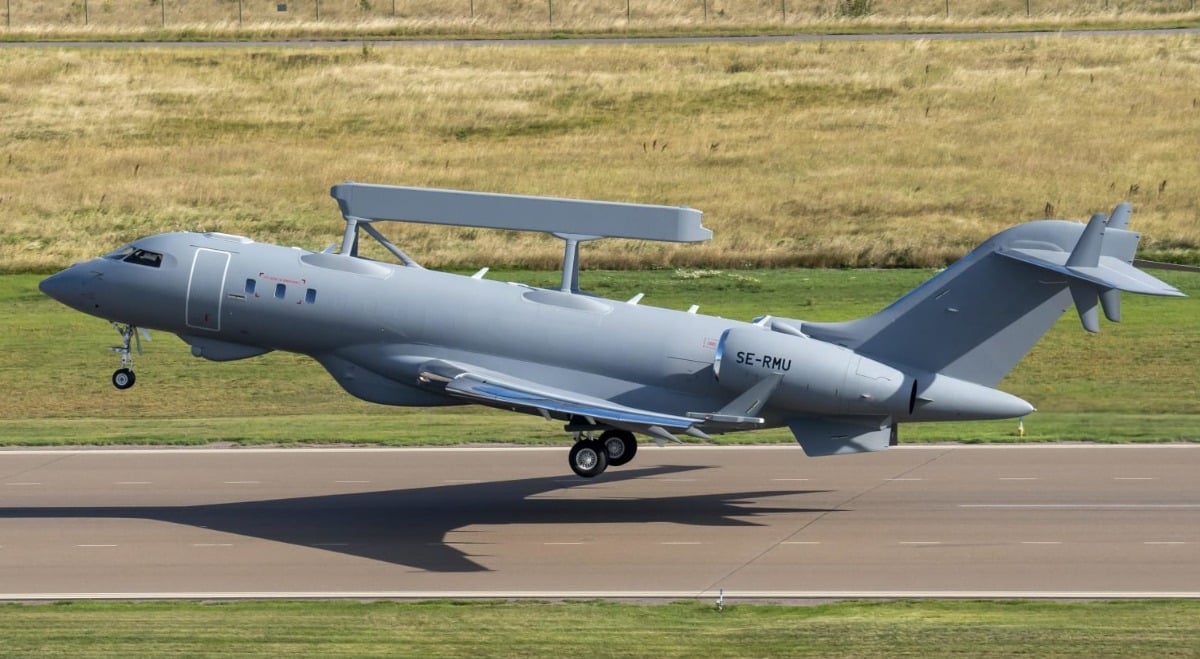
The Billion Dollar Blind Spot Behind Saab and the GlobalEye Mystery Buyer
Saab just closed a billion-dollar transaction for two GlobalEye airborne early warning and control aircraft without naming the customer. Two specialized aircraft equipped with the advanced Erieye ER radar system, capable of tracking air, land, and sea targets simultaneously from high altitudes, have been sold to an unnamed state actor for roughly one billion dollars.
Silence in defense procurement is rarely an accident. It is a calculated diplomatic posture.
When a defense prime minister or a corporate CEO refuses to disclose the buyer behind a nine-figure military contract, the omission speaks louder than any press release. This deal exposes a shifting architecture in global surveillance acquisitions, where the traditional transparency of open market defense trading yields to clandestine sovereign procurement. Analysts look at the price tag and the platform, but they miss the geopolitical friction that forces buyers to hide in the shadows.
Understanding this transaction requires looking past the corporate ledgers of Linköping and examining how modern airborne radar systems alter regional power balances overnight.
Anatomy of the GlobalEye Platform
Airborne early warning and control assets are force multipliers. Without them, an air force operates half-blind, relying on ground-based radars prone to terrain masking and horizon limitations.
The GlobalEye platform changes that dynamic through its utilization of the Bombardier Global 6500 long-range business jet as a host airframe. Traditional systems often rely on heavy, modified commercial airliners or transport planes. Those older platforms scream military presence from hundreds of miles away. They require extensive logistical footprints and massive runways.
Saab took a different route. By integrating the Extended Range version of their Active Electronically Scanned Array radar onto a corporate jet platform, they created a system with eleven-hour endurance and high operational discretion.
+-------------------------------------------------------------+
                 GlobalEye System Architecture
+-------------------------------------------------------------+
| Host Airframe : Bombardier Global 6500 (High Altitude, Long |
|                 Endurance, Commercial Discretion)           |
+-------------------------------------------------------------+
| Primary Radar : Erieye ER (AESA, S-band, Dual-sided active) |
+-------------------------------------------------------------+
| Capabilities  : Simultaneous Air, Maritime, and Ground      |
|                 Surveillance over vast operational theaters |
+-------------------------------------------------------------+
The Erieye ER radar uses gallium nitride transmit-receive modules. This technical choice increases power efficiency and detection range significantly compared to older gallium arsenide arrays. It can spot low-radar-cross-section targets, including cruise missiles and stealth aircraft, even in heavy electronic warfare environments.
When a nation pays one billion dollars for two of these units, they are not just buying airplanes. They are purchasing a continuous, high-altitude nervous system capable of monitoring every movement across contested borders or vital maritime chokepoints.
Why Buyers Hide Their Identities
Secret defense sales are not new, but the motivations driving absolute anonymity have evolved.
In past decades, unacknowledged arms transfers usually involved pariah states dodging international embargoes or covert intelligence operations running black budgets. Today, the secrecy surrounding the GlobalEye sale points to a different reality: middle-tier powers caught between great power competition.
Consider the geopolitical positioning of nations in the Middle East, Southeast Asia, or Eastern Europe. Acquiring an asset as potent as the GlobalEye triggers immediate diplomatic blowback. If an emerging regional power openly purchases advanced Swedish radar aircraft, rival neighbors scramble to upgrade their own countermeasures, triggering localized arms races. Furthermore, major suppliers like the United States, China, or regional hegemons often pressure neutral manufacturers or intermediate states to block or alter defense packages that upset regional stability.
Anonymity protects the buyer from premature deterrence.
If a rival state does not know who operates the GlobalEye, they cannot formulate effective electronic countermeasures or diplomatic pressure campaigns before the system reaches operational readiness. The buyer gains a crucial window of asymmetric advantage.
The Financial Reality of Swedish Defense Manufacturing
Saab operates in a unique corporate ecosystem. Unlike defense monoliths in the United States or Russia that rely on massive domestic military budgets, Swedish defense contractors must export to survive. The domestic market cannot sustain the research and development costs required to maintain world-class military technology.
This export dependency forces aggressive international marketing, often paired with industrial cooperation agreements and technology transfers. However, selling high-end surveillance gear presents strict regulatory hurdles. Sweden’s Inspectorate of Strategic Products exercises rigorous oversight over military exports, evaluating human rights records and regional stability risks before approving any major contract.
A billion-dollar deal for two aircraft indicates a comprehensive package. This figure covers more than the physical airframes and radar units. It includes:
- Ground exploitation stations for data analysis
- Multi-year logistical support and spare parts inventory
- Comprehensive pilot and operator training pipelines
- Cryptographic integration and secure communications suites
When a contract spans this level of depth, the political clearance process within Sweden becomes complex. If the buyer is controversial, keeping their identity sealed helps Stockholm navigate domestic political sensitivities while maintaining its industrial manufacturing base.
The Operational Reality Behind the Marketing Hype
Military hardware marketing brochures always depict flawless performance under pristine conditions. The reality of operating high-end airborne early warning assets is far more grinding.
Operating a Bombardier Global 6500 configured for military surveillance requires specialized maintenance crews, pristine hangar facilities, and uninterrupted access to proprietary software updates. Electronic warfare systems are caught in an endless cycle of cat-and-mouse updates. The moment a radar operates in the field, adversaries capture its emission signatures to program their threat libraries.
A buyer purchasing only two GlobalEye aircraft is buying a strategic asset, not a tactical fleet. Two planes cannot maintain 24/7 continuous coverage of a border indefinitely. Maintenance cycles, crew rest requirements, and scheduled overhauls mean that at any given time, one aircraft is likely grounded.
This limitation reveals the true strategic profile of the buyer. They do not intend to fight a protracted, high-intensity global war. They need strategic deterrence and immediate situational awareness during acute crises. They need to see the first wave coming before anyone else does.
The Broader Shift in Global Surveillance Markets
The sale of these two aircraft highlights a structural shift away from massive, bureaucratic defense acquisitions toward agile, high-tech niche capabilities. For decades, military planners believed bigger was better. They invested in lumbering radar platforms that required massive infrastructure and exposed themselves easily to long-range engagement.
The success of the GlobalEye model proves that mobility and stealthy host platforms command a premium. When an air force can park a surveillance asset on a commercial tarmac looking like a civilian executive jet, it complicates enemy targeting algorithms.
Yet, the silence surrounding this specific contract remains the most telling detail. As global tensions fracture traditional alliances, defense procurement is entering an era of quiet accumulation. Nations are no longer broadcasting their military buildups with celebratory parades and press conferences. They are quietly wiring their borders with digital eyes, keeping the ledger closed, and letting adversaries guess who is watching from the stratosphere.


