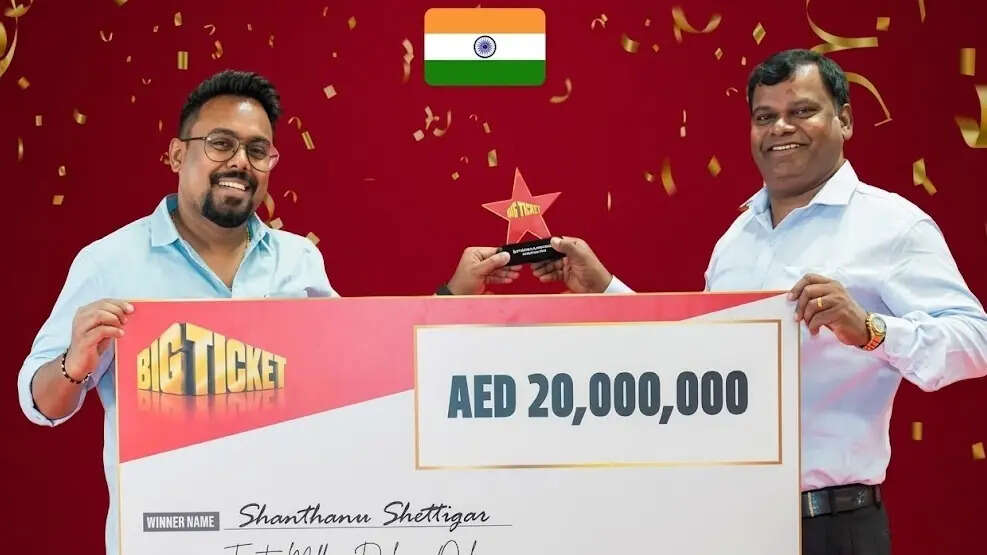
The headlines are always the same. A wide-eyed expat in Abu Dhabi checks a spam folder, discovers they are Dh20 million richer, and the media paints a picture of a "dream come true." It is a feel-good narrative designed to sell more tickets. It is also a statistical and psychological trap.
We celebrate the winner. We ignore the math. We ignore the aftermath.
If you think winning the Big Ticket is the ultimate escape from the grind, you haven't been paying attention to how wealth actually functions. You aren't winning freedom; you are winning a full-time job managing a target on your back.
The Survivorship Bias Machine
The media loves the "accidental millionaire." It feeds the "I thought it was spam" trope because it makes wealth feel accessible—like a lightning strike you can summon if you just buy enough Dh500 slips of paper.
This is survivorship bias in its purest form. For every Indian expat holding a giant novelty check, there are hundreds of thousands of others whose monthly "investment" in raffle tickets is a quiet drain on their actual wealth-building potential.
Let’s look at the cold reality of the Expected Value (EV). In any lottery or raffle, the EV is almost always negative. You are trading a certainty (your cash) for a mathematical improbability. In the context of the UAE’s raffle culture, the "dream" is a tax on those who don't understand variance.
The Psychology of the "Spam" Reveal
Why do these stories always highlight the winner's disbelief? "I thought it was a prank call." "I didn't check my email for days."
This narrative serves the organizer, not the player. It reinforces the idea that luck is egalitarian—that it finds you even if you aren't looking. It removes the agency from the individual and places it in the hands of the "Big Ticket" gods. This creates a feedback loop where people continue to participate in a system where the house always wins, even when someone else takes the jackpot.
When you win Dh20 million, you don't just get the money. You get the Lottery Curse.
- Social Liquidation: Every cousin, former colleague, and "old friend" from your home village now has a business plan or a medical emergency.
- Lifestyle Creep on Steroids: You move from a modest flat to a villa. Your burn rate triples. But your financial intelligence? That stayed exactly where it was when you were earning Dh8,000 a month.
- The Identity Crisis: When wealth is unearned, it is rarely respected. The winner often feels a subconscious need to prove they "belong" in the high-net-worth bracket, leading to disastrous "investment" choices recommended by predatory "wealth managers."
The Math of Why You Should Stop Buying
Let’s run a thought experiment. Imagine a scenario where you take that Dh500 you spend on a ticket every month and put it into a low-cost index fund tracking the S&P 500 or a diversified REIT.
At a conservative 7% annual return, over 20 years, that "spam" money turns into roughly Dh260,000. That is a guaranteed quarter-million dirhams. Instead, most raffle participants trade that guarantee for a 1-in-several-hundred-thousand shot at Dh20 million.
You aren't buying a chance to be rich. You are buying a dopamine hit that lasts until the draw date. You are paying a premium for hope because your current financial strategy is likely non-existent.
The UAE Expat Trap
The UAE is a transient economy. Expats are here to save, send money home, and build a future. The raffle culture subverts this. It turns the "Expat Dream" into a "Gambler’s Prayer."
I have seen professionals in Dubai and Abu Dhabi who make six-figure salaries but have zero net worth because they are "one win away" from retiring. They treat the Big Ticket as a retirement plan. This is not just poor financial planning; it’s a dereliction of duty to one’s family.
True wealth is built through compounding and equity, not random number generators.
When Dh20 Million is a Liability
If you aren't prepared to handle $5 million (roughly Dh18.3 million), receiving it all at once is a catastrophe.
Most people view Dh20 million as an infinite pool of money. It isn't. At a 4% withdrawal rate—the standard for capital preservation—that gives you Dh800,000 a year. That’s a fantastic life. But the winner doesn't see a 4% withdrawal rate. They see a Dh3 million car, a Dh10 million house, and Dh5 million in "gifts" to relatives.
Within three years, the capital is depleted, the taxes (in their home country) are due, and the lifestyle is unsustainable. This is why a staggering percentage of lottery winners end up bankrupt. They have the capital of a king but the financial habits of a peasant.
The Disruptive Truth
Stop looking for your name on a list.
The Indian expat who won Dh20 million is the exception that proves the rule: the system is designed to extract wealth from the many to concentrate it in the one, for the sake of marketing.
If you want to be wealthy in the UAE:
- Kill the Raffle Budget: Take every dirham you’d spend on Big Ticket, Mahzooz, or Emirates Draw and automate it into a brokerage account.
- Ignore the Anecdote: One person’s win is not your "sign" to keep playing. It is a statistical outlier.
- Build a Business, Not a Hope: Use your time to develop a side-hustle or a skill that increases your earning power. That has a 100% success rate if you don't quit.
The Big Ticket isn't a shortcut to the top. It’s a shiny distraction that keeps you from doing the hard work required to actually get there.
The next time you see a headline about an expat winning millions, don't feel jealous. Feel relieved that you aren't the one about to be dismantled by a sudden influx of capital you aren't equipped to manage.
Wealth is grown, not found in a spam folder.