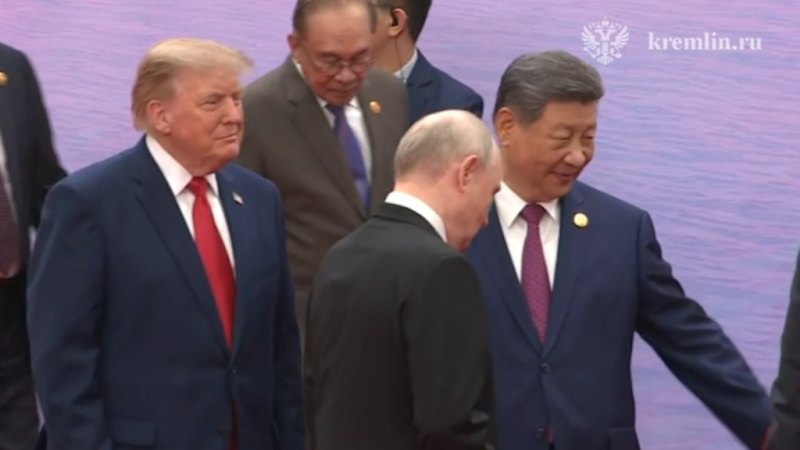
Two major diplomatic events unfolded simultaneously across Eurasia, exposing the widening fracture in global alliances. In Beijing, a high-stakes summit concluded with vague promises and zero structural breakthroughs on trade or security, while thousands of miles away in Berlin, European leaders doubled down on military and financial commitments to Ukraine. Together, these parallel outcomes confirm a stark reality. The era of strategic ambiguity is dead, replaced by hardened geopolitical blocs where economic interdependence no longer prevents security confrontation.
Diplomacy rarely fails with a loud bang. Usually, it dies in a room full of tired translators and carefully scrubbed communiqués. When the doors finally swung open at the conclusion of the Beijing summit, the international press corps was handed a document so thoroughly stripped of actionable commitments that it read more like a calendar invite than a geopolitical agreement. Observers looking for concrete progress on market access, industrial overcapacity, or security guarantees found none.
At the exact same moment, the atmosphere in Berlin was entirely different. European officials, operating under the weight of prolonged conflict on their eastern flank, used the German capital as a staging ground to reaffirm unwavering support for Kyiv. The contrast between the two capitals could not be sharper. While Beijing offered carefully calibrated inertia, Berlin delivered hard pledges of ammunition, air defense, and long-term reconstruction capital.
To understand why these two events collided in the global consciousness, you have to look past the podiums and examine the underlying mechanics of modern statecraft.
The Anatomy of a Stalled Summit in Beijing
When major powers gather in the Chinese capital, the choreography is always immaculate. Handshakes are timed to the second. The banquet halls are spotless. Yet, beneath the surface of protocol, the structural friction between Beijing and Western economies has reached a point where traditional diplomacy can no longer bridge the gap.
The core issue is simple. China's economic model relies heavily on state-directed manufacturing and export-led growth to offset domestic sluggishness, particularly in its battered property sector. Western nations, facing their own industrial anxieties, view this surge of subsidized green technology, electric vehicles, and steel not as healthy competition, but as an existential threat to their domestic manufacturing bases.
During the summit, visiting delegations pressed for verifiable mechanisms to curb industrial overcapacity and level the playing field for foreign firms operating inside China. Beijing's response followed a familiar playbook. Officials offered rhetorical commitments to "high-level opening up" and mutual respect, while flatly rejecting any binding caps on production or structural reforms to state subsidies.
The stalemate extended well beyond trade ledgers. On security matters, particularly regarding Beijing's "no-limits" partnership with Moscow, Western diplomats hit a brick wall. For months, European and American officials have argued that Chinese exports of dual-use components—microelectronics, machine tools, and optics—are keeping the Russian defense industrial base afloat.
Beijing maintains that it is merely conducting normal trade with a neighbor and refuses to be drawn into what it characterizes as a European security crisis. Without movement on dual-use exports or genuine pressure on Moscow to halt hostilities, any broader diplomatic reset remains impossible. The summit ended with little new because neither side possessed the political room to compromise on its core survival strategy.
Why Berlin Became the Center of European Resolve
While Beijing practiced the art of strategic delay, Berlin was forced to confront immediate material realities. For decades, German foreign policy rested on a comfortable triad: cheap Russian energy, lucrative Chinese export markets, and the American security umbrella. Every single pillar of that strategy has collapsed or severely eroded.
The gathering in Berlin was not an exercise in diplomatic vanity; it was a crisis management session disguised as a solidarity conference. European leaders understand that their own security architecture is inextricably tied to the outcome in Ukraine. If Kyiv falters due to a lack of artillery shells or air defense interceptors, the deterrence posture of the entire European continent unravels.
In Berlin, the discussions centered on three urgent operational realities:
- Industrial Mobilization: European defense contractors are still struggling to match the sheer volume of ammunition required for high-intensity attritional warfare. Leaders used the Berlin meetings to finalize multi-year procurement contracts designed to give weapons manufacturers the financial certainty needed to build new production lines.
- Air Defense Integration: With Ukrainian energy infrastructure under relentless bombardment, European capitals scrambled to locate spare Patriot, IRIS-T, and SAMP/T batteries, alongside the interceptor missiles needed to keep them firing.
- Financial Ring-Fencing: Recognizing that domestic political shifts across Western democracies could threaten future aid packages, European officials worked to lock in long-term funding mechanisms, including leveraging the windfall profits from frozen Russian sovereign assets.
The message from Berlin was unmistakable. Europe is attempting to transition from ad-hoc emergency donations to a sustained, institutionalized war economy capable of supporting Ukraine indefinitely. It is a slow, expensive, and politically fraught process, yet the alternative—a victorious Russia on NATO's doorstep—is viewed by European planners as infinitely more costly.
The Invisible Thread Connecting Both Capitals
On paper, a trade-heavy summit in East Asia and a security conference in Central Europe appear to be separate tracks. In practice, they are two sides of the exact same coin. The deadlock in Beijing directly fuels the urgency in Berlin.
Consider the supply chains powering the war in Ukraine. When European intelligence agencies examine the wreckage of Russian drones and missiles recovered on the battlefield, they consistently find components manufactured in Asia and routed through complex networks of shell companies. While Beijing avoids supplying complete, lethal weapons systems directly to Moscow—a move that would trigger devastating secondary sanctions—the flow of commercial technology continues largely unimpeded.
This dynamic places European leaders in an agonizing bind. Germany, in particular, remains deeply entangled with the Chinese market. Major German automakers, chemical giants, and machinery exporters still derive a massive portion of their global profits from China. Cutting ties overnight would trigger an immediate economic recession in Europe's largest economy.
Yet, continuing business as usual with Beijing while simultaneously spending billions to counter a Russian military propped up by Chinese trade is strategically incoherent. The events in Berlin and Beijing highlight this exact contradiction. European leaders are trying to compartmentalize their foreign policy—de-risking their supply chains and confronting security threats on one front, while keeping commercial channels open on another.
Beijing understands this European vulnerability and exploits it masterfully. By dangling market access in front of individual European corporations while refusing concessions to Brussels or Berlin, Chinese diplomats aim to fracture European unity from the inside out. If European capitals cannot agree on how to handle China's economic challenge, they will struggle to present a united front on global security.
The Limits of Diplomatic Theater
Veteran observers of international relations know that summits rarely produce miracles. Breakthroughs are negotiated in quiet backchannels months in advance; public gatherings merely formalize what has already been agreed upon. When a major summit ends with "little new," it is a public admission that the backchannels have run dry.
The failure to generate momentum in Beijing carries immediate consequences. First, it accelerates the fragmentation of global trade. Without negotiated agreements on subsidies and market access, Western nations will increasingly rely on unilateral tariffs, investment screening, and export controls. We are moving away from a single globalized market governed by World Trade Organization rules toward regionalized trading blocs defined by security alignments.
Second, the diplomatic impasse hardens positions on both sides. In Beijing, the lack of Western concessions reinforces the narrative that the United States and its allies are determined to contain China's rise regardless of what Beijing does. In European capitals, China's refusal to use its immense economic influence to restrain Moscow convinces skeptics that Beijing is no longer a neutral actor, but a tacit enabler of European instability.
Meanwhile, the commitments made in Berlin face their own severe tests. Pledging billions of euros and signing procurement contracts is one thing; delivering hardware to the front lines in time to alter the military balance is another.
Europe's defense industrial base suffered decades of underinvestment following the Cold War. Supply chains for specialized explosives, propellants, and precision guidance systems remain dangerously thin. Even with political will solidified in Berlin, physical bottlenecks—from shortages of skilled machinists to delays in raw material sourcing—cannot be solved by diplomatic declarations alone.
A New Era of Hard Choices
The split-screen reality of Beijing and Berlin marks the end of an era where mid-sized and major powers could hedge their bets indefinitely. For years, nations across Europe and Asia operated under the assumption that economic integration would naturally smooth over ideological and security disputes. Trade was supposed to be the ultimate stabilizer.
That theory has collapsed under the weight of geopolitical reality. Today, security imperatives override commercial logic. When Berlin backs Ukraine, it is making a calculated decision to prioritize territorial integrity and deterrence over short-term economic comfort. When Beijing lets a major summit end in stalemate, it is signaling that domestic industrial dominance and its strategic alignment with Moscow outweigh the benefits of smooth relations with the West.
Neither path offers an easy exit. Europe faces years of elevated defense spending, sluggish growth, and intense political pressure from populist movements that question the cost of supporting Kyiv. China confronts mounting tariff walls, capital flight, and an increasingly unified Western front determined to blunt its export machine.
The diplomats have packed their bags, the motorcades have cleared the streets of both capitals, and the press releases have been filed away. What remains is a far more dangerous and predictable world, stripped of polite illusions, where power is measured not by the warmth of a summit handshake, but by factory output and the willingness to bear the cost of confrontation.