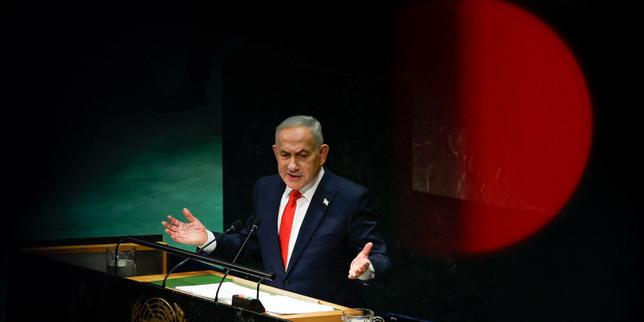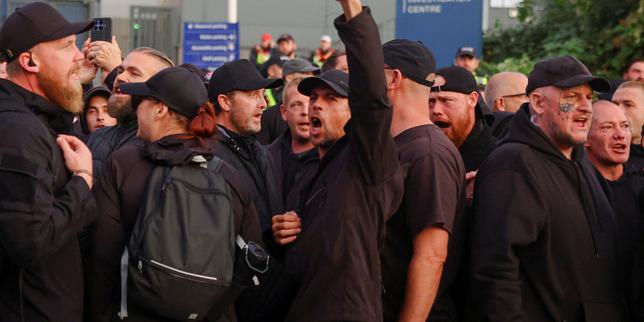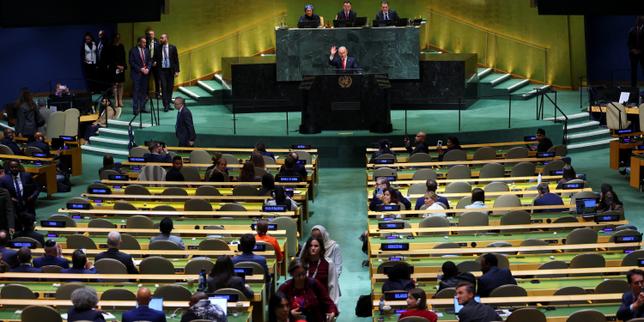
When world leaders gather in New York for the United Nations General Assembly, diplomacy usually wears its most polished mask. Speeches are measured, alliances are nodded to, and controversial realities are carefully smoothed over for the global press corps. But every once in a while, a speech drops all pretense. Benyamin Netanyahu took the podium at the UN and delivered an address that completely ignored international consensus on one of the most volatile issues in the Middle East, choosing instead to brush off surging settler violence in the West Bank as a minor, overblown problem.
If you followed the headlines from that day, you saw the standard split screen of international politics. On one side stood dozens of member states, humanitarian organizations, and international monitors warning that the West Bank was slipping past a tipping point. On the other side stood the Israeli Prime Minister, leaning hard into a narrative that frames these escalating incidents as isolated scuffles rather than a systemic campaign of intimidation and displacement. Read more on a similar subject: this related article.
Let's look past the diplomatic theater and examine what is actually happening on the ground, why Netanyahu's framing doesn't match reality, and why this moment at the UN matters so much for the future of the region.
The Speech That Defied the Room
Netanyahu's appearance at the UN wasn't designed to win over critics in Western capitals or appease international bodies. It was built for a domestic political audience and a very specific ideological base. By standing before the global assembly and minimizing the scale of extremist violence carried out by settlers against Palestinian communities, he signaled total alignment with the right wing of his governing coalition. More analysis by The Guardian highlights similar perspectives on the subject.
For months, foreign ministries across Europe and North America have grown increasingly vocal. They've imposed visa bans and asset freezes on radical settlers, pushing back against a trend that has seen olive groves torched, homes smashed, and entire families driven from their ancestral villages. Yet, from the UN stage, these concerns were dismissed. The message was simple: look away, downplay the friction, and trust that local security forces have the situation under control.
Except they don't. Or rather, they often act as observers while radical groups operate with near total impunity.
What the Data and the Ground Reality Actually Show
When a leader of a state minimizes violence, you have to look at the numbers compiled by neutral monitors. Organizations like the United Nations Office for the Coordination of Humanitarian Affairs (OCHA) have documented a sharp, continuous spike in settler attacks since late 2023, setting records that dwarf previous years.
These aren't just random rock-throwing incidents. They follow a clear, highly organized pattern.
- Small groups of ideological extremists establish unauthorized outposts near Palestinian farming communities.
- Nightly harassment, intimidation of shepherds, and destruction of water tanks begin.
- Physical attacks escalate until families feel they have no choice but to pack up and abandon their homes.
- The land is subsequently absorbed into the expanding perimeter of nearby official settlements.
When Netanyahu downplays this at the UN, he is glossing over a process of creeping annexation that is happening in real-time. It's a strategy designed to alter the geographical and demographic reality of the West Bank so thoroughly that a viable Palestinian state becomes an absolute impossibility.
The Domestic Political Calculus
Why would a prime minister risk severe diplomatic fallout with close allies like the United States and the European Union just to defend radical fringe groups? The answer lies in the fragile math of Israeli coalition politics.
Netanyahu's political survival depends entirely on hardline ministers like Bezalel Smotrich and Itamar Ben-Gvir. Both men champion the settler movement, control key ministries or civil administration powers, and have openly advocated for expanding sovereignty across the West Bank. If Netanyahu were to crack down hard on settler violence or acknowledge its systemic nature, his coalition would instantly collapse.
So, he chooses appeasement at home and defiance abroad. He tells the UN that criticism is biased, that the media exaggerates the clashes, and that Israel is merely defending itself on multiple fronts. It's a politically convenient script, but it completely ignores the long-term strategic damage it inflicts on Israel's standing in the world.
Why This Rhetoric Accelerates Regional Isolation
Diplomacy has consequences, and words spoken at the UN carry weight. By openly minimizing human rights abuses and property destruction in the West Bank, the Israeli government makes it exponentially harder for friendly nations to provide diplomatic cover at the International Court of Justice or the UN Security Council.
Western leaders are finding it increasingly difficult to defend Israeli policy when the Prime Minister himself refuses to acknowledge documented abuses happening right in front of international observers. Sanctions on radical settlers, once unthinkable from traditional allies, are now becoming routine policy in Washington, London, and Brussels.
The disconnect between Netanyahu's UN rhetoric and the daily terror experienced by Palestinian villagers creates a diplomatic vacuum. Instead of de-escalating tensions, speeches like this pour fuel on a fire that is already threatening to consume the entire region. Until leaders are willing to confront uncomfortable truths rather than sweep them under the rug at global summits, the cycle of displacement and retaliation in the West Bank will only accelerate.