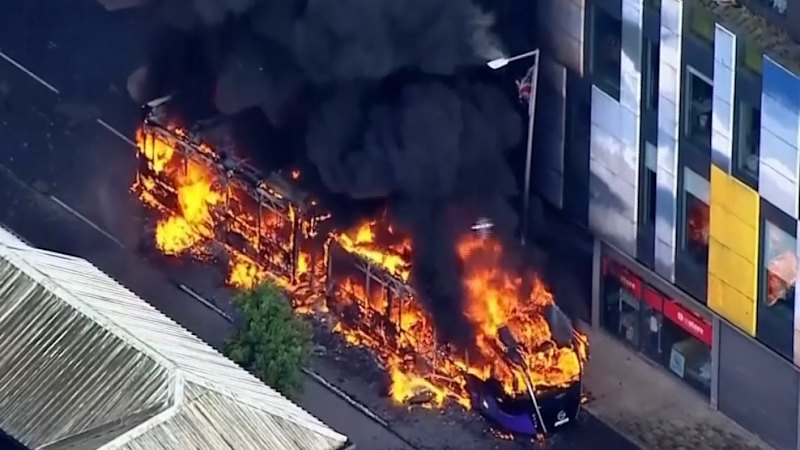
A Glider bus burning on the Newtownards Road isn't just another bad headline for Northern Ireland. It's a flashpoint. On Tuesday night, sections of Belfast erupted into chaotic violence, with masked figures torching vehicles, looting businesses, and attacking homes. This wasn't a random outburst. It was the direct fallout of a horrific knife attack on Monday night in north Belfast, which online agitators rapidly weaponized to spark anti-immigration riots.
If you're trying to make sense of how a horrific local crime turned into a city in flames within 24 hours, you need to look at the anatomy of how modern unrest spreads. The timeline moves fast, driven by graphic viral footage and high-profile online personalities pushing a specific narrative before the facts are even fully established by the police. Discover more on a connected issue: this related article.
The Spark That Lit the Newtownards Road
Everything traces back to Monday night, June 8, around 10:30 PM outside a block of flats on Kinnaird Avenue. A man in his 40s was subjected to a brutal, stomach-churning stabbing. The injuries were devastating, particularly to his face, neck, and eyes. Bystanders risked their own lives to intervene. One local man, Maitiu Mag Tighearnan, used a hurling stick to hit the attacker multiple times, successfully forcing him off the victim.
The Police Service of Northern Ireland (PSNI) moved quickly, arresting a 30-year-old man at the scene and recovering a kitchen knife. By Tuesday, the suspect was officially charged with attempted murder, possession of a bladed article in public, and making threats to kill. More analysis by BBC News highlights similar views on this issue.
Then came the detail that triggered the powder keg. Police Chief Constable Jon Boutcher confirmed the suspect is a Sudanese national who arrived in Belfast from Dublin in February 2023 to claim asylum. While the Home Office confirmed he had leave to remain until 2028 and no prior record on national security databases, the narrative online had already escaped official control.
How the Far Right Triggered a Riot Online
A graphic video of the assault captured on a phone circulated rapidly on social media. It didn't take long for figures outside Northern Ireland to jump on the footage. Far-right agitator Stephen Yaxley-Lennon, who goes by Tommy Robinson, shared the video alongside immediate calls for street protests. High-profile figures like Reform UK’s Zia Yusuf blamed the event on mainstream political immigration policies, while X owner Elon Musk amplifed lists of protest locations, telling his followers that change would only come by protesting loudly and repeatedly.
By Tuesday evening, the digital anger turned into physical destruction on the streets of Belfast.
- East Belfast: A Translink Glider bus was hijacked and set on fire on the Newtownards Road, lighting up the night sky and forcing the immediate suspension of all evening bus and rail services across the city.
- Shankill Road: Masked youths launched fireworks, looted two mobile phone shops, and torched a local African-owned business.
- Lendrick Street: Fires spread to residential properties, forcing emergency services to rescue terrified families from their burning homes using PSNI vehicles.
- Wider Unrest: Pockets of arson and minor gatherings flared up outside the capital, including vehicle fires in Newtownabbey and smaller assemblies in Antrim, Bangor, and Ballymena.
Local leaders didn't hold back in their condemnation. First Minister Michelle O’Neill called the sight of masked men burning families out of their homes "disgusting cowardice." North Belfast MP John Finucane called the scenes "shameful," pointing out that local families and businesses were the ones paying the price for lawless disorder. Justice Minister Naomi Long noted the sheer irony of rioters destroying the exact communities they claimed they were trying to protect.
The Real Impact on Local Communities
While political figures issue statements, the immediate reality for people living in these neighborhoods is pure fear. Belfast's immigrant communities spent Tuesday evening bracing for impact.
On Sandy Row, Sudanese business owners shuttered their storefronts with steel security grates by mid-afternoon, advising staff and families to stay locked indoors. The Belfast Islamic Centre took the extraordinary step of cancelling its evening prayers, advising its congregation to head straight home, avoid spreading unverified rumors, and stay tuned to official police alerts.
This level of fear shows exactly how these incidents operate. A single violent crime is leveraged to collective punishment against an entire demographic, leaving local residents to pick up the pieces of broken windows and burnt-out storefronts.
What Happens Next
If you live in or travel through Belfast over the coming days, safety means staying informed through official channels rather than social media rumors.
Keep a close eye on Translink’s official social channels before attempting to travel. While management intended to resume bus and rail services on Wednesday morning, ongoing visual assessments of street safety will dictate real-time route diversions.
The 30-year-old suspect is scheduled to appear at Belfast Magistrates’ Court on Wednesday, June 10. Expect an exceptionally heavy police presence around the court precincts and known flashpoint areas across the city. The PSNI has already committed to significantly increasing boots on the ground to deter copycat disorder and protect vulnerable neighborhoods from further targeted arson attacks. Stick to verified news outlets, avoid gathering crowds, and report any suspicious activity directly to the authorities.