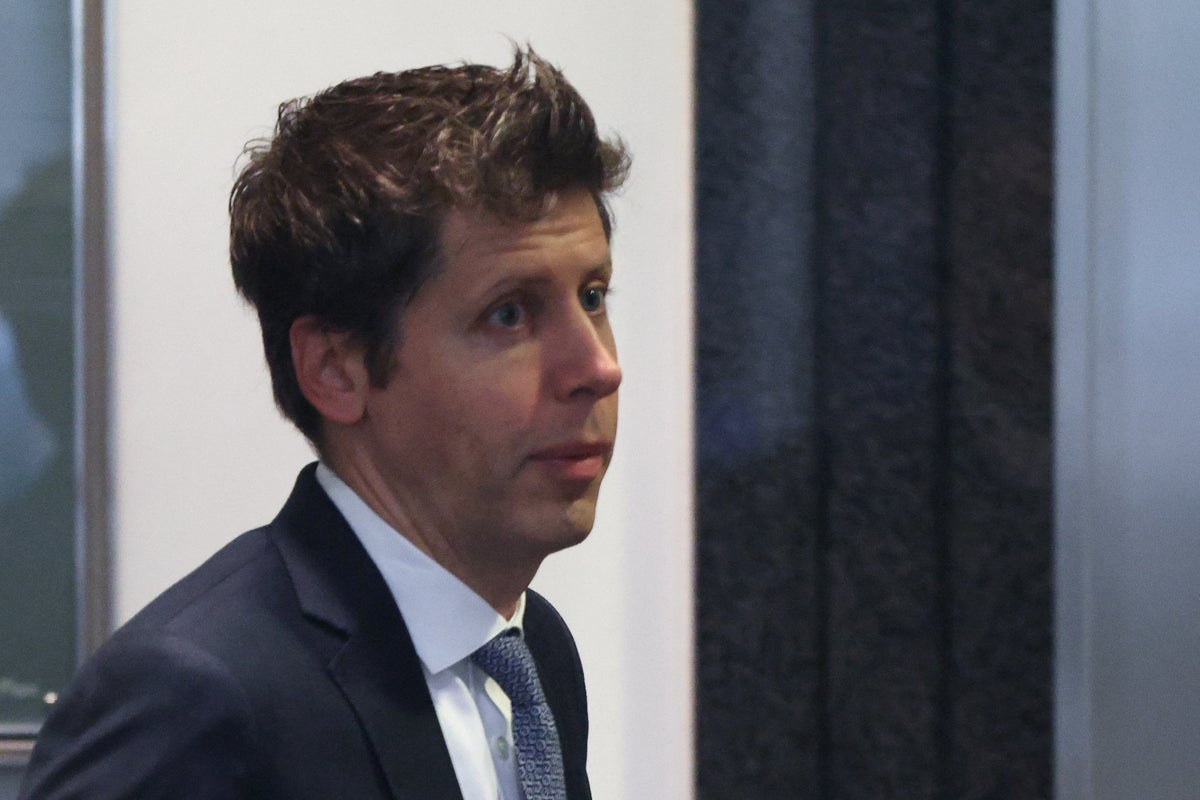
The internal friction that defined the early years of OpenAI has finally spilled into the public record through sworn testimony. Sam Altman recently detailed a fundamental power struggle with Elon Musk that nearly ended the organization before it achieved its first major breakthrough. At its core, the dispute wasn't just about money or research directions. It was a fight for total structural control. Musk reportedly pushed for a merger with Tesla or a "majority equity interest" that would have effectively turned the non-profit lab into an extension of his industrial empire. When the board refused to hand over the keys, the resulting fallout set the stage for the most aggressive corporate rivalry in modern history.
This is the reality of the OpenAI origin story. It was never the smooth, altruistic collaboration the marketing materials suggested. Instead, it was a high-stakes chess match between two of the most ambitious men in Silicon Valley, both of whom recognized that whoever controlled the first general-purpose artificial intelligence would likely control the future of the global economy.
The Takeover Attempt that Failed
In the beginning, OpenAI functioned as an idealistic counterweight to Google’s dominance. The mission was simple: build safe AI and give the benefits to the world. But idealism is expensive. By 2017, the sheer computational costs of training large-scale models were becoming apparent. The organization needed billions, not millions.
Musk saw this financial gap as an opening. According to recent testimony and internal communications, he proposed a structure where he would take the reins as CEO and fold the operation into Tesla. His argument was that a non-profit could never compete with a titan like Google without the massive capital and engineering resources of a multi-billion-dollar car company. He wasn't just offering a partnership. He was demanding a consolidation.
The board, led by Altman and Greg Brockman, balked. They realized that folding OpenAI into Tesla would mean the "open" part of the name would become a relic. The mission would be subservient to Tesla's quarterly earnings and Musk’s personal whims. This rejection was the moment the relationship fractured beyond repair. Musk walked away, cited a conflict of interest with Tesla’s own AI development, and stopped his funding.
The Shift to a For Profit Model
With Musk out and the bank account dwindling, Altman faced a binary choice: let the project die or find a new way to fund it. The result was the "capped-profit" entity. It was a controversial move that many critics, including Musk himself, have called a betrayal of the original charter.
However, the industry perspective is more nuanced. To build the infrastructure required for GPT-4 and beyond, OpenAI needed access to the kind of capital only venture capitalists and Microsoft could provide. They created a structure where early investors could earn a significant return, but any profit beyond a certain point would revert to the non-profit parent company.
It was a messy, experimental compromise. It allowed OpenAI to secure a $13 billion partnership with Microsoft, giving them the raw compute power necessary to dominate the market. Musk has since used this pivot as the primary weapon in his legal and public relations assault, claiming that what was once an open-source charity is now a "closed-source, maximum-profit subsidiary" of a legacy tech giant.
Why the Control Dispute Matters Now
The reason this historical bickering is making headlines again isn't just about hurt feelings. It's about the legal definition of a non-profit’s "founding mission." If Musk can prove in court that Altman and the board intentionally misled donors about their intentions to remain a non-profit, it could jeopardize OpenAI's tax status and its current corporate structure.
More importantly, it highlights the danger of "founder-god" syndrome in the tech sector. Musk’s insistence on control suggests he believed only his specific vision could steward the birth of AGI safely. Altman’s counter-maneuver to partner with Microsoft suggests he believed that scale at any cost was the only way to win. Both men operate on the assumption that they are the only ones capable of managing a technology that could theoretically replace human labor.
The Hidden Costs of the Rivalry
The split didn't just create two competing companies; it created a talent war that has inflated the cost of AI development to absurd levels. After leaving OpenAI, Musk founded xAI, specifically designed to challenge Altman's path. He has since spent billions on GPUs and recruited heavily from the very lab he helped start.
This competition has accelerated the release of models, perhaps at the expense of safety testing. When two entities are locked in a "winner-take-all" race fueled by personal animosity, the incentive to slow down and consider the societal impact of a release vanishes. Every milestone Altman reaches is a sting to Musk’s ego, and every lawsuit Musk files is an obstacle to Altman’s roadmap.
The documents surfacing now show that the "safety" arguments both sides use are often used as shields for business interests. Musk claims he wants to save humanity from "woke" AI; Altman claims he is building a tool for global abundance. Yet, the underlying data shows a much more traditional battle for market share and intellectual property.
Beyond the Legal Theater
The court filings and public testimonies provide a rare window into how these titans actually view the technology they are building. They don't see it as a software product. They see it as a sovereign power.
Musk’s early demand for a "majority equity interest" proves that he viewed OpenAI not as a public good, but as a strategic asset. Altman’s decision to move toward a for-profit structure proves he viewed the non-profit status as an unsustainable shell. Neither side is entirely "innocent" in the context of the original 2015 manifesto.
The legal battle will continue to drag on, but the verdict in the court of public opinion is already becoming clear. The era of the "unbiased, altruistic AI lab" is over. We are now in a period of intense corporate consolidation where the most powerful technology in history is being shaped by a personal grudge between a billionaire who wanted to own it and a CEO who decided he didn't need the billionaire to win.
The stakes are far higher than a breach of contract suit. If the foundation of the most significant AI company in the world was built on a power struggle rather than a shared ethical framework, we have to ask ourselves what that means for the safety of the systems they are currently deploying. When the history of this decade is written, the Altman-Musk split will be seen as the moment the AI industry traded its soul for a seat at the table of global power.