The living room is dark, save for the blue tint of a television screen ticking down the seconds toward 9:00 p.m. An elderly veteran in Ohio sits on his worn recliner, expecting the president to talk about the escalating situation with Iran, an anxiety that has kept him awake for weeks. In another town, a young mother folds laundry, waiting to see if a national emergency will disrupt her family’s weekend plans. They have given the television their most precious commodity: their undivided attention.
But this time, the red broadcast light carries a different weight. The rumor mill in Washington has been spinning for days. The address is not about a sudden foreign crisis or a breakthrough economic policy. Instead, reports suggest the commander in chief is using the institutional gravity of a prime-time slot to litigate the 2020 election all over again, spinning familiar, unproven theories about voting machines and systemic fraud.
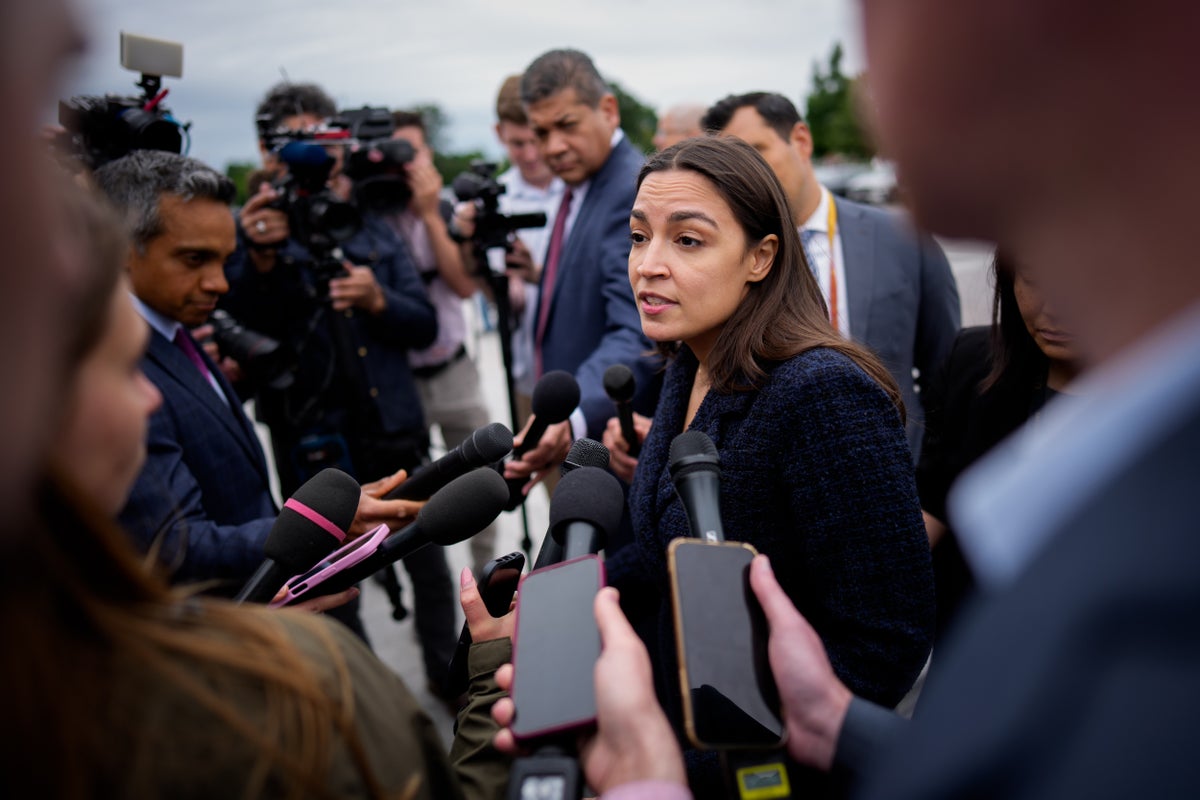
In the middle of this high-stakes broadcasting dilemma, Representative Alexandria Ocasio-Cortez stepped directly into the path of the incoming transmission.
Speaking to a reporter in the hallways of the Capitol, the New York Democrat did not mince words. She issued a direct challenge to the executives running the nation’s largest media companies. Do not switch on the cameras. Do not hand over the airwaves.
"I think we have an ethical obligation not to air things that undermine our elections and are not rooted in fact," Ocasio-Cortez said.
It was a statement that cut straight through the standard, procedural arguments of journalism ethics and landed like a brick in the boardrooms of Manhattan.
For nearly a century, the relationship between the White House and the major television networks operated on a gentleman’s agreement. If the president asked for time to speak to the American people, the networks gave it to them. It was a practice born out of necessity. When Franklin D. Roosevelt spoke during the dark days of World War II, or when Lyndon B. Johnson announced the signing of the Voting Rights Act, the country needed to listen. The airwaves belonged to the public, and the president was the steward of the public interest.
But that agreement assumed a shared baseline of reality.
Now, the gatekeepers are paralyzed. To grant the White House free rein over the airwaves means risking the spread of election misinformation to millions of vulnerable households simultaneously. To deny the request means facing the wrath of a administration that has already shown a willingness to challenge the independent status of regulatory bodies like the FCC, not to mention the fury of millions of viewers who believe the media is censoring their leader.
Consider the impossible choice facing a network executive on a Tuesday evening.
If they carry the address live, they are complicit in amplifying claims that have been thrown out of dozens of courts. They become a megaphone for grievances. If they choose to cut away the moment the rhetoric veers into falsehood, they look like partisan censors, fueling the very distrust they are trying to cure. If they refuse to air it entirely, opting to summarize the speech later with rigorous fact-checking, they risk normalizing the behavior by treating a presidential address like a standard political rally.
There are no good options. There is only a blinking cursor on an empty programming schedule.
The true conflict is not between a congresswoman and a president. It is a battle over the nature of truth in a fractured digital age. When the presidency itself is used as a vehicle to challenge the legitimacy of democracy, the old rulebook of political journalism does not just bend. It shatters.
The executives at the major broadcast networks have remained largely silent, refusing to confirm their plans as the deadline approaches. The White House press secretary has dismissed the criticism as mere speculation from anonymous sources, urging everyone to tune in because "nobody knows yet what President Trump will ultimately say."
But the public knows the rhythm of this song by heart.
Tomorrow night, millions of Americans will sit in front of their screens, fingers hovering over their remotes. The true power no longer resides just in the Oval Office or the network control rooms. It rests in the hands of the people deciding whether to leave the channel on, or to turn the screen completely dark.