When a barricaded-suspect standoff ends with two fatalities inside a residence, standard breaking news reduces the sequence to a timeline of sirens, gunfire, and a SWAT breach. That chronological summary misses the operational mechanics that turn a domestic or localized firearm threat into a dual-fatality scene before tactical teams ever cross the threshold.
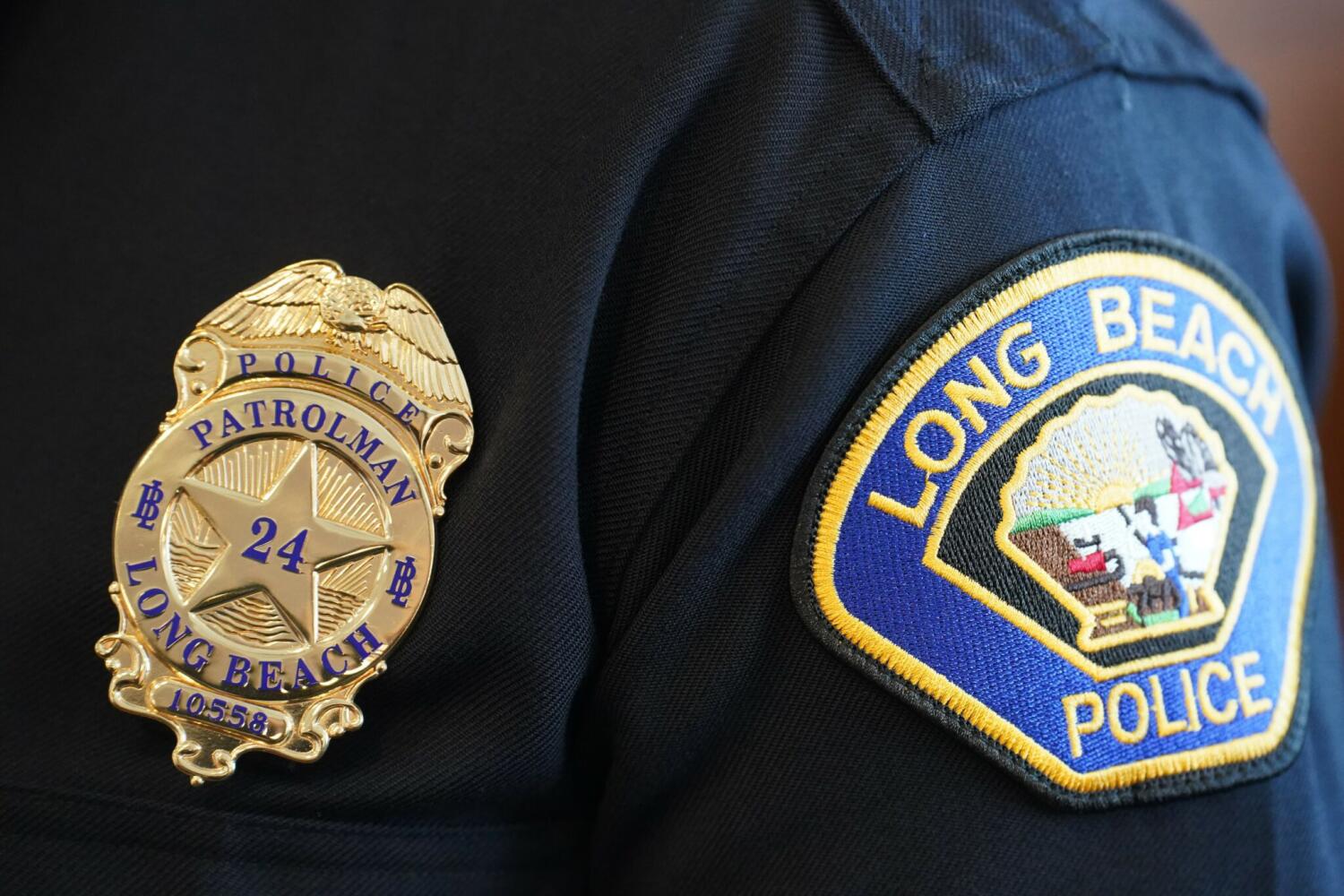
Reporting around the October 2026 Long Beach Police standoff—in which officers responded to early-morning gunfire near East 37th Street and Gardenia Avenue, exchanged shots with a barricaded occupant, and later found two men dead inside with upper-body gunshot wounds—illustrates the limits of event-driven coverage. Police confirmed multiple firearms inside, noted officers wore body-worn cameras, and opened a multi-level investigation to determine who fired the fatal shots or whether any wounds were self-inflicted. Thin breaking dispatches state what was found without explaining how closed-room dynamics, asymmetric information, and tactical containment interact. If you found value in this article, you should read: this related article.
Understanding how two deaths occur during a police standoff requires separating established incident facts from analytical hypotheses. Known facts include the initial gunfire report, the threat and exchange of shots at the perimeter, the deployment of a Special Weapons and Tactics unit, the recovery of multiple weapons, and the discovery of two deceased men inside. Educated hypotheses cover unconfirmed internal sequences prior to officer arrival, shooter-victim roles inside a sealed structure, and causal attribution between external officer gunfire, internal interpersonal violence, and self-inflicted rounds.
Deconstructing the Standard Standoff Narrative
Conventional incident reporting relies on a simple linear chain: call received, officers arrive, shots fired, SWAT called, bodies found. That structure treats the standoff as a single continuous event rather than two distinct phases separated by an information barrier. For another look on this event, see the recent update from USA Today.
The first phase occurs inside the structure before or during initial patrol contact. When a caller reports gunshots at night, patrol units enter an environment with high acoustic ambiguity and zero visual confirmation of interior occupancy. If an armed individual confronts responding officers and fires, immediate disengagement and perimeter establishment protect officers from close-quarters ambush while shifting control to specialized units.
The second phase is containment and delayed entry. Once a perimeter is set, the interior becomes a closed system. Outside observers hear only sporadic shots, radio traffic, or silence, while forensic reconstruction must wait until tactical entry secures the scene and investigators process ballistics, wound trajectories, and digital or video records.
Standard coverage rarely maps three structural flaws in how early reports are read:
- Premature causal linking: Readers often assume a dual fatality found after a police gunfight resulted solely from exchange fire with officers, even when investigators explicitly leave open internal homicide or suicide.
- Black-box interior bias: Treating the house as a single actor hides whether one occupant shot another before police arrived, during the standoff, or prior to a self-inflicted shot.
- Static evidence framing: Mentioning body-worn cameras and multiple firearms early creates expectations of instant answers, whereas ballistics comparison, autopsy findings, and video synchronization take weeks or months.
The Four Causal Drivers of Dual-Fatality Standoffs
When two men are found dead inside a barricaded residence following an armed police response, the outcome typically reflects a combination of four operational and behavioral mechanisms. None of these mechanisms can be confirmed from initial press releases alone, yet each explains a distinct pathway to a two-death outcome.
Pre-Perimeter Violence and Escalation
In many residential firearm incidents, the lethal event inside begins before patrol cars reach the block. A dispute or crisis between two occupants can produce initial gunshots—the very sound that prompts a neighbor's call—leaving one person fatally or mortally wounded before a perimeter forms. If the surviving armed person then confronts arriving officers or barricades inside, the standoff begins atop an already-completed or unfolding internal shooting.
Escalation During Active Contact
When a barricaded occupant fires at officers and an officer returns fire, external rounds enter a structure with drywall, framing, windows, and interior partitions. Projectiles can deflect, penetrate light barriers, or strike targets unseen from the street. At the same time, an armed occupant already in crisis may turn a weapon on a second person inside or on themselves during or immediately after the exchange.
Containment Duration and Crisis Decay
Tactical doctrine prioritizes life preservation, containment, and negotiation over hasty dynamic entry when an armed suspect is isolated inside a residence. Extending containment reduces immediate risk to responding officers and nearby neighbors, but time inside a sealed space affects occupants differently. An individual who has already harmed another person, faces imminent arrest, or experiences acute psychological collapse may reach a point of self-harm during the containment window, resulting in two deaths by the time entry occurs.
Forensic Attribution Friction
Determining how two deaths occurred inside a multi-weapon scene requires reconciling four separate evidence streams:
- Trajectory and range analysis: Matching bullet paths, entry and exit angles, and stippling or soot patterns to determine shooting distance and direction.
- Firearm and ballistic matching: Comparing spent casings, recovered projectiles, and rifling marks against every firearm seized inside and every duty weapon discharged outside.
- Body-worn camera and audio review: Aligning perimeter video and shot timing with interior findings to establish whether external gunfire coincided with interior shots or occurred earlier.
- Medical and toxicology findings: Establishing exact wound lethality, sequence of injuries if multiple wounds exist, and physiological factors.
The Cost Function of Tactical Containment
Every barricaded-suspect standoff operates under a trade-off between immediate exposure risk and information latency. Agencies cannot maximize both speed of resolution and certainty of internal conditions simultaneously.
Fast entry reduces the time a wounded victim inside might wait for medical care and shortens neighborhood disruption. Yet fast entry into an unconfirmed, armed interior sharply increases the probability of close-range gunfire involving officers, hostages, or occupants. Conversely, patient containment and structured negotiation lower immediate kinetic risk to street perimeters, while lengthening the period during which internal events remain unobserved.
This trade-off also creates public accountability friction. Residents and oversight bodies expect rapid clarity after a police shooting, especially when two people are dead and multiple guns are recovered. However, releasing unverified conclusions about who shot whom before forensic testing concludes risks damaging public trust if later ballistics or camera reviews contradict early impressions. Disciplined agencies absorb short-term communication criticism to protect evidentiary integrity.
Operational Playbook for Analysts and Oversight Reviewers
Evaluating a barricaded-suspect fatality report without falling into speculation requires a structured review sequence. Analysts, journalists, and public-safety reviewers can apply five concrete checks whenever an incident like the Long Beach standoff surfaces:
- Separate contact events from discovery events: Distinguish clearly between shots fired at or by officers outside and the later discovery of deceased individuals inside after SWAT entry.
- Audit firearm counts against role claims: Note how many weapons were recovered inside and whether any discharge occurred outside, keeping open the possibility of single-shooter or multi-shooter dynamics until ballistics report out.
- Track time gaps between initial call and entry: Compare the reported start time of the call or gunfire against entry timing to understand how long the interior remained sealed.
- Check review jurisdiction and transparency commitments: Identify which internal units, external prosecutors, or civilian oversight bodies will examine the body-worn camera footage and shooting investigation.
- Avoid inferring motive from location alone: Do not assume domestic dispute, targeted attack, or self-harm without official confirmation, as residential standoffs arise from varied crisis and criminal triggers.
This analytical framework has clear boundaries. Without access to autopsy reports, crime-scene diagrams, ballistic comparisons, and unedited camera recordings, no outside observer can assign guilt or cause of death for a specific individual inside the home. Furthermore, early police briefings naturally reflect initial operational knowledge rather than completed investigative findings, meaning early gaps in detail are structural features of active investigations rather than proof of concealment.
For municipal leaders, oversight boards, and incident analysts tracking these events, the highest-leverage move is to standardize post-standoff forensic status milestones—publishing clear timelines for ballistics testing, camera review release, and cause-of-death determinations rather than relying on one-off initial press statements. Clear milestone reporting closes the public information gap responsibly while preserving the evidentiary rigor required to get the final record right.