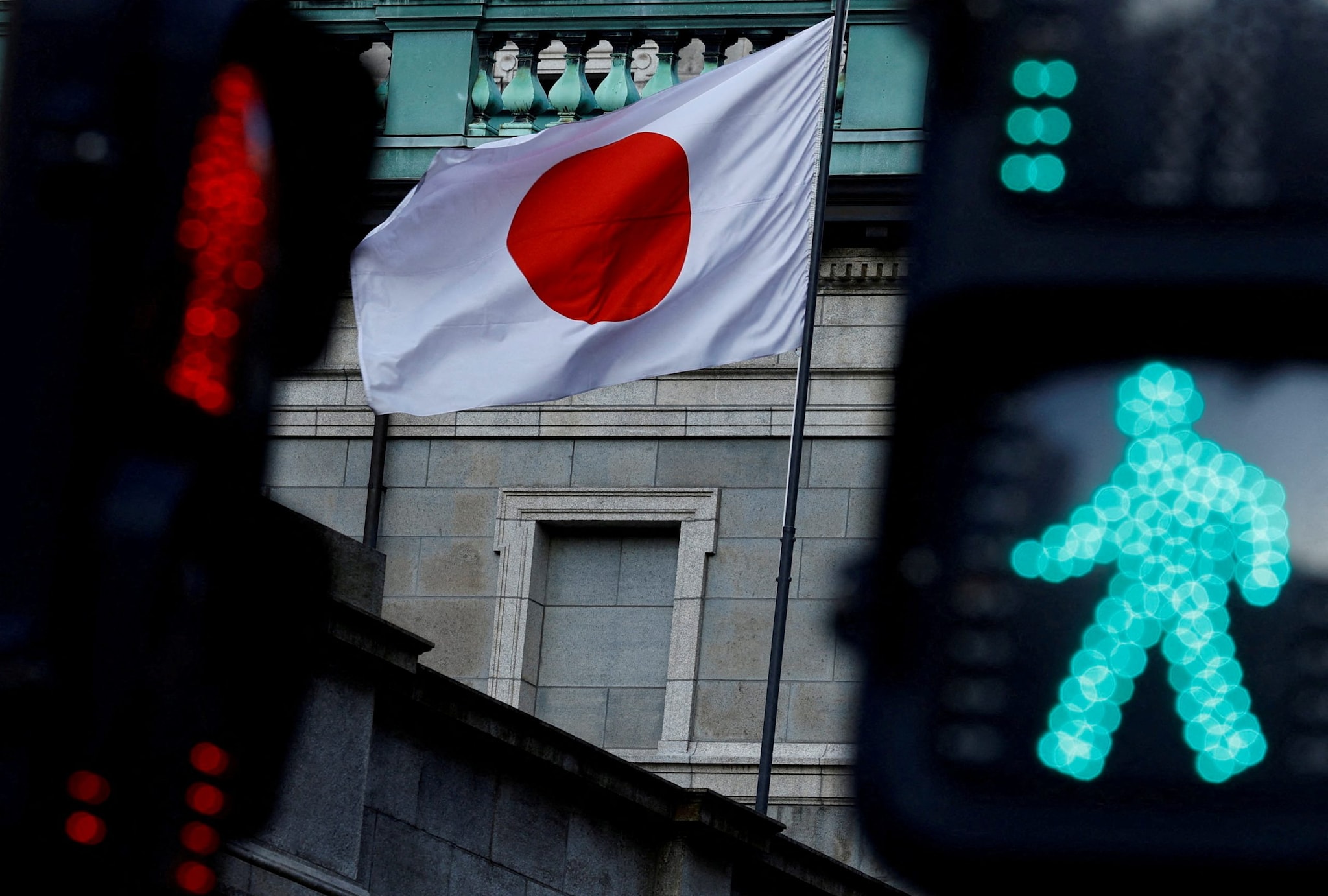
The financial press is currently obsessed with a phantom. Every headline suggests that the Bank of Japan (BoJ) is finally growing teeth, ready to bite back against inflation with a rate hike as early as next month. They point to "inflation risks" like they’ve discovered a new element on the periodic table.
They are wrong.
The consensus view—that Governor Kazuo Ueda is preparing a standard hawkish pivot to save the yen and cool the economy—is a shallow reading of a much more desperate situation. The BoJ isn't hiking because the economy is "too hot." They are hiking because they’ve painted themselves into a corner where the only way to maintain the illusion of control is to tinker with numbers that no longer move the needle for the average Japanese consumer.
The Myth of Cost-Push Stability
Mainstream analysts love to talk about "virtuous cycles." They argue that if the BoJ raises rates, the yen strengthens, import costs drop, and wage growth eventually catches up to create a stable, 2% inflation environment.
This is academic fantasy.
Japan’s current inflation isn't driven by a roaring engine of domestic demand. It is driven by the brutal reality of a weak currency and global commodity spikes. When you raise rates into cost-push inflation, you aren't "cooling" an economy; you are taxing a population already struggling with stagnant real wages. Since April 2022, real wages in Japan have spent more time in the red than a balance sheet at a failing startup.
Raising rates now is an admission of failure, not a sign of strength. The BoJ is trying to defend the yen without saying they are defending the yen, because "currency manipulation" is a dirty phrase in G7 meetings.
The Debt Trap That No One Wants to Discuss
Let’s talk about the math that makes central bankers sweat through their suits. Japan’s public debt-to-GDP ratio sits north of 250%. In a world of near-zero rates, that’s a manageable, albeit massive, pile of IOUs.
But move the needle even a fraction.
If the BoJ moves the short-term policy rate significantly, the cost of servicing that debt starts to eat the national budget alive. Every 100 basis point increase in rates eventually translates to trillions of yen in additional interest payments. This isn't just a "fiscal challenge." It’s a systemic threat to the solvency of the state.
The "consensus" suggests the BoJ has "room to maneuver." They don't. They have a narrow corridor between a currency collapse and a fiscal implosion. To suggest a series of hikes is coming is to ignore the gravity of Japan’s debt.
The Yen Is a Symptom Not the Disease
The market is screaming for the BoJ to "do something" about the yen. The logic goes like this: hike rates, close the spread with the U.S. Federal Reserve, and the yen recovers.
It’s a seductive lie.
The yen's weakness is a structural reflection of Japan’s declining industrial competitiveness and its demographic winter. You cannot fix a decades-long decline in productivity by moving interest rates from 0.1% to 0.25%. The Carry Trade—where investors borrow yen to buy higher-yielding assets elsewhere—isn't going to vanish because of a quarter-point tweak. As long as the Fed keeps rates significantly higher, the "Japan discount" remains the most profitable trade in the world.
I have watched traders try to front-run the BoJ for twenty years. They always overestimate the bank’s appetite for actual volatility. The BoJ exists to prevent volatility, not create it.
Why the "Inflation Risk" Narrative Is Flawed
Most articles cite the Consumer Price Index (CPI) staying above 2% as proof that the BoJ must act. This ignores the nuance of what makes up that CPI.
If you strip out fresh food and energy, the core-core inflation in Japan is far less terrifying. More importantly, the Japanese consumer behavior is fundamentally different from the American or European one. Decades of deflationary mindset have baked a "wait and see" approach into the national psyche.
When prices rise in Japan, people don't demand higher wages to keep spending; they stop buying. We are seeing this in the data. Private consumption has been incredibly soft. If the BoJ hikes into a period of falling consumption, they risk triggering a self-inflicted recession that would make the "Lost Decades" look like a boom time.
The Scenario the Market Ignores
Imagine a scenario where the BoJ hikes by 25 basis points next month. The yen sees a temporary spike. Then, the Fed hints at "higher for longer" because of sticky U.S. services inflation. The yen immediately gives up its gains and sinks further.
The BoJ is then left with:
- Higher debt servicing costs.
- A still-weak currency.
- A domestic economy suffocated by higher borrowing costs for small businesses.
This is the most likely outcome, yet the "insiders" are cheering for a hike like it’s a victory lap. It isn't. It's a Hail Mary pass from a quarterback who is already down three touchdowns in the fourth quarter.
Stop Asking if They Will Hike
The question isn't whether the BoJ can hike. They can. They might even do it just to prove they still have a pulse.
The real question is: Does it matter?
In a globalized financial system where the USD is the sun and everything else is a planet in orbit, the BoJ is a small moon. Their policy shifts are marginal. If you are looking at the BoJ to "save" the yen or "stabilize" the economy, you are looking at the wrong institution.
The reality is that Japan is trapped. If they don't hike, the yen dies. If they do hike, the fiscal budget dies. The "signals" the media is picking up are just the sounds of a central bank trying to find an exit that doesn't exist.
The Institutional Inertia
Central banks are the most conservative institutions on the planet. They do not like being "bold." They like being "predictable." The current signaling is an attempt to manage expectations so they don't have to actually do anything drastic.
By talking about a hike, they hope the market will do their job for them. If the market prices in a hike, the yen might strengthen a bit on its own. It’s a psychological operation, not a monetary policy strategy.
The Brutal Truth for Investors
If you are betting on a sustained Japanese recovery fueled by "normalized" monetary policy, you are ignoring thirty years of history. The structural issues—labor shortages, a shrinking tax base, and an energy dependency that leaves the country vulnerable to every geopolitical hiccup—cannot be solved at the discount window.
The BoJ is not "signaling a chance of a hike." They are signaling their desperation. They are trying to convince the world that they still have a steering wheel attached to the car. In reality, they are just passengers on a global macro trend they can neither control nor escape.
The "inflation risk" isn't that prices will go too high; it's that the BoJ will realize too late that they have no tools left to stop the slide.
Sell the rumor. Sell the news. The pivot is a pivot to nowhere.