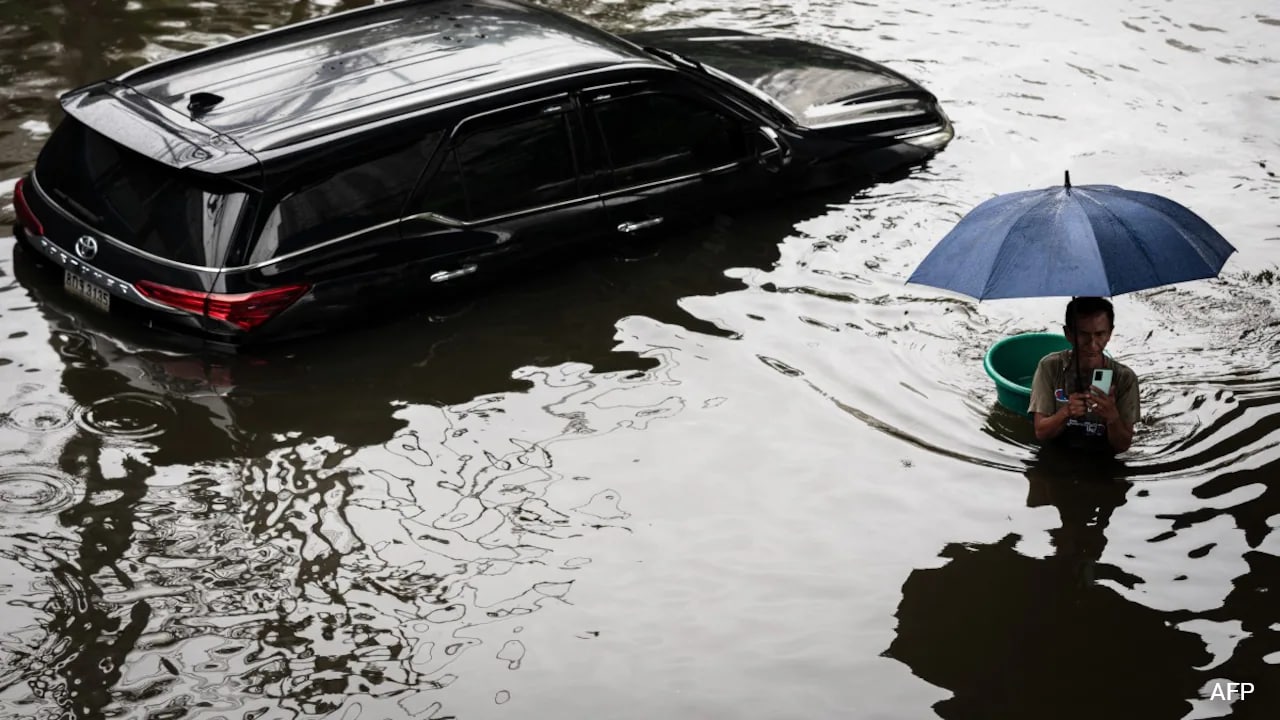
Every time the Chao Phraya River spills its banks and motorbikes turn into marine craft, the global commentariat dusts off the same lazy narrative. They point cameras at submerged streets in Sukhumvit, wring their hands over tropical downpours, and lament the fury of monsoonal skies. It is a comforting fiction. It externalizes the blame. It makes a man-made catastrophe look like an act of God.
The media wants you to believe Bangkok is drowning because the weather is angry. That is garbage.
The water pooling in the alleys of Lat Phrao and rattling through the drainage grates of Silom is not an environmental anomaly. It is the predictable, mathematical consequence of a century spent treating a delta like a real estate portfolio. I have watched developers pave over the lungs of this metropolis, sucking dry underground aquifers to feed high-rise construction, and then act surprised when the dirt caves in. You do not have a rain problem. You have a physics problem.
The Myth of the Unstoppable Monsoon
Let us dismantle the core falsehood driving every headline about urban flooding in Southeast Asia: the notion that unprecedented meteorological events are overwhelming civic infrastructure.
Unprecedented? Hardly. Monsoons have soaked the Chao Phraya river basin for millennia. The delta is a sprawling, low-lying alluvial plain designed by nature to absorb, slow, and disperse seasonal inundation. Historically, Bangkok functioned as an aquatic city. Homes stood on stilts. Canals served as arteries. The city breathed with the tides.
Then came the engineers of the twentieth century with their concrete straightjackets and asphalt fetishes. They paved the natural sponge. They filled in the retention ponds known locally as khlongs to build more shopping malls and concrete jungles. They severed the hydraulic connections that allowed floodwaters to drain naturally into the Gulf of Thailand.
When you concrete over a flood plain, water does not negotiate. It accumulates. The recent weekend downpours in Bangkok were heavy, yes, but they were not statistically anomalous. What was anomalous was the zero-tolerance hydrological capacity of a city that has systematically eliminated its own drainage valves for the sake of square footage.
Sinking Faster Than the Sea is Rising
Focusing purely on rainfall misses the primary catalyst of Bangkok's watery doom. The city is sinking. And no, it is not because sea levels are marching inland—though that is happening too. It is because the ground beneath millions of feet of concrete is collapsing.
For decades, industrial plants and massive residential developments pumped billions of gallons of groundwater straight out of the underlying clay layers. When you drain an aquifer, the microscopic water pockets that hold up the earth collapse. The soil compacts. The ground level drops. In some districts of the capital, the elevation has plummeted by more than ten centimeters every few years.
Parts of the urban core now sit below sea level at high tide. Gravity does not care about your municipal zoning laws. When the drainage canals fill up, water flows backward out of the sewers and into the streets, driven by tidal pressure.
Blaming the clouds for this is like blaming the wind for blowing down a house built out of cardboard. The city is literally eating its own foundation, and the media reports on it like it is a sudden thunderstorm in a movie.
The Concrete Trap and the Illusion of Canals
Civic planners love to boast about mega-drainage tunnels and colossal water pumps. They point to the massive underground drainage project beneath Rama IX Road as proof of forward-thinking adaptation.
It is a band-aid on a severed artery.
These engineering marvels are designed to push millions of cubic meters of water out to sea, but they operate on a bottlenecked system. You can build a ten-lane highway for water, but if the off-ramps are clogged with garbage, illegal construction, and inadequate municipal runoff pipes, the highway just becomes a swimming pool.
Furthermore, Bangkok’s flood management treats water as an enemy to be expelled instantly rather than a variable to be managed dynamically. Venice learned centuries ago that you cannot defeat water with brute force alone; you have to give it room to move. Bangkok's answer has been to build higher walls, channelize rivers into concrete troughs, and pretend that the water will just go away if you scream at it hard enough.
It will not. Every cubic meter of concrete poured into a wetland reduces the city's overall retention capacity. Every high-rise permitted without mandatory subterranean water-retention basins accelerates the local sinkhole effect.
The Real Cost of Denial
The human and economic toll of these recurring floods is staggering, yet the establishment continues to misdiagnose the illness. Small business owners in commercial districts lose millions of baht in ruined inventory every rainy season, while city officials promise that next year's drainage upgrades will finally crack the code.
They will not crack the code because they refuse to address the root cause: land-use corruption and hydrological illiteracy.
When you buy a condominium in a low-lying zone built over a former swamp, you are buying a floating hazard. When municipal authorities grant building permits for massive commercial complexes over natural drainage paths, they are writing a check that future generations will pay for in ruined property and stagnant water.
Stop asking if Bangkok's drainage system can handle the next storm. It cannot. Ask why developers are still allowed to treat a natural delta like dry desert real estate.
The rain is not your enemy. The engineers of your concrete prison are.
Clean up the zoning codes, restore the retention basins, stop sucking the aquifers dry, and learn to live with the water instead of trying to bury it under asphalt. Until then, keep your rubber boots handy, and stop blaming the clouds for the sins of the city planners.


