Australia is spending 368 billion dollars on a naval strategy that feels less like national defense and more like an open invitation to a geopolitical disaster.
The multi-decade AUKUS security pact between Australia, the US, and the UK was supposed to secure the Indo-Pacific. Instead, it’s locking Australia into an escalating military alignment aimed squarely at China, its biggest trading partner.
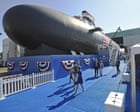
The cracks in the plan are widening into craters. The latest blow to the agreement has upended the original math. Rather than getting a mix of new and used vessels, Australia is now set to receive three secondhand Virginia-class nuclear submarines from the United States.
Prime Minister Anthony Albanese is shrugging off the change, standing on the Sunshine Coast to declare that the multi-billion dollar project is "full-steam ahead."
But the political opposition is furious. The Australian Greens have renewed their push to completely scrap the deal, explicitly warning that these nuclear attack submarines do not protect the coastline—they risk dragging the country into a catastrophic war with China on America's behalf.
The Submarine Switch That Stripped Australian Sovereignty
When the federal government first sold AUKUS to the public, it was pitched as a massive technological leap. Australia would buy a combination of new and used Virginia-class boats from the US before eventually co-building a brand-new fleet called SSN-AUKUS with the British.
That script has been flipped. The US shipbuilding industry is choked with delays, unable to keep up with its own domestic demands, let alone build shiny new toys for export.
Because Washington cannot build these boats fast enough, Australia is paying top dollar for three secondhand submarines.
Greens defense spokesman David Shoebridge stepped directly into the firing line on the ABC’s Insiders program, calling out the massive strategic risk of the revised arrangement. This isn't just about receiving used goods; it is about who holds the keys.
By tying the national defense architecture entirely to American technology, parts, and maintenance schedules, Australia is effectively surrendering its strategic independence. You cannot operate a Virginia-class nuclear attack submarine without deep, ongoing logistical support from the US military. If Washington holds the leash, Australia loses the sovereign right to say no when the next deployment order comes down from the Pentagon.
Buying Exquisitely Expensive Platforms for Someone Elses War
The central argument against AUKUS boils down to a fundamental question: What are these submarines actually for?
If you want to protect the Australian coastline, a massive nuclear-powered attack submarine is arguably the wrong tool for the job. They are built for long-range, high-endurance operations far from home shores.
Senator Shoebridge didn't mince words, stating that Australia shouldn’t be buying "exquisitely expensive US weapons platforms to invite ourselves to someone else's knife fight."
The sole tactical purpose of acquiring these specific nuclear-powered vessels is to project aggressive military power deep into northern waters, specifically the South China Sea.
Conventional Subs vs. AUKUS Nuclear Subs
-----------------------------------------------------------------
Conventional: Stealthy in shallow coastal waters, cheaper, highly defensive, independent maintenance.
Nuclear: Built for deep-water long-range transit, hyper-expensive, dependent on US logistics.
Defense Minister Richard Marles and the Labor leadership argue that Australia needs this long-range capability to police and protect vital international sea trade routes on the other side of the planet. But trying to police global shipping lanes right on Beijing's doorstep is a massive provocation.
Smaller, conventional diesel-electric submarines or cutting-edge unmanned submersibles could easily defend the maritime approaches closer to home. They would do it at a fraction of the cost without turning the nation into a primary target in a superpower conflict.
The Growing Cracks Inside the Labor Party
Albanese wants everyone to think the political class is united behind this defense strategy, but the cracks are widening inside his own tent.
The pushback is no longer coming just from the Greens or anti-war activists. Major figures within the Labor Party are breaking ranks to criticize the deal. High-profile backbencher Ed Husic and former Labor minister Peter Garrett have both raised serious alarms over the spiraling costs and the massive geopolitical risks involved.
They join senior elder statesmen like former Prime Minister Paul Keating and former Foreign Minister Gareth Evans, who have spent months shouting from the rooftops that Australia will have zero meaningful sovereignty over these vessels in an actual conflict.
Albanese has chosen to completely bury his head in the sand. When confronted with the latest round of criticisms, he flatly dismissed the opposition, stating that the government would not take defense advice from the Greens.
Instead, he pointed to global supply chain vulnerabilities, like the temporary closures in the Strait of Hormuz, to justify the need for a blue-water navy. He insists that as an island continent, prioritizing a high-end nuclear naval fleet is the ultimate deterrent.
But deterrence is a two-way street. When you buy a weapon designed specifically to threaten an adversary's backyard, you don't deter them. You provoke them to build more weapons and aim them directly at you.
Shoveling Billions into an American Veto
The financial reality of AUKUS is increasingly grim. Australia has already sent billions of dollars across the ocean to the US and UK as massive down payments just to upgrade their domestic manufacturing bases.
Under the current agreements, neither Washington nor London is legally obligated to hand over a single thing if their own national security environment degrades.
With the shifting political landscape in Washington, relying on American promises is a dangerous gamble. The United States retains a strict presidential veto over the transfer of any nuclear submarine technology. If a future administration decides that keeping those Virginia-class hulls is more important than fulfilling a promise to Canberra, Australia is stuck with the bill and no boats. There is no claw-back mechanism for the billions already spent.
Furthermore, the domestic hurdles are immense. Australia has no domestic nuclear industry, a severe shortage of specialized naval engineers, and zero infrastructure to handle the highly enriched uranium waste these reactors produce.
Real Alternatives for True Maritime Security
The government claims that walking away from AUKUS now would leave a massive capability gap as the aging Collins-class submarines retire. That is a false dilemma.
There is still a viable window of opportunity to pivot. Instead of waiting decades for secondhand American hulls and hypothetical British designs, Australia could rapidly acquire modern, highly advanced conventional submarines from reliable partners like South Korea, Japan, or Sweden.
These nations build world-class conventional submarines with anaerobic propulsion systems that are incredibly quiet, perfectly suited for defensive operations, and can be delivered years ahead of schedule.
If the goal is genuine national defense rather than regional power projection, the immediate next steps are clear:
- Freeze any further multi-billion dollar cash transfers to foreign shipyards.
- Conduct an independent strategic review of the naval fleet that prioritizes sovereign regional defense over global interoperability.
- Redirect the massive financial savings into domestic manufacturing, coastal missile defense, and advanced autonomous sea drone technology.
Continuing down the current path doesn't buy security. It buys a permanent front-row seat to a war Australia has no business fighting.
AUKUS Submarine Deal Concerns
This video outlines the escalating friction and manufacturing hurdles facing the submarine transfer, highlighting how shifting international realities are forcing changes to the original deal.