The modern theater of war is currently defined by a radical inversion of the cost-exchange ratio. In the Red Sea and across Eastern Europe, state actors are deploying $2 million Interceptor Missiles to neutralize $20,000 Uncrewed Aerial Vehicles (UAVs). This 100:1 fiscal disparity is not a failure of procurement; it is the logical outcome of a defensive doctrine optimized for high-end threats facing a "democratized" offensive technology. To understand why the United States military continues this expenditure, one must analyze the convergence of technical risk-aversion, the physics of kinetic interception, and the catastrophic economic consequences of a "leaked" threat.
The Physics of the Kinetic Deficit
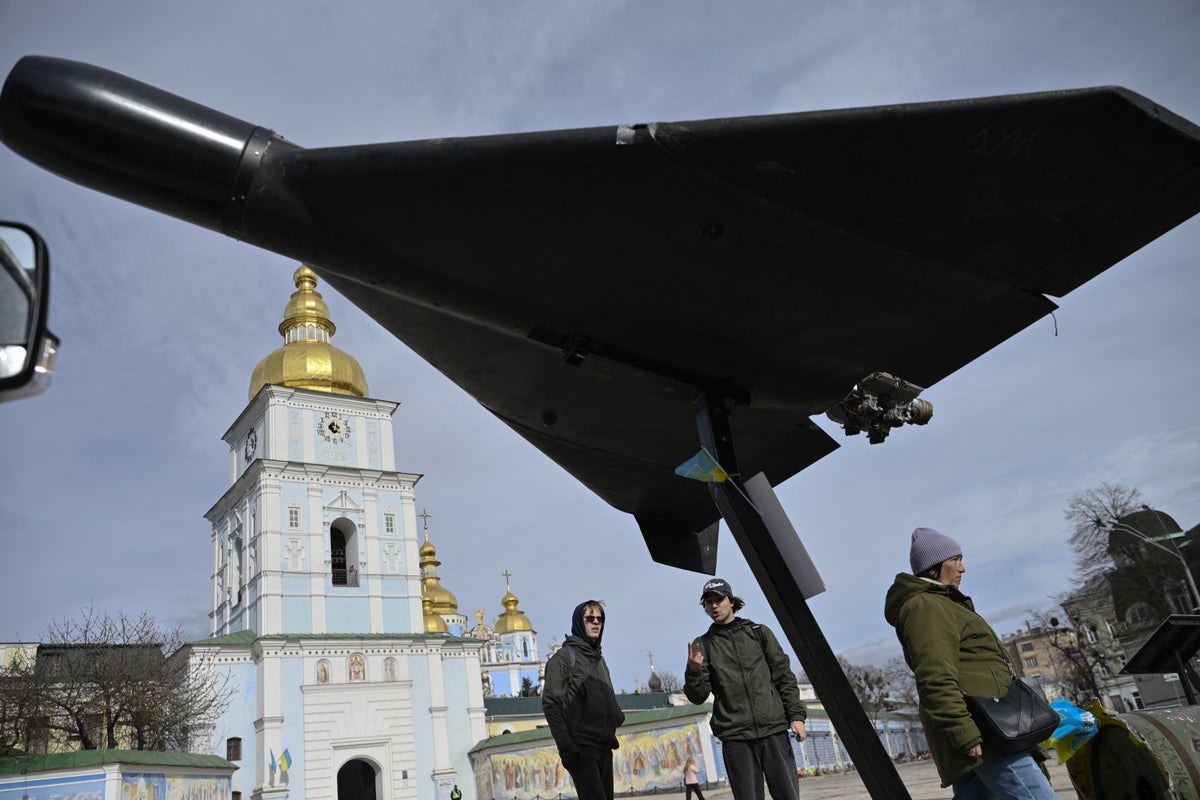
The fundamental driver of the cost disparity is the difference between propulsion-based guidance and autonomous pathfinding. A Shahed-136 drone is essentially a flying lawnmower engine mated to a GPS-guided circuit board. It moves slowly, follows a predictable flight path, and lacks any sophisticated electronic counter-countermeasures (ECCM).
Conversely, an RIM-161 Standard Missile 3 (SM-3) or an MIM-104 Patriot missile is designed to intercept targets moving at supersonic or hypersonic speeds. The cost of these interceptors is embedded in three technical tiers:
- Seeker Sophistication: To achieve a "kill" against a maneuverable target, the interceptor requires active radar or infrared seekers capable of discriminating targets from background noise at extreme velocities.
- Kinetic Energy Management: High-speed interception requires solid-fuel rocket motors that can provide instantaneous thrust and high-G maneuvering capabilities.
- Probability of Kill ($P_k$ ): Military doctrine mandates a high $P_k$, often requiring the launch of two interceptors per incoming threat to ensure a 99% success rate.
When these high-tier assets are redirected toward low-tier drones, the "overkill" is literal. The interceptor is paying for performance capabilities—Mach 4 speeds, 30G turns—that are entirely irrelevant to downing a slow-moving UAV. However, because the US Navy and Army have prioritized the defeat of cruise and ballistic missiles, their current inventory lacks a middle-tier, low-cost kinetic solution.
The Economic Value of the Defended Asset
The $2 million vs. $20,000 comparison is a flawed metric because it ignores the Value of the Defended Asset (VDA). If a $20,000 drone strikes a $2 billion Arleigh Burke-class destroyer, the cost-exchange ratio is no longer 100:1; it is 1:100,000 in favor of the attacker.
In the Red Sea, the calculation extends beyond military hardware to global macroeconomics. The Suez Canal handles approximately 12% of global trade. If a single low-cost drone strikes a commercial tanker, insurance premiums for the entire region spike, shipping companies reroute around the Cape of Good Hope, and global supply chains suffer multi-billion dollar delays.
The US military is not buying a $2 million "drone killer." It is buying a $2 million "insurance policy" against the disruption of global maritime commerce. In this framework, the $1.98 million loss on the individual kinetic exchange is a negligible operational expense when compared to the systemic risk of a successful strike.
The Three Pillars of Defensive Attrition
To move beyond the current crisis, defense planners are evaluating the "Attrition Triad"—a framework for rebalancing the cost curve without sacrificing the $P_k$.
1. Directed Energy Weapons (DEW)
Lasers and High-Power Microwaves (HPM) represent the only theoretical path to a near-zero "cost per shot." A laser system like the DragonFire or the Navy’s HELIOS consumes only the fuel required to generate electricity.
- The Constraint: Atmospheric attenuation (fog, rain, dust) drastically reduces the effective range and lethality of photons.
- The Bottleneck: Dwell time. A kinetic interceptor destroys a target instantly upon impact. A laser must stay focused on a specific point on the drone's hull for several seconds to burn through, creating a "queueing" problem when facing swarms.
2. Electronic Warfare (EW) and Soft-Kill
Breaking the data link between the drone and its operator or spoofing its GPS signal is the most cost-effective method of neutralization.
- The Constraint: Modern drones are increasingly moving toward autonomous terminal guidance (image recognition). Once a drone is no longer tethered to a human operator or an external GPS signal, EW becomes ineffective.
- The Bottleneck: Signal competition. Jamming a wide area can interfere with friendly communications and civilian infrastructure.
3. Low-Cost Kinetic Interceptors
The development of "Coyote" style interceptors—essentially small, cheap drones designed to ram into other drones—aims to match the attacker's price point.
- The Strategy: Using a $50,000 interceptor to kill a $20,000 drone brings the exchange ratio down to a sustainable 2.5:1.
- The Technical Challenge: Scaling production. The US defense industrial base is optimized for low-volume, high-complexity manufacturing. Mass-producing "disposable" interceptors requires a shift toward consumer-grade electronics and automotive-style assembly lines.
Strategic Resilience and the Industrial Base Gap
The most significant risk is not the fiscal cost, but the inventory depletion rate. The United States can afford to spend $2 million per drone strike indefinitely from a purely budgetary standpoint. However, the industrial base cannot produce SM-2 or SM-6 missiles at the rate they are being expended in active conflict zones.
A single weekend of high-intensity engagements can consume months of production capacity. This creates a "Strategic Deficit" where the US depletes its magazine of sophisticated missiles intended for a peer-state conflict (e.g., in the Indo-Pacific) to handle low-end threats in the Middle East. This "asymmetric exhaustion" is a deliberate strategy by adversaries to force the US into a state of conventional disarmament through low-cost attrition.
Structural Pivot: Moving Toward Tiered Defense
The solution to the $1 million drone-kill problem is not a single "silver bullet" technology but a tiered defensive architecture that matches the interceptor to the threat's capability.
- Tier 1 (Outer Ring): High-cost kinetic interceptors (Standard Missile family) reserved exclusively for high-velocity, high-altitude threats.
- Tier 2 (Middle Ring): Medium-cost, rapid-response systems like the National Advanced Surface-to-Air Missile System (NASAMS) or the Evolved SeaSparrow Missile (ESSM).
- Tier 3 (Point Defense): Directed energy, 30mm or 57mm proximity-fuzed shells (which cost roughly $1,000 per round), and small-form-factor interceptor drones.
The current friction exists because Tiers 1 and 2 are being forced to do the work of Tier 3.
To regain the strategic advantage, the Department of Defense must accelerate the integration of Modular Open Systems Architecture (MOSA). This allows for the rapid "plug-and-play" of new, cheaper interceptors into existing Aegis or Patriot command-and-control systems. Without this interoperability, the US remains trapped in a legacy cycle where it must use its most expensive tools for its most frequent problems.
The strategic priority is the decoupling of "Defensive Capability" from "High-Cost Kinetic Hardware." The transition from a missile-centric defense to a multi-modal defense (lasers, microwaves, and cheap interceptors) is not just a technological upgrade; it is a fiscal necessity for maintaining global presence. The actor who can achieve a 1:1 cost-exchange ratio while maintaining a 99% $P_k$ will control the future of tactical airspace.
Defense contractors must be incentivized to produce "good enough" munitions at scale, rather than "perfect" munitions in boutique quantities. Until the procurement model shifts to value volume over exquisite performance, the asymmetric cost curve will remain the most effective weapon against US military hegemony.