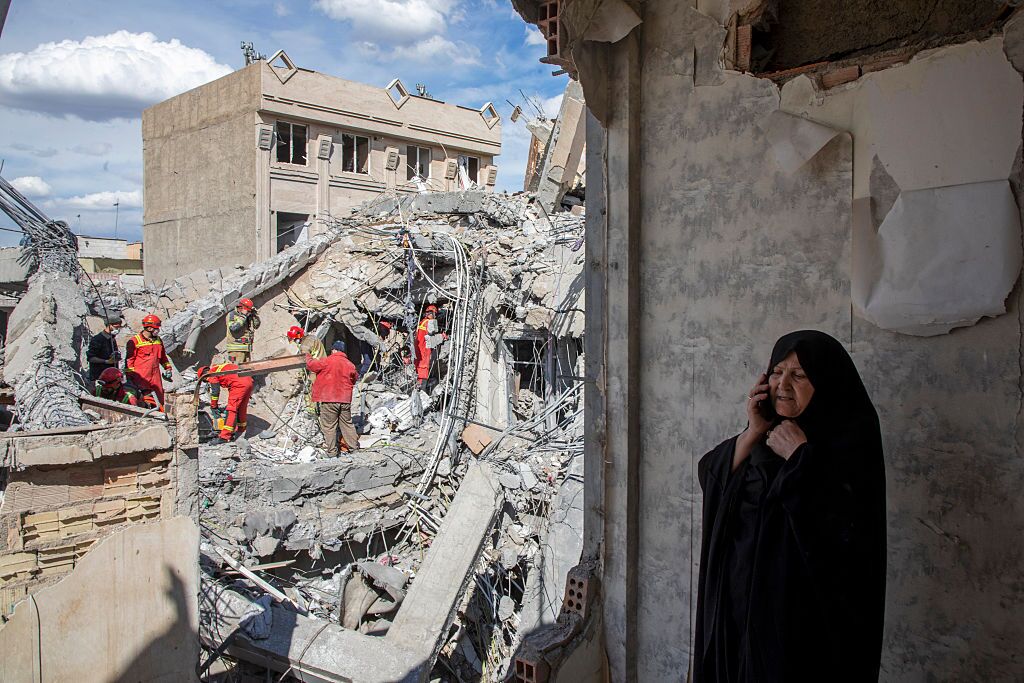
The physical injury of U.S. service members at a Saudi Arabian installation one month into a regional conflict is not an isolated tactical failure; it is the manifestation of a deliberate cost-imposition strategy designed to test the elasticity of the U.S. regional security umbrella. By targeting high-value, static assets with low-cost, expendable munitions, regional adversaries aim to force a strategic reassessment within Washington regarding the viability of its forward-deployed footprint. This analysis deconstructs the mechanics of these attacks, the failure points in existing integrated air and missile defense (IAMD) systems, and the structural pressures now acting on the U.S.-Saudi defense partnership.
The Architecture of Asymmetric Targeting
Adversaries are no longer seeking to win decisive battles. Instead, they operate under a framework of persistent harassment, where the objective is to degrade political will and logistical efficiency. This strategy functions through three distinct mechanisms:
- Economic Inversion: Launching a suicide drone costing $20,000 forces the defender to utilize interceptors, such as the Patriot PAC-3 or terminal high altitude area defense (THAAD) missiles, which cost millions of dollars per unit. The objective is to exhaust the defender's magazine depth through sheer volume.
- Normalization of Hostility: Frequent, low-yield attacks serve to lower the threshold for "escalation." When attacks become a weekly occurrence, a single strike resulting in minor injuries—as seen at the Saudi base—often fails to trigger a proportional kinetic response, thereby ceding the initiative to the aggressor.
- Intelligence Collection via Attrition: Every successful or unsuccessful strike provides the attacker with telemetry on radar coverage, interceptor reaction times, and the specific blind spots of localized electronic warfare (EW) suites.
The Failure of Geographic Insulation
The recent strike highlights a critical vulnerability: the assumption that distance from the primary theater of operations provides safety. The "One-Month Pivot" indicates that the conflict has transitioned from a localized border dispute into a theater-wide confrontation. Saudi bases, historically viewed as "rear-area" logistics hubs, are now frontline assets.
The shift in risk profile is driven by the proliferation of Long-Range Loitering Munitions (LLMs) and cruise missiles with low radar cross-sections. These systems exploit the "Curvature Gap"—the inability of ground-based radar to detect low-flying objects beyond the horizon. Unlike ballistic missiles, which follow a predictable parabolic arc, these munitions utilize terrain-masking and waypoint navigation to approach targets from unexpected vectors, often bypassing the primary sensor arrays oriented toward known threat corridors.
The Cost Function of Forward Presence
Maintaining U.S. troops on Saudi soil carries a heavy "sovereignty tax" and a significant "protection overhead." The injury of personnel creates a specific type of political friction.
- The Domestic Pressure Loop: In the U.S., casualties in non-declared combat zones accelerate calls for "Retrenchment" or "Offshore Balancing."
- The Host-Nation Dilemma: For Saudi Arabia, the inability to protect U.S. forces on their soil signals a weakness in their own territorial defense capabilities, potentially inviting further aggression against their energy infrastructure.
The defense of these bases relies on a multi-layered sensor-to-shooter link. When this link fails—resulting in the injuries reported—the breakdown usually occurs at the Decision-Latency Phase. Automated systems may identify a "threat," but the human-in-the-loop requirement for engagement in complex airspaces (crowded with civilian traffic and friendly drones) often introduces a delay that fast-moving munitions exploit.
Structural Constraints of Integrated Air and Missile Defense (IAMD)
The current IAMD posture in the Gulf is robust but brittle. It relies on a high-centralization model that is susceptible to Saturation Attacks. If an adversary launches 50 simultaneous projectiles at a single Saudi base, the probability of a "leaker"—a missile or drone that penetrates the defense—approaches statistical certainty.
The injury of troops suggests the attack likely utilized a "Mix-and-Match" salvo:
- Decoys: Cheap, non-armed drones that mimic the radar signature of a threat.
- Kinetic Effectors: The actual armed munitions timed to arrive seconds after the interceptors have been committed to the decoys.
This tactical reality creates a bottleneck in resource management. Commanders must decide between "Over-shooting" (firing two interceptors at one target to ensure a kill) and "Conservation," which risks the lives of personnel on the ground.
The Strategic Re-Calibration
One month into this conflict, the U.S. military faces a binary choice in its Saudi Arabian operations.
First, it can double down on Hardened Point Defense. This involves the rapid deployment of "C-RAM" (Counter Rocket, Artillery, and Mortar) systems and directed-energy weapons (lasers) that provide a lower cost-per-shot and higher magazine capacity. However, these systems have limited range and require significant power infrastructure.
Second, it can move toward Dispersed Operations. By breaking up large concentrations of troops and assets into smaller, mobile "nodes," the U.S. reduces the payoff for any single enemy strike. This creates a logistical nightmare but significantly complicates the enemy's targeting cycle.
The injuries sustained this week indicate that the current "Static Concentration" model is no longer tenable against an adversary with precision-strike capabilities. The escalation is not a precursor to a traditional invasion; it is an invitation to a war of nerves where the primary theater is the U.S. taxpayer's patience and the Saudi government's perceived stability.
The immediate operational priority must be the integration of Passive Defense Measures. This includes the construction of reinforced "Safe Rooms" near work areas, the use of decoy thermal emitters to confuse infrared seekers, and the implementation of signal-silence protocols to prevent "Geolocating via Emissions."
If the U.S. continues to rely solely on active interception—firing expensive missiles at cheap drones—it will inevitably lose the arithmetic of this conflict. The goal is to move from a posture of "Reaction" to one of "Resilience," where an attack on a Saudi base is met with an automated, multi-domain response that targets the launch platforms and the command-and-control nodes simultaneously, rather than simply swatting away the arrows.