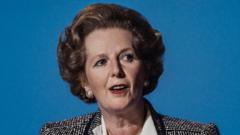
Hilary Mantel did not just write a story about a fictionalized attempt on Margaret Thatcher’s life. She ignited a decade-long debate about the boundaries of historical imagination and the lingering ghosts of the 1980s. Now, that controversy moves from the printed page to the stage as Liverpool’s Everyman Theatre hosts the world premiere of The Assassination of Margaret Thatcher. This is not a simple biographical play. It is a psychological chamber piece that examines the precise moment when the domestic sphere collides with the violent machinery of political change.
The production arrives at a time when the British public’s relationship with its political past remains fractured. By staging this specific narrative in Liverpool—a city where Thatcher’s legacy is a raw, unhealed wound—the production team is leaning into a regional tension that gives the script a weight it might lack in London's West End. This is a calculated provocation.
The Anatomy of a Controversy
When the original short story was published in 2014, the backlash was immediate and vitriolic. Conservative pundits and former ministers accused Mantel of "sick" and "perverted" fantasies. They missed the point. Mantel wasn't calling for a hitman; she was exploring the eerie, quiet intimacy of a stranger entering a private space to perform a public execution.
The story centers on a woman in Windsor who mistakes a man for a plumber. He is, in fact, an IRA sniper. He has chosen her spare bedroom because it offers a clear line of sight to the hospital where the Prime Minister is recovering from eye surgery. What follows is a dialogue between the reluctant host and the professional killer. It is a study in power, class, and the strange politeness that persists even in the shadow of a rifle.
Why Liverpool Matters for This Premiere
Choosing Liverpool for the debut is a masterstroke of casting the audience itself. To understand why, one must look at the 1980s through the lens of "managed decline." This was the phrase used in secret cabinet papers regarding Liverpool after the Toxteth riots. While the rest of the UK was being forced into a new neoliberal mold, Liverpool became the focal point of resistance.
Staging a play about Thatcher’s death here adds a layer of metatextual irony. The audience brings a collective memory of the era's economic hardship, making the sniper’s mission feel less like a thriller plot and more like a visceral manifestation of the city's historical anger.
Beyond the Rifle Scope
The play must solve a problem that the short story could hide through prose: the static nature of the setting. Most of the action takes place in a single room. To keep a modern audience engaged, the Everyman production has to rely on the claustrophobia of the environment.
The sniper represents the intrusion of the "Troubles" into the manicured gardens of the English middle class. Throughout the 1980s, the violence in Northern Ireland often felt like a distant, flickering image on a television screen for those in the South East. Mantel’s narrative drags that violence across the threshold. It forces the protagonist—and the audience—to stop being a spectator.
The Problem of Historical Distance
We are now forty years removed from the Brighton hotel bombing, the real-world event that serves as the silent backdrop to this fictionalized tale. For younger theatergoers, Thatcher is a historical figure akin to Churchill or Victoria. For older generations, she remains a Rorschach test for their own identity.
The challenge for the stage adaptation is to avoid falling into caricature. If the sniper is too heroic, the play becomes propaganda. If he is too villainous, it becomes a standard police procedural. The strength of Mantel’s writing was her ability to make the assassin human, weary, and disturbingly logical. He isn't a monster; he is a technician.
The Ethics of Rewriting History
Counter-factual history is a dangerous game. When a writer "kills" a real person in a fictional setting, they are engaging in a form of literary exorcism. Critics often argue that this is disrespectful to the deceased or their families. However, the function of art is often to explore the "what if" scenarios that haunt the national subconscious.
The play asks whether the course of British history would have fundamentally changed if that shot had been fired and hit its mark. Would the Thatcherite revolution have stalled, or would she have been martyred, cementing her policies for a century? The play doesn't provide an easy answer, focusing instead on the tension of the finger on the trigger.
The Mechanical Tension of the Stage
In a live performance, the presence of the weapon is a constant source of anxiety. The rifle is a third character. The director must manage the physical space so that the window—the portal to the target—remains the focal point of every scene.
- Spatial Dynamics: The distance between the woman and the assassin.
- Aural Design: The distant sounds of Windsor vs. the clicking of the rifle bolt.
- Lighting: The transition from afternoon light to the cold shadows of the evening.
These elements transform a dialogue-heavy story into a high-stakes standoff. The audience knows that in reality, Thatcher lived until 2013. Yet, within the walls of the theater, that reality is suspended. The suspense comes not from the outcome, but from the transformation of the woman in the room as she realizes she is an accomplice by default.
The Ghost in the Room
Thatcher never actually appears in the play. She is a phantom, a destination for a bullet. This absence makes her more powerful. She becomes an idea rather than a person—the embodiment of the state, of authority, and of the division that the sniper intends to end.
By keeping the target off-stage, the play focuses on the ripple effects of political extremism. It examines how ordinary people find themselves caught in the gears of history. The woman in the flat isn't a political activist. She is a person who wanted her pipes fixed and ended up witnessing the architecture of a murder.
The Political Climate of 2026
Staging this work now is a commentary on our current polarization. We live in an era where political rhetoric often borders on the violent. By looking back at the intense hatred and fierce loyalty Thatcher inspired, the play holds a mirror to contemporary tribalism.
The Everyman has a history of radical programming. It is a space that encourages the audience to grapple with uncomfortable truths. The Assassination of Margaret Thatcher fits perfectly into this tradition. It is a play that refuses to let the past stay in the past. It insists that the shadows of the 80s are still lengthening across the current British landscape.
The production relies heavily on the interplay between the two leads. The dialogue is sharp, unforgiving, and stripped of sentimentality. There are no grand speeches about the glory of the cause. Instead, there is the mundane detail of the mission—the wind speed, the angle of the sun, the timing of the car's arrival. This focus on the "how" of the act makes the "why" even more chilling. It strips away the romance of the revolutionary and replaces it with the cold reality of the task at hand.
The play ends not with a bang, but with the terrifying stillness of anticipation. The moment of the shot is less important than the silence that precedes it. In that silence, the audience is forced to sit with their own feelings about the woman in the hospital bed and the man at the window. You are left to wonder which is the greater violence: the bullet, or the system that made the bullet necessary. No one leaves the theater with a clean conscience. There are no easy exits from history.