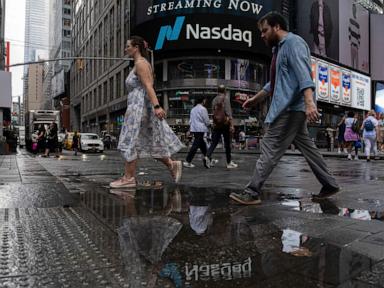
Asian shares finished the trading session in positive territory on Monday, reflecting a cautious yet optimistic sentiment across regional exchanges. Investors are currently weighing steady oil prices against the backdrop of stagnant United States stock futures. This movement suggests that while global markets are not bracing for an immediate shock, participants are avoiding aggressive bets ahead of key economic data releases.
The immediate trigger for this regional performance remains a mix of bargain hunting and a lack of negative catalysts from Wall Street. When United States futures stay flat, traders in Tokyo, Hong Kong, and Sydney often view the environment as safe enough to move back into equities. Yet, this stability is fragile. The market is not driven by conviction; it is being guided by a wait-and-see mentality that permeates every major trading desk. Meanwhile, you can find other developments here: Why DB Cargo Is Selling Off Its UK Rail Freight Empire.
Why Oil Prices Hold the Key to Stability
Energy costs act as a silent tax on the global economy. When crude oil remains steady, it provides a rare sense of predictability that central banks and corporate treasury departments desperately need. For the last quarter, volatility in the energy sector has masked underlying issues in supply chain logistics. By staying within a predictable range, oil prices have effectively allowed equity markets to focus on corporate earnings rather than fear-driven inflation hedging.
If prices were to spike suddenly, the ripple effect would be immediate. Manufacturing margins in export-heavy Asian economies would compress overnight. Shipping costs would surge, and the cost of capital would likely rise as traders factor in a more aggressive interest rate environment. The current stability is not an indication of health but rather a temporary period of equilibrium. It is a fragile state that could be overturned by any geopolitical disruption in major oil-producing regions. To see the complete picture, check out the recent report by Harvard Business Review.
The Illusion of Regional Decoupling
For years, analysts argued that Asian markets could decouple from American volatility. Recent sessions prove the opposite remains true. The correlation between the S&P 500 futures and the Nikkei 225 is higher than at any point in the last decade. Why? Because the majority of institutional liquidity is managed by firms that treat global markets as a single, interconnected pool of capital.
When American futures stall, it is rarely due to a localized event. It is usually a signal that global institutional investors are hitting a ceiling in their risk appetite. If the United States market fails to provide a clear direction, capital sits on the sidelines. In Asia, this creates a vacuum where local traders are left to speculate on regional policy rather than global growth. This is why you see modest gains across the board rather than a genuine bull run. There is no conviction from the largest players in the room.
Corporate Earnings Versus Macro Sentiment
A dangerous gap is opening between how individual companies are performing and how the broader indices are moving. Many blue-chip firms across Asia are reporting higher efficiency, better margins, and lower debt burdens compared to their performance during the last two years. Despite these strong balance sheets, share prices are tethered to macro sentiment.
Investors are ignoring individual success stories because they are terrified of a recession. It is a psychological game. If a company announces a ten percent increase in revenue but the broader market sentiment is bearish due to interest rate fears, that company’s stock often sits flat or drifts downward. Smart money is watching this divergence. There is significant value hidden in plain sight, trapped by a market-wide obsession with United States Federal Reserve signals.
The Role of Central Bank Transparency
The obsession with interest rate adjustments is not just about the cost of borrowing. It is about the loss of predictability. When the central banks were quiet, companies could plan capital expenditures for five to ten years out. Now, with quarterly shifts in monetary policy, planning has become a guessing game.
This shifts the burden to the average investor, who is forced to become an armchair economist. You are no longer just buying shares in a company; you are betting on whether a central bank official will sound hawkish or dovish in their next press release. This environment suppresses long-term investment. Money flows into short-term instruments and high-yield savings, starving companies of the patient capital they need to innovate.
Managing the Risk of Stagnation
The most significant risk to the current market environment is not a crash, but prolonged stagnation. If indices stay in this narrow range for too long, retail participants will eventually lose interest. Liquidity will dry up. When volume drops, the market becomes susceptible to flash crashes or erratic movements caused by high-frequency trading algorithms reacting to minor news events.
Investors should focus on firms with high cash flow and low exposure to interest rate fluctuations. These businesses have the autonomy to survive a period of stagnant growth. They do not rely on cheap credit to maintain their operations. They are the bedrock of any portfolio in a market that refuses to pick a direction.
As the week progresses, keep an eye on the volume of trades in the mid-session. If volume is low, the price action is likely deceptive. Do not mistake a lack of selling pressure for a surge in demand. Real movement requires conviction, and right now, the global markets are waiting for someone else to take the first step.