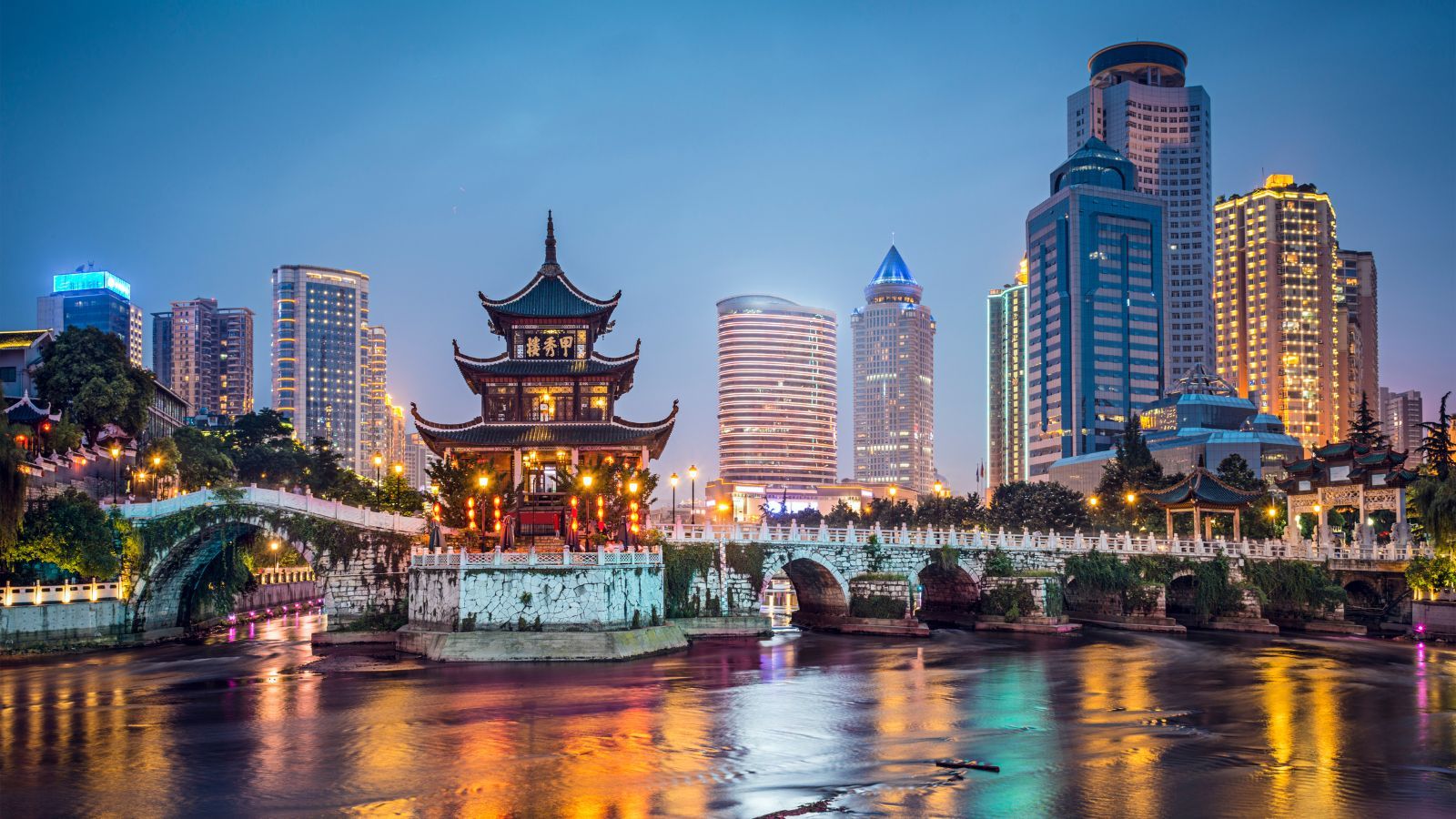
Fluorescent lights hum over a glass conference room in Singapore at 1:15 a.m., where a thirty-two-year-old software founder stares at a spreadsheet that has been his whole life for seven years. Outside, rain streaks down high-rise windows toward the harbor. Inside, cold coffee sits untouched beside three phones, each glowing with messages from investors, lawyers, and employees whose net worth is currently trapped in illiquid equity. To an outsider, this looks like a routine late-night grind. To the people inside the room, it feels like standing on a moving platform and deciding whether to leap before the gap widens too far.
For years, the conventional script for ambitious startups was simple enough to fit on a napkin. Raise private rounds, stay out of the public glare, grow quietly, and wait for the right moment to ring a bell. Yet the tempo across Asia has shifted. When a seasoned investor like Jenny Lee points out that Asian startups are speeding toward initial public offerings, she is not merely reading a chart of upcoming listings. She is describing a change in how founders weigh survival, independence, and timing in an unpredictable world.
Speed. That is the word that changes the mood in every boardroom from Seoul to Jakarta to Bengaluru.
The Long Wait Inside Private Walls
Staying private once felt like a luxury. A decade ago, abundant late-stage capital meant a company could stay behind closed doors for ten or twelve years, iterating in peace without quarterly earnings calls or public scrutiny. Founders could test bold bets, absorb missteps, and keep their focus on product rather than stock tickers.
That comfort comes with a quiet tax. Private shares do not pay school tuition or clear mortgages. Early engineers who gave up higher salaries and safer jobs to join a scrappy team eventually start asking when paper wealth becomes real choice. Investors who committed capital years ago face their own mandates to return money to limited partners. When private funding cycles tighten or become selective, waiting indefinitely stops feeling patient and starts feeling like being locked inside a room while the exit sign flickers.
To understand the emotional weight of this shift, consider a hypothetical character: Meilin, a composite founder running a logistics software company across Southeast Asia rather than a single real individual. In this hypothetical scenario, Meilin built her business from three laptops in a shared office into a platform moving freight across ports and inland hubs. Her team loves the craft. Her customers depend on the software every morning. Yet every month she spends raising another private bridge round is a month pulled away from hiring better engineers and expanding into new corridors. Going public, in her mind, is not an ego trip. It is a way to put permanent oxygen in the room so her team can breathe and build without begging for survival every eighteen months.
Notice the metaphor here: capital in a fast-growing company works much like air in a submarine. Too little, and the crew spends all its energy conserving breath instead of steering. Too much without discipline, and the vessel grows heavy and slow. Founders are trying to find the exact pressure that lets them stay submerged long enough to finish the voyage.
What Speed Really Means When Markets Shift
When observers hear that startups are speeding toward IPOs, it is easy to picture reckless sprints—companies rushing to market half-baked just to cash out. Anyone who has watched a company prepare for an exchange listing knows the reality is far more grueling. Going public is less like jumping off a cliff and more like stripping a racing car down to its frame before a long endurance track. Every weld is inspected. Every claim is tested. Every habit has to hold up under thousands of skeptical eyes.
Why, then, are founders accelerating their timelines instead of hiding out?
Part of the answer lies in maturity. Many of today's prominent Asian technology companies are no longer chaotic garage experiments; they have real revenue, clear unit economics, and regional scale that justifies public ownership. Another part lies in discipline. Public markets reward clarity. If a business makes money, serves a real need, and has a credible path forward, public investors can price it directly rather than relying on rumor and hype.
There is also a psychological shift. For a long time, founders in emerging and fast-growing Asian markets felt pressured to copy Silicon Valley playbooks down to the last detail, including the assumption that staying private longer was always smarter. Now, more leaders are asking a sharper question: why wait in the shadows if your business is ready for daylight, and if public capital gives you stronger governance, clearer credibility with enterprise clients, and a transparent currency for talent?
Still, I have sat through enough high-stakes financial decisions in my own life—watching numbers look tidy on paper while my stomach knotted at 3 a.m.—to know how terrifying irreversible moves can be. Signing paperwork that binds you to public disclosure, market swings, and external expectations changes the air in a room. Even confident executives hesitate when the moment becomes real. If you feel a mix of excitement and dread looking at a shift like this, you are not alone. Uncertainty is baked into any major transition.
Three Questions Every Founder and Investor Faces
Whenever a wave of listings picks up momentum, the same practical questions surface in coffee shops and board meetings alike. Instead of treating them as abstract trivia, it helps to see how they collide in real life.
Is Faster Always Better for a Growing Business?
Not necessarily. Speed only helps if the foundation is solid. A company that rushes to list before its billing systems, compliance, and leadership team are ready will spend its first year as a public company putting out fires instead of serving customers. A startup is like a suspension bridge: if you load heavy traffic onto it before the cables are anchored, the sway gets dangerous fast. Speed works best when preparation happened quietly in the background.
What Do Founders Give Up When They Ring the Bell?
Privacy is the first thing to go. In a private round, a founder can explain a rough quarter over dinner with a handful of backers. As a public company, every misstep is dissected in real time, and stock prices can swing on news that has nothing to do with how hard the team is working. Founders also give up some room for quiet experimentation. When thousands of shareholders hold a piece of the company, patience becomes a scarce resource.
Why Does This Matter Beyond Wall Street and Financial Districts?
Because startups shape everyday life. The payment app a shopkeeper uses at noon, the health clinic platform that schedules a parent's appointment, the supply chain tool that keeps medicine cold in transit—these are built by people whose energy and focus are shaped by how their companies are funded. When founders spend less time chasing uncertain private checks and more time running durable businesses, customers feel the difference in reliability.
The Human Ledger Behind Every Valuation
Charts and market commentary love big numbers. They talk about deal flow, liquidity, and regional momentum as if capital were water flowing through pipes. Yet behind every filing are hundreds of ordinary lives carrying quiet hopes.
Think again of our hypothetical founder, Meilin, walking out of that late-night meeting as dawn breaks over the water. In her mind are the people who believed her when the company had no brand name at all. There is the young engineer who moved to a new city and rented a tiny room because he liked the mission. There is the operations lead who stayed up fixing bugs during a holiday rush so customers would not lose shipments. None of those people care about financial jargon at midnight. They care whether the work meant something, whether the team will stay intact, and whether the climb was worth the strain.
Venture capital at its best has always been a bridge between present effort and future possibility. When Jenny Lee and other market observers highlight this push toward public listings across Asia, they are pointing to a bridge being built faster—not out of panic, but out of a desire for permanence and reach. Public markets are not a finish line. They are a wider stage, with brighter lights, harsher acoustics, and a chance to play for a much larger audience.
Standing at the Edge of Daylight
Every era of business has its defining tension. For one generation, the test was proving that world-class technology companies could be built outside traditional hubs. For another, it was scaling fast without losing control. Today, across Asia's bustling cities and ambitious teams, the test is stepping out of private shelter into public accountability while keeping the hunger that started the journey.
The rain stops outside the glass tower. The first commuter train rumbles across the bridge in the distance, carrying people toward another day of work, risk, and hope. Inside, the spreadsheet is closed, the lights are dimmed, and the real test begins not on a screen, but in how steady the hands are when the doors open to the world.