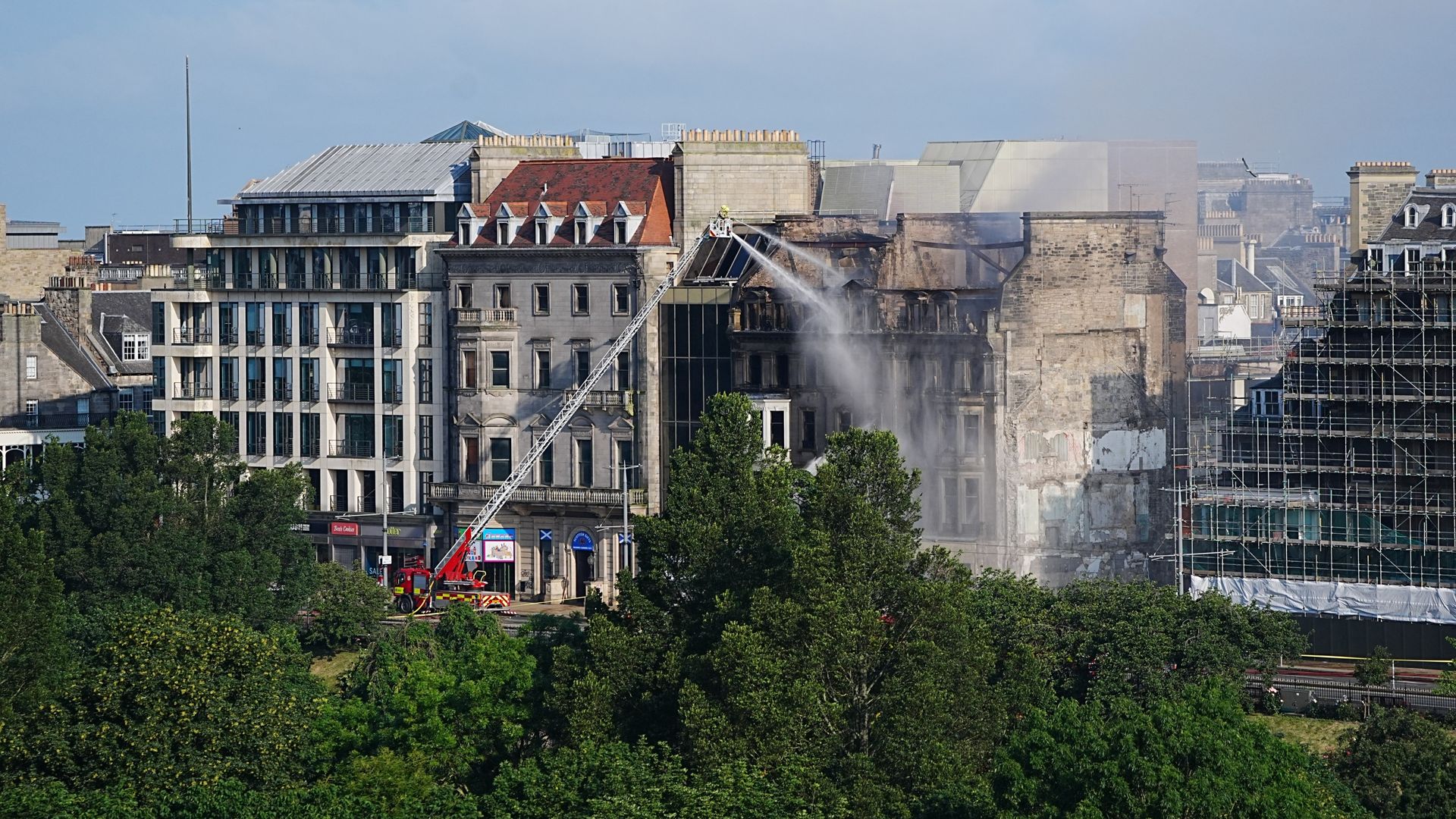
The smoke cleared from the downtown core late Tuesday evening, leaving behind the skeletal remains of a Victorian-era landmark that had anchored the commercial district for more than a century. A primary downtown street reopened to vehicular and pedestrian traffic at dawn, but the physical removal of police tape and barricades does little to solve the underlying urban emergency exposed by the flames. Beneath the scorched masonry and the frantic emergency response lies a systemic municipal failure. Aging infrastructure, deferred preservation mandates, and speculative real estate neglect combined to turn a routine structural fire into a massive public hazard.
Municipal officials praised the swift action of the fire department, pointing to the zero-casualty statistic as the ultimate metric of success. That framing misses the point entirely. When a city centre street reopens after a major fire gutted a historic building, the return of traffic flow masks a creeping institutional rot. This disaster was years in the making, born from an economic model that treats heritage architecture as an obstacle to profit rather than a structural asset requiring active defense. For a different perspective, read: this related article.
The Anatomy of a Preventable Disaster
The building at the corner of Merchant and State streets was not merely old; it was vulnerable. Built during the post-Industrial expansion of the late 1800s, the structure featured heavy timber floor joists, unreinforced brick masonry, and long-abandoned interstitial ceiling spaces that effectively acted as vertical chimneys. Modern fire codes generally require retrofitting these vintage hazards with internal sprinkler grids, firestops, and compartmentalization barriers. Yet, enforcement remains a bureaucratic maze of exemptions, economic hardship appeals, and protracted legal battles between city planners and absentee landlords.
Property records indicate the building changed hands four times in the past decade, each sale driven by offshore shell companies looking for speculative land value rather than operational utility. The upper floors had stood vacant for fifteen years, written off as financially unviable to renovate under strict historical preservation guidelines. When a building is left empty, routine maintenance ceases. Water leaks from aging roofs compromise structural timber, electrical wiring from the mid-twentieth century corrodes behind lathe and plaster, and security protocols lapse. Related coverage on the subject has been shared by Al Jazeera.
The fire did not start because of bad luck. It started because the economic incentives surrounding urban real estate favor decay over maintenance. Landlords can often write off losses or wait out zoning boards until a total structural collapse grants them a clean slate for high-density, low-character redevelopment. The fire department arrived in minutes, but the systemic neglect began decades prior.
The True Economic Toll of Reopening Too Soon
Opening the road is a political necessity. Mayors and city councils measure their competence in traffic metrics and business district foot traffic. A closed thoroughfare strangles nearby retail shops, coffee stands, and transit routes, turning public safety measures into an economic crisis for surrounding business owners.
Yet rushing the reopening process creates severe secondary risks. Structural engineers hired by the municipal authority signed off on the reopening after clearing the immediate facade collapse hazard, but adjacent properties share party walls built during an era when foundation standards were vastly different from today. Vibration from heavy diesel buses and delivery trucks rumbling down the reopened lane can destabilize cracked mortar joints on neighboring historic facades.
Furthermore, the economic impact on small businesses situated within the immediate blast radius is devastating. Insurance payouts for business interruption are notoriously slow, and commercial landlords rarely offer rent abatements simply because the street outside is blocked by ash and emergency scaffolding. Several independent merchants in the immediate vicinity are facing imminent bankruptcy, not because their customer base evaporated permanently, but because they lacked the cash reserves to survive a two-week total shutdown.
Insurance adjusters whisper about a looming commercial crisis. As older urban cores age past their design lifespans, the cost of insuring properties with outdated construction methods is skyrocketing. Premiums for downtown commercial spaces have jumped significantly over the past three years. Many property owners respond by cutting corners on basic safety equipment and fire watch protocols, creating a vicious cycle of rising risk and diminishing protection.
The Preservation Paradox
Urban planners face a painful paradox. Enforce strict heritage preservation laws, and property owners abandon older buildings, letting them rot until an accidental fire clears the title. Relax the laws, and historic districts are bulldozed for generic glass-and-steel monoliths that strip a city of its distinct identity and cultural memory.
Cities across the region are failing to bridge this gap. Grants for seismic and fire retrofitting are chronically underfunded, requiring endless mountains of paperwork that small-scale local operators cannot navigate, while corporate developers find loopholes. The city council allocates millions to flashy waterfront revitalizations and convention centers while core commercial districts crumble behind decorative plywood facades painted to look like windows.
Real urban resilience requires a shift from reactive emergency management to aggressive preventative intervention. If a landlord leaves a historic property vacant for more than twenty-four months without a valid, funded renovation permit, the municipal government should have the legal authority to step in, stabilize the envelope, bill the owner at punitive rates, or seize the asset through eminent domain for public-interest housing or cultural trust management. Leaving prime real estate to rot as a tax shelter is a luxury cities can no longer afford.
Beyond the Barricades
The barriers are gone, and the morning commute has resumed its monotonous rhythm. Pedestrians walk past the charred skeleton, glancing sideways at the exposed brick before staring back down at their smartphones. Life returns to normal with terrifying speed.
Until the next timber beam gives way. Until the next electrical short circuit finds a nest of dry insulation in a building that nobody has inspected since the previous administration took office.
A reopened street is not a recovery. It is merely a clean slate for the next tragedy waiting to happen in the dark, hollowed-out centers of our cities.


