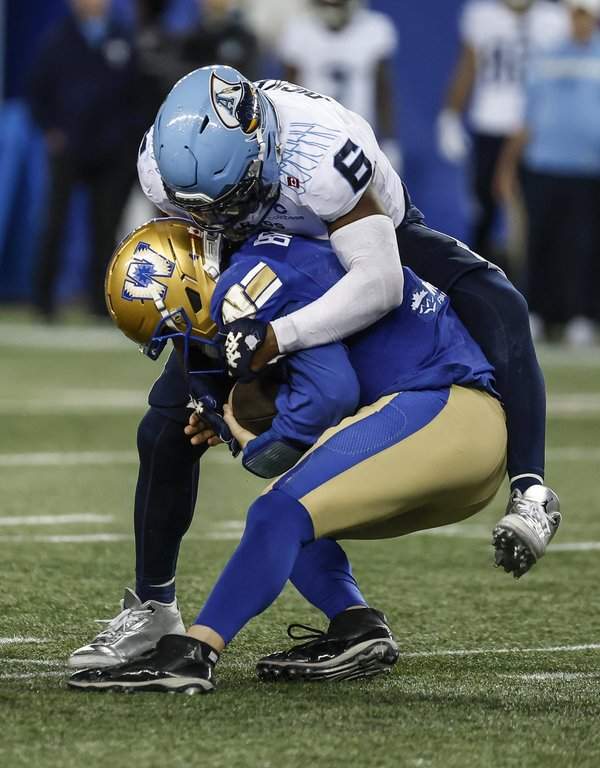
Every time an aging linebacker puts together a sharp stretch in Toronto, the press box goes into nostalgia mode. A veteran linebacker shines again with the Argos. Cue the warm-and-fuzzy narrative about locker-room leadership, craft over youth, and how experience beats athleticism when the calendar turns.
That story is comforting. It is also the exact trap front offices walk into right before a defense falls apart.
When a thirty-something linebacker looks dominant in October or November, the lazy consensus says the front office found a bargain and the player cracked the code of aging. Look closer at what usually happens in Canadian football when a veteran linebacker suddenly pops off the screen. Most of the time, he is not out-running offenses. He is benefiting from scheme camouflage, favorable down-and-distance scripts, or a roster pipeline that failed to develop a younger replacement.
I have sat in enough film rooms and watched enough GM budgets get torched on "one-more-year" extensions to recognize the pattern. Front offices love paying for a highlight reel from three seasons ago while ignoring why the snap count had to be managed in the first place.
The Lazy Consensus Around Veteran Linebackers
Standard sports coverage treats veteran production like a binary switch. Either the player has "still got it" or he is washed. Neither tells you anything useful about football operations.
In CFL defense, linebacker play sits at the intersection of space management, boundary leverage, and read-and-react speed. A twelve-yard field and twenty-second play clock punish hesitation faster than almost any other sport on earth. When a veteran linebacker looks crisp, three things usually happen behind the scenes:
- Protected assignments: Defensive coordinators quietly reduce his sideline-to-sideline pursuit duties and keep him closer to the box or stacked alignments.
- Rotation discipline: His total snaps stay capped so his first step never turns into a half-step in the fourth quarter.
- Adjacent talent: A fast, rangy SAM or nickel back absorbs the perimeter stress that used to expose his hip turn.
None of that makes a veteran linebacker bad. It makes him conditional. Calling a conditional player a true centerpiece is how rosters stagnate.
What "Shining" Actually Measures in CFL Defense
Ask ten casual fans what makes a linebacker stand out and eight will point to tackles, a splash sack, or a timely interception. Tackles are a terrible standalone metric for linebacker quality. A linebacker who consistently cleans up plays six yards downfield is often telling you the defensive line lost leverage or the coverage forced a checkdown.
Real evaluation starts with definitions that press releases skip:
- Trigger latency: The time between offensive key recognition (guard pull, tight end release, backfield flow) and pad movement. Veterans often win here because they recognize formations faster.
- Recovery acceleration: The ability to reverse direction when an offense uses play-action or boundary motion. Age hits this first, even when straight-line speed looks fine on tape.
- Communication load: Calling fronts, checks, and blitz adjustments without burning timeouts or blowing assignments.
When a veteran linebacker with the Argos looks great, check which of those three categories drove the performance. If trigger latency and communication carried him while recovery acceleration quietly eroded, the coaching staff is doing heroic work masking a structural vulnerability.
Imagine a Scenario Where Experience Is the Symptom
Imagine a scenario where a veteran linebacker posts nine tackles, a TFL, and a pass breakup in a prime-time win for Toronto. The postgame show crowns him the heartbeat of the defense. Meanwhile, the 23-year-old developmental linebacker drafted two years earlier sits on the practice roster or plays four special-teams snaps.
Why does that happen? Sometimes the kid just isn't ready. Plenty of prospects wash out because they cannot process CFL motions.
Other times, the veteran's competence creates an organizational blind spot. Coaches naturally lean on the guy who knows every call. Practices become about winning today's game rather than teaching the younger defender how to survive live reps. Twelve months later, the veteran gets hurt or hits the inevitable cliff, and the club has to scramble for street free agents while pretending the transition was planned.
I have watched front offices spend millions patching holes that started as "harmless" veteran extensions. You do not ruin a roster with one aging starter. You ruin it by building your identity around him for two extra seasons.
Why People Ask the Wrong Questions About Aging Defenders
Search engines are full of the same predictable queries whenever a veteran linebacker catches fire: Is [player] still an All-CFL talent? How does a veteran linebacker stay healthy in the CFL? Should the Argos re-sign him?
Those questions assume the main variable is the player's grit. It isn't.
A better question is: What does this player cost against the salary cap compared to the ceiling of the roster spot?
Every snap a 33-year-old linebacker takes is a snap a younger player does not get to learn, fail, and adapt. In a hard-cap league, paying veteran rates for managed-minute production squeezes money away from high-variance positions like edge rushers, boundary corners, and offensive tackles.
Even if the veteran plays at an all-star level for ten games, the opportunity cost compounds. Front offices that confuse short-term reliability with long-term value end up perpetually chasing the middle of the standings.
What Front Offices and Coaches Should Actually Do
Dismantling the veteran-linebacker myth does not mean cutting every seasoned player at thirty. Veteran presence matters when used with cold-blooded precision.
1. Cap Snap Counts Before the Season Starts
Treat veteran production like a high-end relief pitcher. Decide in training camp that the player gets 55 to 65 percent of defensive snaps, heavily weighted toward early downs, red-zone packages, and high-leverage third-and-short situations. Do not wait for hamstring tightness to force the issue.
2. Tie Playing Time to Development Benchmarks
Pair the veteran directly with a younger linebacker in meeting rooms and walk-throughs. Give the younger player explicit game-day packages—starting with sub-packages or boundary stunts—so his mistakes happen under controlled conditions rather than during a fourth-quarter collapse.
3. Grade Film by Unassisted Leverage, Not Box Score
When evaluating whether the Argos should bring a veteran back, strip out every play where a defensive tackle held two blockers or a safety baited the quarterback. Grade only the reps where the linebacker had to win in space on his own. If those reps are declining, let another team pay for the name on the back of the jersey.
The Downside of Taking the Hard Line
There is a real cost to treating veteran success with skepticism. If a front office turns cold on seasoned players, the locker room can lose its glue. Young defenders need someone who knows how to prepare during a three-game losing streak, how to handle media scrutiny after a blown coverage, and how to take care of their body across a brutal schedule.
You can lose a winnable game in September by benching a sharp veteran in favor of an raw prospect who still looks at the sideline after every play. Winning football requires balancing upside against execution. Ignore that tension and your defense turns into a science experiment that gets the coaching staff fired.
Where Real Defensive Edge Comes From
Veterans who know how to read offensive guards and survive in wide-field football deserve respect. Coaches like Chris Jones and defensive minds across the league have built reputations on squeezing every drop of intelligence out of seasoned defenders.
Still, celebrating a veteran linebacker's resurgence without asking why he needed protection—or what happens when his legs finally go—is lazy analysis. Look past the warm glow of the comeback story. Measure the snap distribution, watch how offenses attack his leverage, and judge the Argos not by how bright a veteran shines in November, but by who is ready to step into his cleats when his time runs out.