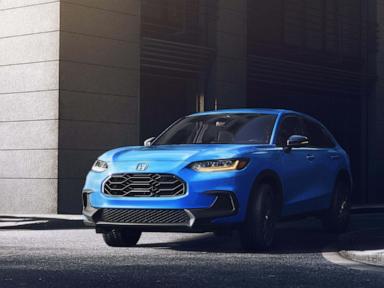
When evaluating the subcompact SUV segment, standard automotive journalism frequently reduces consumer choice to subjective design traits and superficial amenity lists. To analyze utility and consumer expenditure efficiently, we must move past qualitative impressions and examine the underlying cost functions, packaging constraints, and total cost of ownership matrices that govern the marketplace. The comparison between the Honda HR-V and the Kia Seltos represents a divergence in automotive strategy: Honda optimizes for baseline residual value and structural material integrity, while Kia targets volumetric efficiency, feature density, and tiered powertrain options.
The Acquisition and Packaging Cost Function
The consumer purchasing decision begins at the point of initial capital outlay. The base Honda HR-V starts at an MSRP of approximately $28,150, whereas the base Kia Seltos enters the market at $26,485. This initial price delta of roughly $1,665 sets up a structural divergence in how each vehicle allocates utility per dollar spent.
Spatial efficiency remains a primary metric within this segment. Despite the Honda HR-V maintaining an overall exterior footprint that is slightly longer than the Seltos, it yields inferior interior metrics. The Seltos provides 27.8 cubic feet of cargo capacity behind the second row and expands to 64.2 cubic feet total, compared to the HR-V's 24.4 cubic feet behind the second row and 55.1 cubic feet maximum. This dimensional disparity stems from cabin packaging geometry. The Seltos utilizes a more vertical greenhouse architecture, maximizing interior volume relative to footprint, whereas the HR-V prioritizes a sloping roofline that penalizes vertical cargo clearance.
Powertrain Architecture and Dynamic Output
Performance metrics in this segment reveal a clear trade-off between baseline stability and high-end performance scaling.
The HR-V relies exclusively on a single powertrain option: a 2.0-liter naturally aspirated four-cylinder engine producing 158 horsepower and 138 lb-ft of torque, mated to a continuously variable transmission. In rigorous testing, this configuration achieves a zero-to-sixty mph time of 10.2 seconds.
The Seltos approaches powertrain design through segmentation. Its base 2.0-liter engine produces 147 horsepower and 132 lb-ft of torque, achieving a slightly slower zero-to-sixty sprint of 10.6 seconds. However, the Seltos architecture supports a higher-tier performance option: a 1.6-liter turbocharged four-cylinder engine delivering 190 horsepower paired with standard all-wheel drive. This structural availability grants the Seltos a performance ceiling that the HR-V catalog cannot match.
Total Cost of Ownership and Depreciation Mechanics
A purchase price advantage at the dealership does not guarantee long-term financial optimization. True cost of ownership calculations require an examination of fuel efficiency, insurance risk profiles, warranty structures, and five-year depreciation curves.
Fuel economy metrics favor the Seltos in standard front-wheel-drive configurations, achieving an EPA-estimated 30 mpg combined compared to the HR-V's 28 mpg combined. Over a standard 60,000-mile operating window, this efficiency variance shifts marginal operating expenditures in favor of the Kia.
Conversely, asset depreciation alters the long-term balance sheet. Historical residual data demonstrates that the Honda HR-V retains its asset value more aggressively over a standard five-year holding period, experiencing lower percentage depreciation (approximately 33.9%) than the Seltos (approximately 44.4%). This 10.5-point residual advantage absorbs much of the initial purchase price gap, equalizing the five-year ownership costs between the two models to within a narrow margin.
Offsetting the depreciation penalty is Kia's institutional warranty framework. The Seltos is backed by a 10-year or 100,000-mile powertrain warranty, contrasted with Honda's standard 5-year or 60,000-mile coverage. For buyers planning to hold the asset past the medium-term financing window, this warranty structure acts as an institutional hedge against catastrophic mechanical expenditure.
Strategic Allocation of Capital
Selecting between these two platforms depends entirely on how the consumer weighs asset depreciation against immediate operational utility. If the objective is maximum cabin volume, advanced infotainment display acreage, optional high-output acceleration, and long-term powertrain risk mitigation, the structural math points directly to the Kia Seltos. If the objective is minimized depreciation risk, high interior material fidelity in touchpoint zones, and predictable baseline transport without need for configuration variance, the Honda HR-V remains the rational choice. Evaluate your holding period and volumetric requirements before deploying capital into either architecture.