Stand on the concrete docks of the Port of Piraeus on a damp Athenian morning, and you will hear the deep, rhythmic groan of massive gantry cranes hoisting twenty-ton steel containers from the bellies of enormous red-hulled freighters. The containers bear names that sound like modern portmanteaus of global capitalism, but look closer at the hulls. Look at the port authority ledgers. This is no longer merely a Greek enterprise, nor a Western one. It is a vital artery of a project conceived over a decade ago in the smoke-filled backrooms of Beijing—a blueprint to redraw the economic map of the world without firing a single shot.
When Xi Jinping stepped into the grand hall of power in late 2012, Western commentators often made the mistake of viewing China through a lens of temporary industrial expansion. They saw cheap labor, rising skyscrapers of steel and glass, and a colossal manufacturing engine that churned out everything from plastic toys to microchips. They missed the underlying architecture. They missed the ambition. You might also find this connected article useful: The Structural Mechanics of Sovereign Insolvency: Decoding the French Fiscal Trap.
By 2015, that architecture had a name: the Belt and Road Initiative, combined with an ironclad domestic consolidation that left no doubt about who held the levers of the modern Chinese state.
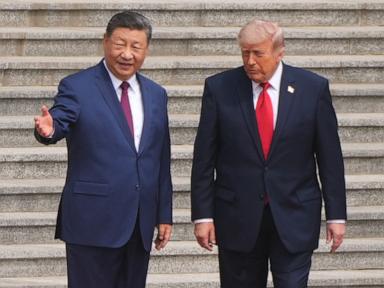
Consider what happens next in this sprawling geopolitical chess match. Xi heads into a high-stakes visit with Donald Trump carrying not just the economic weight of the world's second-largest superpower, but the accumulated momentum of a decade spent systematically rewriting the rules of international trade, digital sovereignty, and regional dominance. As reported in recent reports by Associated Press, the effects are significant.
To understand how we arrived at this precise, tense intersection of global titans, we have to strip away the abstractions of gross domestic product and bilateral trade deficits. We have to look at the human cost and the human will.
The Long Memory of Beijing
Walk through the narrow alleyways of a manufacturing hub in Shenzhen, and you will meet men like Chen Wei. Chen is forty-two, with calloused thumbs and eyes that have watched three distinct eras of Chinese industry pass beneath his workshop windows. In the late nineties, Chen assembled cheap plastic fans for foreign brands that took ninety percent of the profit margin. Today, he manages a automated robotics line that churns out high-precision components for electric vehicles destined for European highways.
"We used to build what they told us to build," Chen says, wiping a smear of machine oil from his forearm with a rag. "Now, we write the specifications."
That shift did not happen by accident. It was engineered.
When Xi consolidated his authority a decade ago, he diagnosed a fundamental vulnerability in the Chinese model: it was rich, but it was dependent. It relied on Western capital, Western intellectual property, and Western consumer markets to keep its hundreds of millions of urban workers employed and pacified. If the West sneezed, Chinese factories caught pneumonia.
The response was a multi-pronged doctrine of self-reliance wrapped in outward expansion. Billions of dollars poured into artificial intelligence, quantum computing, domestic semiconductor manufacturing, and green energy infrastructure. While the capitals of Western democracies became bogged down in populist elections, legislative gridlock, and short-term economic cycles, Beijing planned in increments of twenty, fifty, and one hundred years.
This is the invisible reality that accompanies Xi into every diplomatic summit. He does not negotiate from a position of temporary advantage; he negotiates from a foundational conviction that the pendulum of global hegemony is swinging back toward the East, and that time is the ultimate currency.
The Infrastructure of Influence
To grasp the true nature of modern Chinese power, look away from the stock markets of Shanghai and look instead toward the windswept plains of Central Asia, the dusty ports of East Africa, and the digital fiber-optic cables running beneath the ocean floor.
For generations, Western power was built on military bases, aircraft carriers, and international financial institutions like the International Monetary Fund and the World Bank. These institutions came with strings attached—demands for political transparency, democratic reforms, and structural adjustment programs that often left developing nations reeling.
China offered a different bargain. It offered concrete, steel, and cash without a lecture on human rights.
A highway cutting through the jagged mountains of Pakistan. A deep-water port in Sri Lanka. A digital telecommunications network spanning dozens of developing nations. These projects were not merely commercial investments; they were strategic tethers. They bound economies tightly to the gravitational pull of Beijing.
By the time the world woke up to the sheer scale of this transformation, the new trade routes were already paved. The supply chains were already anchored. When political leaders in Washington or Brussels drafted sanctions or trade barriers, they discovered a sobering truth: you cannot easily isolate an economy that has spent ten years weaving itself into the daily infrastructure of five continents.
The Trump Variable
Now, the calendar turns to another chapter of volatility.
When Xi meets with Donald Trump, the room will be heavy with history and unpredictable energy. Trump views global trade through the transactional prism of a real estate developer—tariffs as a sledgehammer, deals as personal victories or defeats, and America First as an absolute doctrine.
Xi views the encounter through the lens of civilizational destiny. To Beijing, American presidents come and go every four or eight years, swinging the pendulum of U.S. foreign policy from interventionism to isolationism. But the Chinese state remains constant. Its leadership possesses the luxury of infinite patience.
This clash of styles creates a dangerous, fascinating friction. On one side stands a populist leader eager to project strength, secure favorable agricultural purchases, and protect domestic manufacturing through aggressive protectionism. On the other stands a leader who has spent over a decade systematically insulating his nation against external economic shocks, transforming China from a global workshop into a technological and geopolitical titan that refuses to be cornered.
The irony is palpable. The very policies designed by Washington to contain China—tariffs, export controls, tech blockades—have often served to accelerate Beijing's drive toward absolute technological independence. When you lock a giant out of your supply chain, you simply force them to build their own.
The Human Stakes
Behind the vaulted ceilings of diplomatic conference rooms and the blinking tickers of financial terminals, ordinary lives hang in the balance.
In a quiet suburb of Ohio, a laid-off machinist looks at his granddaughter's tablet computer, manufactured in a sprawling factory outside Shenzhen, and wonders where the future went. In a bustling café in Chengdu, a twenty-five-year-old software engineer codes algorithms for autonomous vehicles, confident that her generation will write the rules of the twenty-first century.
These two worlds are locked in a profound, quiet struggle—not just for economic supremacy, but for the narrative of human progress.
The story of the past ten years is not simply that China grew richer or more powerful. It is that the center of gravity of human ambition shifted. The confidence that the Western liberal democratic model was the inevitable destination of all modern societies has fractured. In its place has risen a competitive multipolar reality, where efficiency, state-directed capitalism, and long-term strategic planning challenge the chaotic dynamism of free markets.
When Xi shakes hands across the negotiating table, the cameras will flash, and pundits will dissect every micro-expression for signs of weakness or compromise. But the real negotiation has already happened over the past decade, written into the steel of global ports, the lines of millions of lines of proprietary code, and the quiet determination of a nation that decided it would no longer wait for permission to lead.
The future belongs to those who build it while others are still arguing about the blueprint.