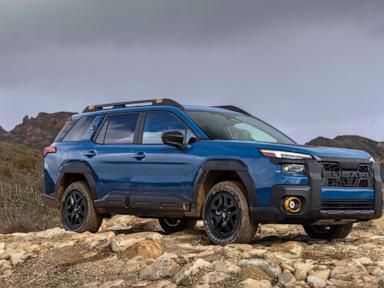
Purchasing a midsize sport utility vehicle requires navigating a fragmented segment where utility, operating expenditures, dynamic capability, and packaging constraints continuously conflict. Automotive evaluation agencies like Edmunds attempt to synthesize these conflicting variables into clean ordinal rankings. However, ordinal rankings obscure the underlying multi-variable trade-offs that consumers must actually manage. Evaluating the midsize segment demands deconstructing the physical and economic constraints governing vehicle design, rather than relying on weighted aggregate scores.
The Dimensional Economics of Packaging
The fundamental engineering challenge of a midsize two-row platform is the zero-sum allocation of interior volume between occupants and cargo. Physical exterior dimensions are bounded by urban infrastructure constraints, specifically standard parking stall widths and garage clearance limits. Within this fixed spatial envelope, manufacturers must optimize dimensional efficiency.
Vehicles that lean into rugged proportions, such as the Honda Passport, prioritize passenger volumetric space and cargo capacity over aerodynamic optimization. This structural choice introduces a direct penalty in thermal efficiency and fuel consumption. Conversely, crossover designs that adopt sleek, wagon-influenced profiles, such as the Toyota Crown Signia, improve aerodynamic drag coefficients and thermal efficiency at the expense of vertical cargo volume and rear-seat headroom.
The primary cost function governing this trade-off is expressed as:
$$Total Utility = f(Passenger Volume, Cargo Volume) - g(Fuel Expenditure, Exterior Footprint)$$
When manufacturers adjust parameters to maximize cargo utility, fuel expenditure increases due to frontal area growth and mass penalties.
Powertrain Specialization and Operating Cost Projections
Powertrain architecture dictates the financial amortization curve of a midsize utility vehicle. The market bifurc
Evaluating The Midsize SUV Segment Through Metrics And Mechanics
technology, lifestyle, business
Midsize sport utility vehicles represent one of the most heavily scrutinized segments in the automotive landscape. Buyers navigating this market face a sprawling array of compromises involving spatial efficiency, powertrain mechanics, platform architecture, and total cost of ownership. Consumer testing publications often rank these vehicles using subjective scoring matrices that obscure the underlying engineering trade-offs. To properly evaluate the class, one must strip away marketing classifications and examine the structural variables governing packaging, mechanical durability, and operational economy.
The Architectural Constraints Of Three-Row Packaging
The primary engineering challenge in the midsize vehicle category is dimensional optimization. Designers operate under a fixed footprint dictated by garage constraints and urban maneuverability, typically hovering around 190 to 200 inches in overall length. Within this finite volumetric envelope, the manufacturer must balance cargo capacity, second-row passenger comfort, and third-row usability.
This creates an inescapable zero-sum mathematical equation. Maximizing cargo volume behind the rearmost seats inherently compresses third-row legroom. Vehicles utilizing a transverse-engine, front-wheel-drive unibody platform—such as the Toyota Highlander, Honda Pilot, or Kia Telluride—prioritize cabin floor flatness and initial footprint efficiency. Conversely, longitudinal-engine, rear-wheel-drive architectures—exemplified by models like the Mazda CX-90—shift weight distribution toward a more balanced 50-50 ratio, altering driving dynamics and longitudinal space distribution.
When analyzing third-row usability, the critical metric is not raw legroom measurement, but hip point height relative to the floor. A low seat cushion forces adult passengers into an unnatural knee-up posture, causing fatigue on long journeys. Vehicles that raise the third-row seating plane to alleviate this issue invariably sacrifice critical headroom, rendering the rearmost seats suitable exclusively for small children.
Powertrain Dynamics And Thermal Efficiency
Powertrain selection within this segment has shifted from naturally aspirated six-cylinder engines to turbocharged four-cylinder units and complex hybrid configurations. This transition is driven entirely by regulatory compliance and fleet-wide fuel economy mandates rather than pure mechanical preference.
Turbocharged four-cylinder engines deliver competitive low-end torque curves, achieving peak twisting force at much lower engine speeds than legacy V6 alternatives. However, under sustained high-load conditions—such as trailer towing or mountain grade climbing—small-displacement forced-induction engines operate in closed-loop enrichment modes to manage exhaust gas temperatures. This results in a precipitous drop in real-world fuel efficiency, frequently performing worse than a larger displacement engine operating at lower specific output.
Hybrid variants introduce a different set of mechanical compromises. By integrating electric drive units into the transaxle, manufacturers reclaim kinetic energy during deceleration and assist the internal combustion engine during initial launch transients, where fuel consumption is highest. The economic trade-off lies in upfront capital expenditure and long-term battery degradation. The additional mass of the hybrid battery pack also alters suspension tuning requirements, demanding stiffer spring rates and more sophisticated damping systems to maintain body control without sacrificing ride quality.
The Cost Function Of Total Ownership
Purchase price represents only a fraction of a vehicle's true economic impact. Depreciation curves, insurance risk profiles, maintenance schedules, and fuel costs dictate the true cost of operation over a standard five-year or seventy-thousand-mile ownership lifecycle.
Depreciation is heavily influenced by brand perception and supply-chain volume. High-volume models with consistent fleet sales tend to depreciate more rapidly in the retail market, while vehicles with constrained supply or cult followings retain residual value more effectively. However, high residual value is often offset by elevated initial transaction prices and higher dealership markups.
Maintenance complexity scales non-linearly with technological integration. Vehicles heavily reliant on complex sensor suites for advanced driver-assistance systems incur significant repair costs following minor cosmetic collisions. Calibration of radar arrays, surround-view camera systems, and LiDAR sensors transforms routine body repairs into multi-thousand-dollar electronic recalibration events.
Evaluating Market Competitors Through Functional Metrics
When comparing dominant models in this class, prospective buyers should bypass subjective driving impressions and evaluate vehicles against specific operational requirements.
- Payload and Towing Capacity: Vehicles utilizing body-on-frame architectures or heavy-duty cooling packages maintain structural integrity under heavy loads, whereas unibody crossovers with maximum towing ratings near five thousand pounds experience significant transmission fluid temperature spikes during sustained towing in ambient high temperatures.
- Cabin Ergonomics and Interface Latency: Touchscreen reliance introduces cognitive load. Mechanical switchgear for primary climate and audio functions reduces driver distraction by allowing tactile muscle memory operation.
- Safety Margin and Structural Rigidity: Small overlap crash test ratings serve as an indicator of structural load-path design. Vehicles that successfully deflect impact energy around the passenger cell rather than absorbing it directly through floorpan deformation consistently minimize occupant injury metrics.
Strategic Procurement Playbook
Navigating the midsize utility vehicle market requires aligning engineering specifications with actual utilization patterns rather than projected lifestyle aspirations. If a vehicle's third row remains folded flat ninety percent of the time, accepting the packaging penalties and fuel economy losses of a three-row chassis is economically inefficient.
Buyers prioritizing long-term reliability should favor naturally aspirated powertrains or mature hybrid systems over newly introduced forced-induction architectures. Conversely, those operating frequently at high altitudes will benefit from the barometric compensation inherent to turbocharged engines, which maintain volumetric efficiency where naturally aspirated motors lose power. Prioritize chassis architecture over cosmetic interior appointments, as structural foundations dictate long-term durability and crash safety margins.