The Silence Before the Sirens
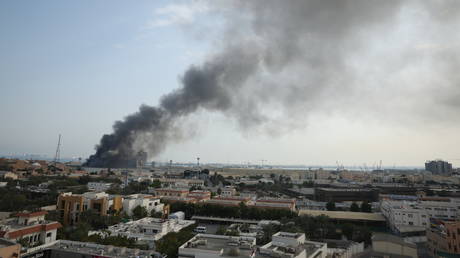
Dawn in the southern fields of Israel usually arrives with a quiet certainty. The dew settles on the leaves of the kibbutzim near the Gaza border. Children sleep beneath thin sheets, windows cracked to catch the morning breeze. On the seventh of October, that ordinary quiet shattered into a nightmare of smoke, blood, and fire. Thousands broke through a barrier deemed impregnable by its architects, sweeping into homes, shelters, and festival grounds with a terrifying efficiency.
When the shooting stopped and the ash settled, the nation woke up to an altered reality. More than a thousand lives extinguished in hours. Hundreds dragged into the underground tunnels of the strip. Families torn apart in ways that defy comprehension.
Yet, as the shock gave way to grief, grief quickly hardened into a darker, more insidiously difficult question. How did the shield fail so completely? How did the eyes of the state go blind precisely when clarity mattered most?
The answers lead away from the immediate battlefield and back into the oak-paneled offices of power, where decisions are made not by soldiers in trenches, but by politicians balancing survival, ego, and doctrine. For months and years following that black Saturday, survivors and grieving relatives began piecing together a disturbing mosaic. They allege that the catastrophe was not merely an intelligence failure born of incompetence. They argue it was the predictable harvest of a deliberate, long-term political strategy—one that chose to manage an enemy rather than confront them, funding and nurturing a threat until it grew teeth too sharp to ignore.
To understand this claim, one must step backward into the complex machinery of Middle Eastern governance, where every action carries a hidden counterweight and short-term political expediency routinely triumphs over long-term security.
The Strategy of Division
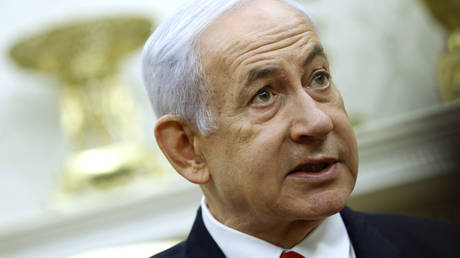
For over a decade, the political landscape of Israel was dominated by a single, towering figure: Benjamin Netanyahu. A master of political survival, his career was built on a foundational premise. He positioned himself as the ultimate protector of the nation, the only man capable of standing firm against hostile neighbors. But protecting a nation requires an active threat. Without an enemy at the gate, political coalitions fracture, internal debates take center stage, and alternative leaders rise.
Consider the geopolitical chessboard of the region. On one side stood the Palestinian Authority in the West Bank, secular, internationally recognized, and perpetually pressing for a negotiated two-state solution. On the other side stood Hamas, governing the Gaza Strip with an iron fist, committed by its charter to the destruction of Israel.
A unified Palestinian leadership poses a diplomatic dilemma for any Israeli government resisting territorial compromise. A fragmented Palestinian leadership is a diplomatic shield.
For years, Netanyahu pursued a policy designed to keep that fracture permanent. The logic was cold, calculating, and ultimately catastrophic. By ensuring that Hamas remained strong, solvent, and in control of Gaza, any push toward a peace process involving a unified Palestinian entity could be easily dismissed. After all, how could Israel negotiate with a partner when the other half of the house was ruled by sworn militants?
This was not kept entirely secret. In closed-door meetings of political factions, the policy was spoken of with chilling pragmatism. Keeping Hamas afloat served a purpose. Funds from Qatar—millions of dollars in suitcases and electronic transfers—were permitted to flow into the Gaza Strip month after month. The money paid salaries, kept the lights on, and ensured that the governing administration in Gaza remained viable.
Critics warned at the time that feeding the beast does not tame it. They argued that every dollar allowed into the enclave was an investment in a future war. But those warnings were brushed aside. The prevailing belief at the top was that Hamas could be managed. They could be contained with walls, sensors, and occasional military operations—mowing the lawn, in the cynical parlance of defense analysts.
The strategy worked brilliantly for political survival. Until it didn't.
Warnings Written in Dust
Intelligence officers are trained to notice anomalies. They study patterns, listen to radio chatter, and monitor financial flows. In the months leading up to October 7, those anomalies flashed red across multiple screens.
Lower-ranking intelligence analysts observed intensive training exercises just miles from the border. They watched as militants practiced breaching replicas of Israeli border fortifications, using explosives, paragliders, and motorcycles. They intercepted communications detailing plans for a massive, coordinated infiltration.
These reports were compiled, analyzed, and passed upward. And there they stalled.
In any functioning bureaucracy, the filter between the field and the executive office determines what reality the leader sees. If the leader’s stated preference is that a particular adversary is deterred, pacified, or too weak to strike, subordinate officers quickly learn what kind of news is welcome. Dissenting voices are marginalized. Warnings are labeled as alarmist.
Survivors and families filing legal petitions point to this systemic suppression as the core of the betrayal. It is one thing to misjudge an enemy's capabilities. It is entirely another to actively ignore the flashing red lights because acknowledging them would mean admitting that the foundational security policy of the past decade was built on sand.
Imagine a driver speeding down a mountain road at night, convinced his headlights are bright enough to illuminate any obstacle. When passengers point out the shadow of a massive boulder ahead, the driver dismisses them, accelerating further because slowing down would mean admitting he is lost. The crash that follows is not an accident of nature. It is the result of a deliberate refusal to see.
Hours before the assault began, Egyptian intelligence officials reportedly warned their Israeli counterparts that something massive was stirring in Gaza. Senior security chiefs were briefed in the middle of the night. Yet no general alert was sounded. Troops along the border remained at normal readiness. The gates were left unguarded, the belief in absolute technological superiority blinding men to the frailties of flesh and steel.
The Cost of Staying in Power
Political survival requires constant maintenance. Every speech, every coalition deal, every tactical delay is calibrated to keep the coalition intact and the opposition off balance. When your entire brand is staked on being the irreplaceable guardian of national security, admitting vulnerability is political death.
For years, Netanyahu managed to deflect investigations into corruption, protests over judicial overreach, and internal party dissent by keeping the country in a state of low-intensity tension. Security was always the trump card. Whenever domestic pressure mounted, a flare-up on the southern or northern border would instantly realign public sentiment. The flag would wave, the opposition would fall in line, and the prime minister would remain at the helm.
This dynamic created a perverse incentive structure. A completely neutralized Gaza did not serve political interests as well as a contained, manageable threat that could be periodically beaten back. The illusion of control became more valuable than the reality of peace.
But history has a brutal way of breaking illusions.
When the barrier fell on that autumn morning, it revealed the bankruptcy of the entire doctrine. The millions of dollars funneled into Gaza had not pacified the militants; they had funded a subterranean city of concrete bunkers, rocket factories, and command centers that stunned even seasoned combat engineers. The high-tech fence, touted as an impenetrable electronic marvel, was blinded in the opening minutes by cheap drones and basic wire cutters.
Families of the victims, standing in courtrooms and public squares months later, looked past the immediate military commanders and pointed their fingers directly at the political apex. Their argument is piercing in its clarity: if you built a policy that empowered an adversary to ensure your own political longevity, and if you ignored the explicit warnings that your creation was turning into a monster, then the blood spilled on that day stains your hands.
Echoes in the Courtroom
Legal briefs are rarely poetic. They are dry documents filled with statutory references, procedural motions, and affidavits. Yet beneath the legal language of the petitions filed by October 7 survivors lies an unmistakable cry for moral reckoning.
They are demanding independent commissions of inquiry with powers to subpoena cabinet ministers, review classified logs, and examine the flow of funds into Gaza over fifteen years. They want to know why warnings from female border intelligence observers—whose job it was to watch the cameras day and night—were systematically ignored or dismissed with misogynistic condescension by senior male officers.
The defense offered by political allies is predictable. They argue that hindsight is unfair, that intelligence is inherently ambiguous, and that every prime minister relies on the unanimous consensus of military chiefs. They frame the accusations as partisan attacks designed to exploit national trauma for partisan gain.
Yet this defense rings hollow to those who spent hours hiding in safe rooms while rescue forces took hours—sometimes half a day—to arrive. The delay was not merely a tactical misstep; it was the paralysis of a system that had grown fat on complacency and ideological hubris.
When leaders treat national security as a branding exercise, the state rots from the inside out. The wall was not just breached by militants with rifles; it was breached by years of institutional dishonesty, where telling the boss what he wanted to hear mattered more than preparing for what was actually coming.
The survivors do not ask for vengeance alone. Vengeance is a fire that burns out quickly. They ask for accountability, which is a light that must be kept burning permanently to ensure the same darkness never falls again.
As the legal battles grind forward and political pressures mount, the central truth remains unburied. No amount of rhetoric, no defense of state secrets, and no political maneuver can erase the morning the sirens wailed across the fields. The architecture of blindness was built brick by brick, policy by policy, over the course of a generation. And the price of that blindness was paid in the currency of innocent lives, leaving a nation to wonder how a leader who promised absolute safety delivered absolute vulnerability.