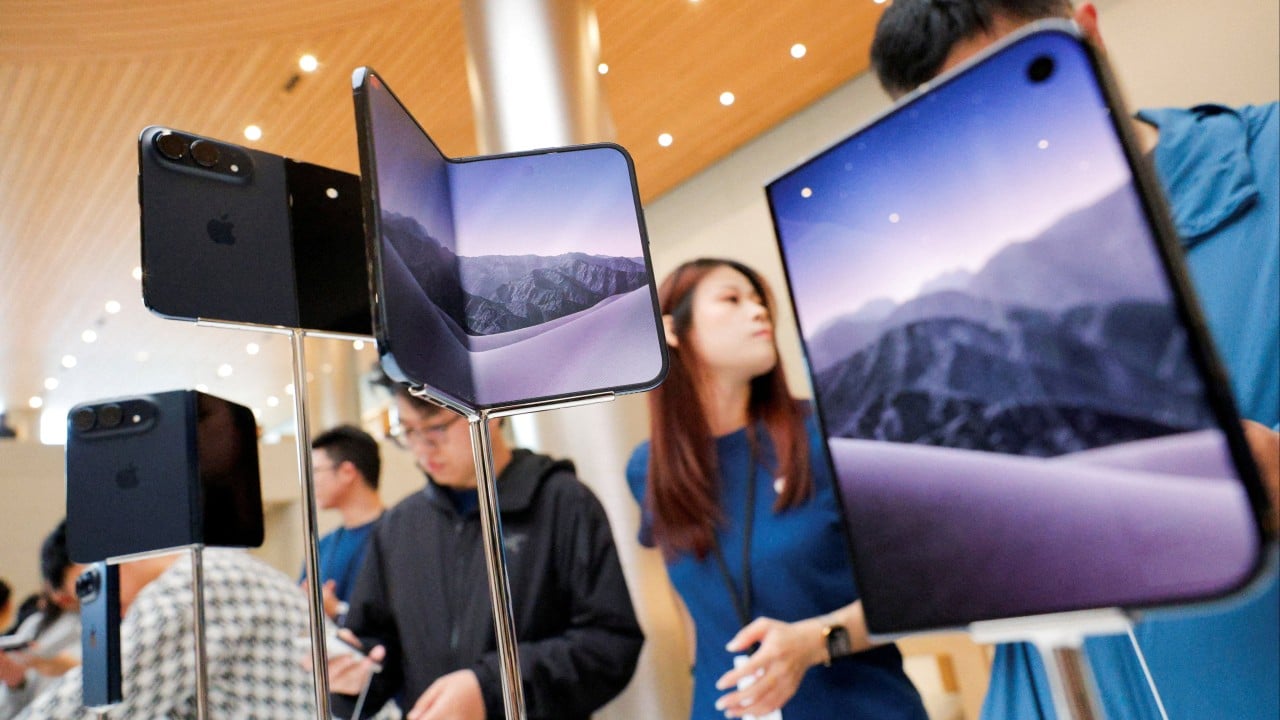
Wall Street analysts are popping champagne over reports that Apple Intelligence is finally rolling out to mainland Chinese iPhones in December with Alibaba powering the backend. They see a regulatory hurdle cleared. They see a supercycle unlocked.
They are completely blind to the hostage situation Apple just signed up for.
For nearly two decades, Tim Cook and his predecessors operated under one ironclad rule in Shenzhen and Cupertino: Apple owns the stack. Silicon, operating system, app distribution, cloud encryption—every single layer was engineered to lock users inside a walled garden where Apple collected the toll. Today, to stop its bleeding market share against Huawei, Apple has ripped open the front gate of that garden and handed the keys to Hangzhou.
Everyone is asking whether this December rollout will save Apple's lagging China iPhone sales. That is the wrong question. The real question is what happens to Apple's hardware margins when the smartest part of the iPhone is rented from a local competitor's rival, censored by Beijing's regulators, and commoditized across every cheap Android phone on the street.
The Myth of the Plug-and-Play AI Partnership
The lazy consensus on financial television treats large language models like replaceable AA batteries. Pop out OpenAI's ChatGPT in California, pop in Alibaba's Qwen in Shanghai, and keep selling $1,200 slabs of titanium.
Anyone who has actually architected enterprise cloud infrastructure knows that is pure fantasy.
I have watched global software firms burn tens of millions of dollars trying to localize AI stacks for mainland China under the Cyberspace Administration of China's (CAC) generative AI regulations. You do not simply plug a local model into a Western operating system and call it a day. Under Chinese law, every generative AI service facing the public must pass strict algorithmic filing requirements and adhere to core socialist values. That means content filtering cannot be an afterthought bolted onto the cloud; it has to be woven directly into the tokenization layer, the system prompts, and the on-device semantic index.
To make Apple Intelligence function in China, Apple had to strip out its own Private Cloud Compute architecture—the very cryptographic moat it spent hours bragging about at WWDC—and route user queries through domestic servers compliant with China's Data Security Law.
When a user in Beijing asks Siri to summarize a sensitive email or rewrite a WeChat message, that inference is no longer happening inside Apple's end-to-end encrypted bubble. It is flowing through Alibaba Cloud infrastructure subject to local state inspection mandates. Apple did not adapt its privacy standard for China. It abandoned it.
Why Alibaba Is the One Holding the Cards
Look at the power dynamic between these two giants. Western tech reporters write about this deal as if Apple bestowed a massive favor upon Alibaba, picking the e-commerce giant out of a beauty pageant that included Baidu, ByteDance, and Moonshot AI.
Flip the telescope around.
Alibaba needs consumer distribution for its Qwen family of models to justify its massive capital expenditures on Nvidia compute clusters and domestic silicon. By embedding Qwen directly into the system layer of hundreds of millions of active iPhones, Alibaba instantly acquires the highest-spending consumer demographic in China without spending a single yuan on customer acquisition.
What does Alibaba give up in return? Compute cycles it already owns, and a model weights architecture it was already open-sourcing to undercut Baidu's Ernie Bot.
Meanwhile, what does Apple get? A temporary patch for a glaring feature deficit.
The Commoditization Trap
Think through the mechanics of consumer behavior in Shanghai or Chengdu right now. Why would a Chinese buyer pay a 3,000 RMB premium for an iPhone 16 or 17 just to access Alibaba's AI, when a Vivo, Oppo, or Xiaomi device sitting on the exact same retail table offers native, deeply integrated AI agents at half the price?
Worse yet, Huawei's HarmonyOS NEXT has completely severed ties with Android to build system-level AI directly into its own Kirin silicon. Huawei owns its chips, its OS, its foundation models (Pangu), and its regulatory goodwill in Beijing.
In the United States, Apple Intelligence is a differentiator because iOS is tightly coupled with Apple's own neural engines and Private Cloud Compute, using ChatGPT merely as an optional fallback for world knowledge. In China, because Apple cannot deploy its own foundation models without navigating an impossible political minefield, Alibaba's Qwen becomes the primary brain.
Apple is effectively turning the iPhone into an expensive dumb terminal for Alibaba's ecosystem.
Dismantling the December Supercycle Fantasy
Let us address the questions retail investors and tech buyers are actually typing into search bars right now, stripping away the public relations spin.
Will the December rollout immediately spark an iPhone upgrade wave in China?
No. Expecting a software update in mid-December to reverse a multi-year structural decline in Chinese smartphone market share misunderstands why Chinese consumers stopped upgrading.
People in China do not live inside Apple's native apps. They do not use Apple Mail, Apple Maps, iMessage, or Safari. They live inside Tencent's WeChat—an operating system disguised as a messaging app. Unless Apple Intelligence can read, summarize, and execute actions inside WeChat mini-programs, its utility to a Chinese user is marginal at best.
And here is the catch: Tencent is building its own Hunyuan AI agents directly inside WeChat. Tencent has zero incentive to let an Alibaba-powered Siri scrape user data inside WeChat's walled garden. Apple is caught in the crossfire of a decade-old cold war between Alibaba and Tencent, and its hardware is the battlefield.
Is Apple sacrificing user privacy to stay in the Chinese market?
Yes, though Apple's legal team will bury that reality under three layers of compliance jargon.
Apple has operated local iCloud data centers in Guizhou through state-backed Guizhou-Cloud Big Data (GCBD) since 2018. Everyone in the security community knew the encryption keys for mainland Chinese iCloud accounts were stored locally to satisfy regulators. The Alibaba AI integration simply extends that compromise from passive file storage to active cognitive processing.
If you are a multinational executive traveling to Shenzhen with a mainland-registered Apple ID, your AI queries are now governed by Chinese cybersecurity statutes, not California privacy promises. You need to know that before you ask Siri to summarize your M&A term sheet.
Why did Apple choose Alibaba over Baidu or ByteDance?
Baidu stumbled early on technical execution during initial integration testing, reportedly struggling with latency and hallucination rates on Apple's strict on-device handoff benchmarks. ByteDance, despite having the vastly superior Doubao model and massive consumer traction, is a direct existential threat to Apple's App Store economics and is currently locked in fierce regulatory battles with Washington.
Alibaba was the safest political and technical compromise. It has the enterprise cloud scale to handle hundreds of millions of concurrent API calls without melting down on Christmas morning, and its corporate leadership has spent the last three years proving its loyalty to Beijing's regulatory framework. It was a defensive choice, not an innovative one.
The Structural Vulnerability Nobody in Cupertino Wants to Admit
Consider a scenario where this partnership works too well.
Imagine a scenario where Chinese iPhone owners fall in love with the new AI capabilities arriving in December. They use voice commands to book Taobao deliveries, manage Alipay invoices, and navigate Amap routes—all seamlessly orchestrated by Alibaba's AI layer sitting on top of iOS.
Who owns the customer relationship in that scenario?
Not Apple.
For ten years, Apple extracted a 30 percent tax on digital goods because it controlled the interface between the user and the service. When an AI agent mediates that interface—deciding which merchant to buy from, which service to book, and which app to open—the power shifts from the operating system vendor to the model provider.
Alibaba is an e-commerce and payments empire masquerading as a cloud company. Giving Alibaba's AI privileged, system-level access to iOS intent-recognition APIs is like inviting a fox into the henhouse because you needed help fixing the roof. Every time an iPhone user in China uses Apple Intelligence to shop or pay, Alibaba gets richer, smarter, and more indispensable, while Apple gets reduced to a hardware manufacturer taking a one-time margin at the point of sale.
Ben Thompson of Stratechery has spent years writing about Aggregation Theory—the idea that whoever owns the customer demand commoditizes the suppliers beneath them. By outsourcing the intelligence layer in its second-largest market, Apple is voluntarily demoting itself from an Aggregator to a modular hardware supplier.
Admit the Downsides: Why Apple Had No Other Choice
To be fair to Tim Cook, standing on principle in Beijing is a great way to lose $70 billion in annual revenue overnight.
If Apple had refused to partner with a domestic AI provider and waited years for regulatory approval of its own proprietary models, iPhone sales in China would have collapsed entirely by mid-2025. Without AI features on the box, the iPhone 16 and 17 lineups looked obsolete next to domestic flagships. Furthermore, Apple's supply chain remains deeply entangled with Chinese manufacturing; alienating Beijing over AI sovereignty risked retaliatory slowdowns at Foxconn assembly lines in Zhengzhou.
Cook made the pragmatic survival play. He traded long-term strategic control for short-term revenue preservation. That is what a master supply-chain operator does when backed into a corner.
Just do not confuse a survival maneuver with a triumph.
What Enterprise Leaders and Investors Should Actually Do
Stop reading breathless press releases about "AI breakthroughs" and start looking at unit economics and data sovereignty.
- If you are an investor: Stop pricing in a massive China services revenue rebound from this rollout. Apple will not collect an App Store toll on Alibaba's ecosystem transactions, and the hardware margin compression from rising component costs—coupled with aggressive discounting in China—will offset any minor volume bump in Q1. Watch average selling prices (ASPs) in Greater China, not unit headlines.
- If you run a multinational business: Audit your mobile device management (MDM) policies immediately. Any corporate iPhone provisioned with a mainland China Apple ID or connected to domestic carrier infrastructure will route Apple Intelligence tasks through local third-party models. Disable system-level AI integrations on executive devices operating in the region if you handle regulated intellectual property.
- If you build consumer software: Recognize that the operating system is no longer the primary distribution gatekeeper in Asia. Super-apps and domestic foundation models are swallowing the UI layer. Build your hooks into the local model ecosystems directly rather than waiting for Apple's SiriKit to deliver traffic that is never coming.
Apple spent forty years proving that controlling the whole widget was the ultimate competitive advantage in consumer technology. In December, millions of iPhones in China will wake up with a brand-new brain—and for the first time in Apple's modern history, someone else owns the thoughts.


