
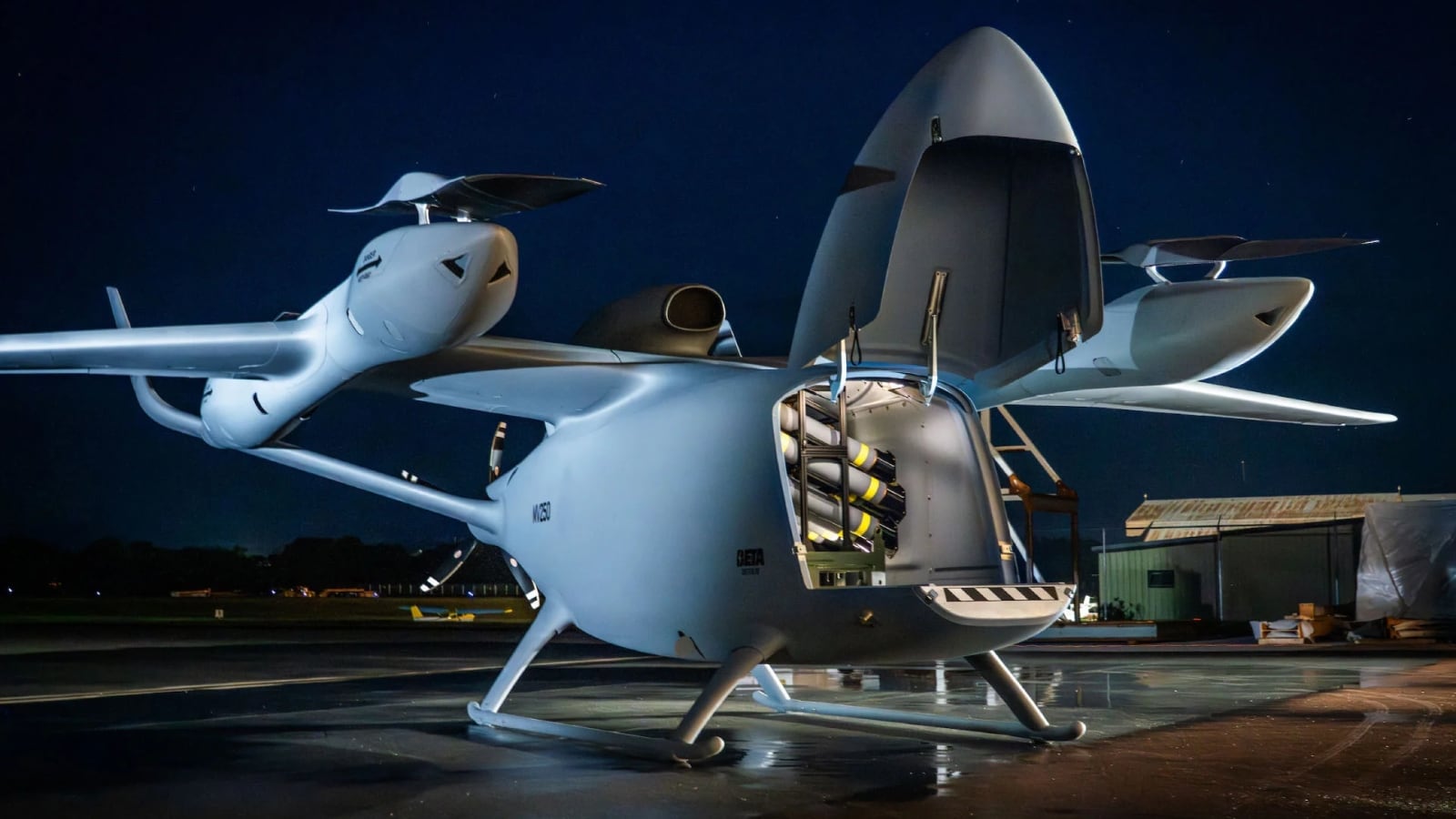
Two California aviation players are rewriting the rules of military procurement. Defense hardware firm Anduril Industries has teamed up with electric vertical takeoff and landing specialist Archer Aviation to build high-payload hybrid and electric attack drones for combat. This partnership bypasses decades of legacy defense bureaucracy by merging commercial electric aviation manufacturing with autonomous combat software. The goal is straightforward: build autonomous military aircraft faster, cheaper, and in far greater numbers than traditional aerospace primes can manage.
The Pentagon faces a glaring math problem in modern warfare. High-end platforms like fighter jets and long-range missiles cost tens or hundreds of millions of dollars apiece. They take years, sometimes decades, to build. When war games simulate high-intensity conflict, stock of these precious platforms depletes within weeks. Defense planners call for attritable mass—unmanned combat systems cheap enough to lose in battle yet capable enough to inflict severe damage.
Until recently, commercial aviation startups and military suppliers occupied entirely different worlds. Commercial firms chased urban air mobility certifications, while defense contractors chased multi-billion-dollar government programs. That separation has dissolved.
The Manufacturing Trap in Defense Contracting
Traditional defense contractors build exquisite weapons. Companies like Lockheed Martin, Boeing, and Northrop Grumman excel at engineering hyper-complex machines designed to last for decades. However, their factories are organized around low-volume production runs. They assemble military aircraft by hand in small facilities, relying on bespoke components from hundreds of specialized subcontractors.
This structure creates massive bottlenecks when military demand spikes. Trying to double the production rate of a conventional military jet or missile system often takes four to six years. Supply chains are fragile. Tooling is highly specialized and difficult to scale rapidly.
Archer Aviation offers something legacy contractors lack: high-volume automated manufacturing lines engineered for commercial scale. To make urban air taxi fleets commercially viable, Archer had to design factories capable of churning out thousands of aircraft components annually under strict safety standards. By tapping into these production lines, Anduril gets immediate access to scaled manufacturing capability for carbon-fiber structures, electric powertrains, and high-density battery systems.
This hardware foundation mates directly with Anduril’s software backbone. Anduril does not treat aircraft as isolated hardware platforms; it treats them as mobile nodes running its Lattice operational software. Lattice ingests sensor data across disparate battlefields, using automated algorithms to track targets and recommend tactical maneuvers.
Combining high-volume electric airframe production with autonomous battle-management software fundamentally alters military economics. Instead of waiting ten years for a exquisite, low-quantity drone program, military buyers can procure thousands of autonomous airframes built on commercial production lines.
How Electric Vertical Takeoff Changes the Tactical Battlefield
Runways are deathtraps in modern conflict. Satellite imagery and long-range precision artillery make static military airfields target number one during any opening salvo. Any combat aircraft that requires a paved, two-kilometer runway is vulnerable before it even starts its engines.
This reality explains the military shift toward vertical takeoff and landing platforms. Small tactical drones already launch from soldiers' hands or small catapults, but they carry tiny payloads over short distances. Heavy transport helicopters can lift serious payload, but they require huge maintenance footprints, burn massive amounts of jet fuel, and leave loud thermal and acoustic signatures.
Hybrid-electric vertical aircraft fit right in the middle.
+-----------------------------------------------------------------------+
|                       THE BATTLEFIELD ADAPTATION                      |
+-----------------------------------------------------------------------+
| TRADITIONAL FIGHTERS          | ELECTRIC HYBRID ATTACK DRONES         |
| Requires 2-mile runways      | Launches from unprepared fields/ships |
| Huge acoustic/thermal traces | Low thermal signature, whisper quiet  |
| Decades to build, costly     | Rapid mass assembly, low unit cost    |
| Low attrition tolerance      | Built for high-attrition conflict     |
+-----------------------------------------------------------------------+
Electric motors produce maximum torque instantly. They operate with far fewer moving parts than turbine engines, sharply reducing mechanical failure points and field maintenance. Their acoustic profile is radically lower than conventional rotorcraft, allowing low-altitude flight beneath enemy radar without tipping off ground troops through engine noise miles away.
By modifying Archer’s airframe designs for military payloads—ranging from multi-spectral electronic warfare pods to precision-guided munitions—the joint initiative creates a new class of low-observable attack platforms. These craft can disperse across distributed island chains or forest clearings, launch vertically without infrastructure, execute strike or reconnaissance sorties, and land at hidden positions for rapid battery swaps.
The Severe Engineering Bottlenecks Nobody Mentions
While the promise of low-cost, mass-produced attack drones sounds convincing in marketing presentations, severe engineering hurdles remain. Enthusiasts often overlook the physics of energy storage and battlefield survival.
Battery Energy Density
Lithium-ion batteries contain a fraction of the specific energy of jet fuel by weight. Jet fuel packs roughly twelve thousand watt-hours per kilogram, whereas advanced commercial battery cells yield under three hundred. This means electric aircraft carry heavy mass penalties. To fly meaningful distances while carrying heavy explosive payloads, these aircraft must rely on hybrid architectures—combining internal combustion generators with electric lift motors—or trade off flight endurance for weapon weight.
Electronic Warfare and Signal Degradation
Commercial electric aviation relies heavily on un-jammed GPS signals and clean communication links. In contested military airspace, electronic warfare units flood radio spectrums with noise. Autonomous attack craft cannot depend on continuous ground control or satellite positioning. If electronic jamming cuts off communication, the platform's onboard software must navigate visually using optical terrain matching and execute targeting decisions without human intervention.
Thermal Management Under Fire
High-output electric motors and rapid-discharge battery packs generate extreme heat during vertical climbs and high-speed maneuvers. Combat aircraft operate in hot desert or humid tropical environments where cooling components becomes difficult. If internal temperatures spike, battery management systems automatically throttle power to prevent catastrophic thermal runaway, crippling the drone mid-mission.
Solving these three engineering limits requires heavy military-grade testing, which rapidly inflates costs. The true test for Anduril and Archer will be whether they can ruggedize these commercial platforms against electronic interference and extreme thermal loads without pricing themselves out of the low-cost manufacturing model.
Wall Street Versus the Pentagon Budget
The financial structure behind this partnership reflects a dramatic shift in how military technology gets funded. Historically, the Pentagon paid traditional defense contractors through cost-plus contracts. The government reimbursed every dollar a company spent on research and development, plus a guaranteed profit percentage. This model incentivized contractors to prolong development cycles and inflate costs.
Anduril operates on a venture-capital-backed model. It spends its own private capital to develop products first, then sells finished products off the shelf to government buyers. Archer, listed publicly on the stock market, brings private capital markets and investor funding to offset manufacturing scale costs.
This high-risk approach forces fast hardware iteration. If a prototype crashes during testing, the engineering team modifies the design and flies another iteration within weeks. Legacy contractors often take months or years just to process design change paperwork through oversight committees.
Yet this private capital strategy carries serious operational risk. Commercial aviation startups burn massive amounts of cash before reaching profitability. Archer must maintain financial stability in its core commercial passenger markets while scaling up defense operations. If commercial adoption stutters or regulatory approvals lag in civil aviation, financial pressure could spill over into defense manufacturing schedules.
Furthermore, traditional defense primes will not yield their market dominance without a fight. They possess unmatched lobbying muscle in Washington and deep roots in key congressional districts where legacy defense manufacturing provides tens of thousands of jobs. Congress often continues funding older, expensive programs simply to protect local employment, regardless of how fast defense technology evolves elsewhere.
What Real Disruption Looks Like on the Airfield
Military transformation rarely happens because of slick announcements. It happens when field units receive hardware that fundamentally changes how they operate in combat conditions.
Imagine a forward operating site in a littoral combat zone. Rather than maintaining a vulnerable multi-million-dollar runway that demands hundreds of support personnel and massive fuel reserves, a small squad deploys ten autonomous hybrid attack drones from standard shipping containers on an unpaved beach.
The drones launch silently in sequence, automatically forming a networked swarm. They communicate with each other over directional, low-probability-of-intercept data links. When one drone encounters an active radar site, it passes target coordinates to the rest of the formation without requiring input from a human operator miles away. Two drones execute electronic jamming, three draw air defense fire, and the remaining platforms strike the target with precise munitions.
If three aircraft are destroyed during the engagement, the mission is still a total success because the remaining assets return to land on arbitrary clearings for rapid battery swapping. The financial cost of the lost aircraft represents a tiny fraction of the enemy surface-to-air defense system they eliminated.
That is the operational doctrine driving the collaboration between Anduril and Archer Aviation. It shifts air power away from rare, exquisite assets that military commanders are terrified of losing, toward massed, autonomous platforms designed for high-attrition battlefields. Traditional aerospace companies must adapt their slow, expensive manufacturing pipelines to match this speed, or risk watching their primary government customer buy its fleets from non-traditional builders.


:max_bytes(150000):strip_icc():focal(749x0:751x2)/Arnold-Schwarzenegger-Joseph-Baena-032926-a90f8d3315fc44a6aebc6d7bb44bda01.jpg)