Reporting on large-scale civil disturbances in Germany—specifically incidents where over 100 law enforcement officers sustain injuries during youth-led demonstrations—typically relies on surface-level casualty counts and generational labels like "Gen Z riots." This framing obscures the operational, sociological, and tactical mechanics driving modern urban escalation. When analysts reduce complex public order failures to generational friction, they miss the structural asymmetry between decentralized, digitally coordinated crowds and rigid, hierarchical state security apparatuses.
Understanding how an urban protest in Germany transitions into a high-casualty engagement requires examining three intersecting variables: the structural anatomy of crowd mobilization, the tactical doctrine of German riot police (Bereitschaftspolizei), and the kinetic realities of dense urban terrain.
The Structural Anatomy of Modern Youth Mobilization
Standard media coverage treats youth-dominated protests as monolithic blocks driven by a single ideological grievance. In operational reality, modern urban unrest in German metropolitan centers—such as Berlin, Hamburg, Frankfurt, or Stuttgart—operates through a Three-Tiered Mobilization Architecture.
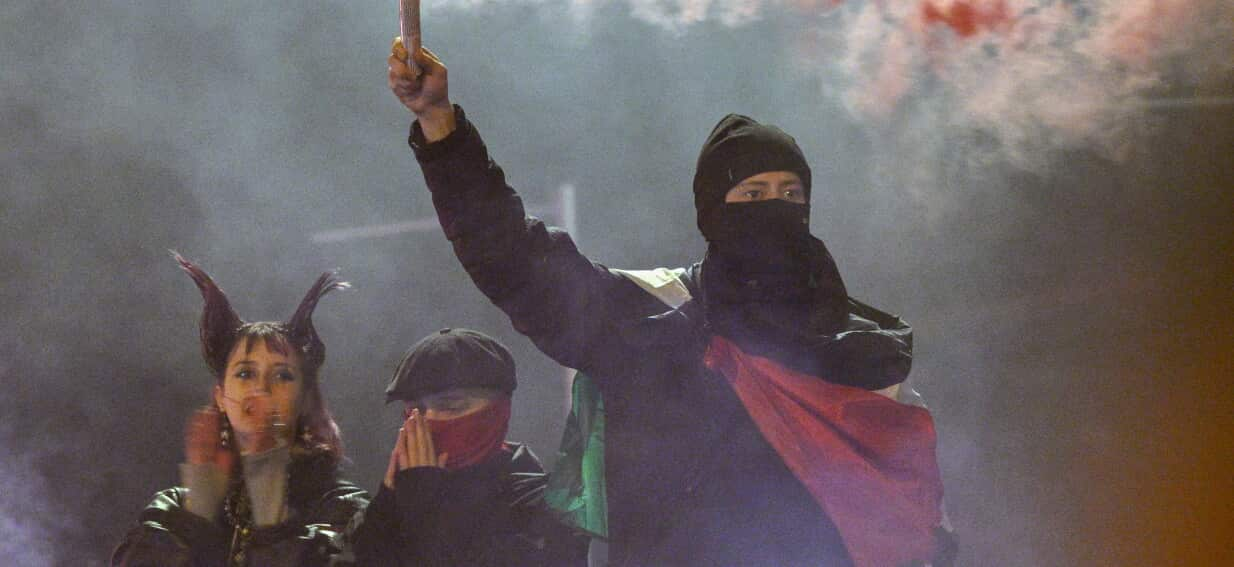
- The Core Ideological Vanguard: A relatively small, disciplined contingent often aligned with established autonomous networks (Autonome or Schwarzer Block). This group understands police containment tactics, utilizes counter-surveillance, and arrives equipped with protective gear and pyrotechnics.
- The Networked Periphery: Young participants mobilized via encrypted messaging apps (Telegram, Signal) and algorithmic social feeds (TikTok, Instagram). Unlike traditional political cadres, this cohort lacks a centralized command structure. They respond to real-time visual triggers—such as viral clips of police interventions—creating rapid, localized surges in attendance.
- The Opportunistic Fringe: Individuals drawn to the kinetic energy of the event rather than its stated political objective. In high-density urban districts, this group exploits the distraction of security forces to engage in property destruction, looting, or direct confrontation with emergency responders.
The friction between these three tiers creates a severe command-and-control problem for law enforcement. Traditional crowd-management models assume a negotiation partner—a protest organizer or steward network capable of de-escalating the crowd from within. When the Networked Periphery and Opportunistic Fringe outnumber the Core Vanguard, no single leader possesses the authority to halt an escalation.
Tactical Asymmetry and the Policing Doctrine
German public order policing is governed by strict constitutional frameworks—specifically Article 8 of the Basic Law (Grundgesetz), which protects the right to peaceful assembly—and a tactical doctrine known as De-escalation and Graduated Force (Deeskalationsstrategie). While effective for predictable, permitted marches, this doctrine faces severe operational bottlenecks when confronted with decentralized, high-mobility youth crowds.
The Containment Paradox (Wanderkessel)
To maintain control without immediately resorting to lethal or severe kinetic force, German police frequently utilize mobile containment formations, colloquially termed the Wanderkessel (moving kettle). Officers form a tight physical perimeter around a marching crowd to isolate agitators from bystanders.
However, executing a Wanderkessel in narrow, historic European street grids—like Berlin's Neukölln or Hamburg's Schanzenviertel—introduces critical vulnerabilities:
- Line-of-Sight Deprivation: Tall residential buildings, parked vehicles, and street furniture break visual continuity between squad leaders and flanking units.
- Vertical Exposure: Tightly packed police formations become static targets for projectiles thrown from rooftops, balconies, and upper-story windows.
- Logistical Bottlenecks: Moving armored water cannons (Wasserwerfer) and prisoner transport vehicles through narrow, barricaded streets slows response times, leaving forward infantry squads isolated.
The Injury Inflation Mechanism
When news outlets report that "over 100 police officers were injured," readers often assume a sustained, pitched battle involving severe trauma. Operational data from German Interior Ministries demonstrates a different reality, driven by broad clinical reporting thresholds and low-grade kinetic attrition.
Under German occupational safety regulations, any physical impairment sustained on duty—ranging from acute acoustic trauma caused by illegal firecrackers (Polenböller), eye irritation from pepper spray blowback, and smoke inhalation, to sprained ankles during rapid sprints over cobblestones—is formally logged as an injury.
The mechanism driving triple-digit injury figures is rarely a single catastrophic breach of police lines. Instead, it is the cumulative effect of sustained, low-intensity projectiles (bottles, paving stones, commercial-grade pyrotechnics) deployed against officers wearing heavy, mobility-restricting protective gear (Körperschutzausstattung) over six-to-twelve-hour shifts. Fatigue degrades situational awareness, increasing the rate of slips, falls, and localized breaches.
The Information Loop and Algorithmic Escalation
In previous decades, the narrative of a riot was shaped after the fact by evening news broadcasts and morning newspapers. Today, the information environment operates inside the event itself, acting as a real-time force multiplier.
Participants act simultaneously as demonstrators and live broadcasters. When a forward police unit executes a targeted extraction (Zugriff) to arrest a projectile thrower, dozens of smartphones capture the physical struggle from tight, context-free angles. Within minutes, these clips are uploaded to social platforms with captions framing the arrest as unprovoked state brutality.
This triggers a Feedback Escalation Loop:
- Stage 1 (Trigger): A localized police intervention occurs to stop property damage or projectile throwing.
- Stage 2 (Broadcast): Context-stripped video circulates rapidly among young users within a five-kilometer radius.
- Stage 3 (Convergence): Outraged peers converge on the specific intersection to "defend" the protesters, swelling crowd density just as police units are attempting to clear the sector.
- Stage 4 (Overload): The sudden influx of fresh, uncoordinated participants overwhelms the local police perimeter, forcing commanders to deploy tear gas, batons, or water cannons—which in turn generates more viral footage, restarting the cycle.
Economic and Sociological Undercurrents
Attribution of these events solely to "youth delinquency" ignores measurable socioeconomic stressors affecting young adults in major German cities. Analysts examining urban unrest consistently identify three structural pressures that lower the threshold for civil friction:
Housing Density and Spatial Compression
Rapid urbanization and severe housing shortages in German metropolitan areas have pushed young adults and students into high-density, lower-income districts. Limited private living space increases reliance on public squares, parks, and streets as primary social venues. When municipal authorities or police clear these public spaces—whether due to curfew enforcement, noise complaints, or protest bans—the intervention is experienced not merely as crowd control, but as the seizure of the community's primary living room.
The Post-Pandemic Socialization Deficit
Cohort studies across Europe indicate that adolescents and young adults who experienced prolonged lockdowns during critical developmental years exhibit lower institutional trust and heightened sensitivity to state restrictions on movement. For a demographic whose formative years were defined by spatial confinement, visible displays of state containment—riot gear, barricades, identity checks—trigger immediate, reflexive resistance rather than compliance.
Economic Stagflation and Real-Wage Erosion
While Germany maintains a robust social safety net, persistent inflation in energy, food, and rent costs has disproportionately eroded the disposable income of entry-level workers, apprentices, and university students. Economic precarity does not automatically cause riots, but it strips away the perceived stake young individuals hold in maintaining civic order. When upward mobility feels blocked, the perceived personal cost of clashing with state authorities drops significantly.
Methodological Flaws in Standard Reporting
Competitor coverage of these incidents routinely fails on three analytical fronts, distorting public understanding and policy responses:
- Conflation of Coincidence with Causation: Labeling an event a "Gen Z riot" because the participants are aged 16 to 25 mistakes demographic presence for ideological motivation. Young people have always constituted the physical vanguard of street protests due to higher risk tolerance and physical stamina. The age of the crowd is a constant; the variable is the communication technology and urban density amplifying their coordination.
- Absence of Denominator Data: Reporting "100 injured officers" without stating the total deployment size (often 2,000 to 4,000 officers for major Berlin or Hamburg operations) prevents accurate risk assessment. A 3% injury rate across a 3,500-officer deployment indicates a very different tactical reality than a 25% injury rate within a 400-officer detachment.
- Binary Framing (Peaceful vs. Violent): Media narratives struggle to capture the spatial segmentation of modern protests. A demonstration of 10,000 people can remain entirely peaceful along 95% of its route while a 200-person splinter group engages in severe violence three blocks away. Treating the entire event as a single homogeneous riot invalidates legitimate political expression while obscuring the specific tactical failures that allowed the splinter group to detach.
Operational Limitations of Current Countermeasures
Municipal governments and police leadership typically respond to high-casualty protest weekends with calls for stricter penalties, expanded surveillance, or bans on specific demonstrations (Versammlungsverbote). Each of these interventions carries severe operational limitations:
- Pre-emptive Demonstration Bans: Prohibiting a march rarely prevents the crowd from gathering; instead, it eliminates the legal framework that requires organizers to provide stewards and follow an agreed route. Unpermitted gatherings scatter across multiple transit hubs, forcing police to divide their forces across a wider geographic area.
- Hardware Escalation: Deploying heavier armored vehicles and more aggressive crowd-dispersal munitions increases the physical standoff distance, which reduces minor officer injuries from hand-thrown objects. However, visible militarization alienates moderate onlookers, accelerating the Feedback Escalation Loop and increasing political pressure on municipal leaders.
- Mass Arrest Tactics: Conducting mass detentions (Einkesselung) ties up hundreds of officers for hours to process paperwork, transport detainees, and secure perimeter lines. This administrative drain leaves the surrounding city under-policed during the critical late-night window when opportunistic violence peaks.
Strategic Imperatives for Urban Security Management
To break the cycle of high-casualty urban unrest without eroding constitutional assembly rights, municipal authorities and law enforcement planners must abandon legacy crowd-control assumptions and execute a structural shift in urban public order strategy:
- Decouple Spatial Management from Confrontation: Replace static, perimeter-heavy containment (Wanderkessel) in narrow historic districts with dynamic, intelligence-led corridor management. Keep transit arteries open to allow peaceful participants to disperse naturally, preventing the pressure-cooker effect that traps bystanders alongside violent agitators.
- Deploy Real-Time Digital Counter-Narratives: Establish dedicated communication teams embedded within police command centers to release raw, unedited body-camera and drone footage within 15 minutes of major kinetic interventions. Neutralizing context-free viral clips in real time disrupts the algorithmic convergence of secondary crowds.
- Standardize Granular Casualty Reporting: Public safety ministries must separate acute trauma requiring hospitalization from minor occupational injuries (acoustic shock, sprains, smoke exposure) in official press releases. Accurate data prevents political overreaction and allows tactical planners to address specific equipment vulnerabilities—such as upgrading ear protection against illegal pyrotechnics—rather than overhauling entire operational doctrines based on inflated headline figures.
- Invest in Non-Police Urban De-escalation: Fund and deploy trained, independent street-work and youth mediation teams (Streetworker) who maintain year-round credibility in high-density neighborhoods. During high-tension events, these actors can operate inside the Networked Periphery to diffuse localized flashpoints before uniformed formations are forced to intervene.