The announced resignation of Ukrainian Prime Minister Yulia Svyrydenko marks the fourth major executive reorganization since February 2022. Operating under martial law, which legally prohibits democratic elections, the Office of the President increasingly relies on structural cabinet reshuffles as a primary mechanism to signal policy adaptation and maintain executive centralized authority. The removal of Svyrydenko, who served for less than a year after her appointment in July 2025, reflects an intentional transition from a domestic economic endurance strategy to a highly targeted, bilateral diplomatic offensive.
To analyze this shift requires moving past political optics and evaluating the structural bottlenecks facing the Ukrainian state apparatus across two primary operational fields: international critical resource dependency and domestic governance under systemic military attrition.
The Strategic Realignment Framework
The reallocation of executive personnel within the Ukrainian government functions under a strict input-output model. When domestic or external variables alter the inputs (e.g., shifts in foreign executive administration priorities, degradation of physical energy infrastructure), the executive branch alters its personnel architecture to match the new output requirements.
President Volodymyr Zelenskyy characterized this specific reorganization as a shift in "political strategy." This strategy can be deconstructed into three core operational pillars:
- Granular Foreign Policy Assignment: Transitioning from generalized diplomatic missions to assigning specific, high-stakes international portfolios to single, highly experienced individuals with direct mandates.
- Defense-Industrial Localisation: Accelerating the integration of state-owned enterprises with Western defense contractors to bypass legislative friction in allied nations.
- Infrastructure Crisis Mitigation: Restructuring domestic ministries to address the immediate physical vulnerabilities of the energy grid under continuous long-range bombardment.
[External Inputs: Infrastructure Attrition & Allied Political Shifts]
                     │
                     ▼
[Executive Realignment: Personnel Shuffles as Governance Pivot]
                     │
         ┌───────────┼───────────┐
         ▼           ▼           ▼
   [Bilateral     [Defense     [Grid
   Diplomacy]   Production]  Resilience]
The Economics of the Washington Pivot
Svyrydenko, a 39-year-old former economy minister, built significant political equity in Western capitals through her management of the United States–Ukraine critical minerals agreement. That deal deliberately linked long-term American economic interests to Ukraine's territorial security. Her anticipated reassignment to lead a critical diplomatic mission—likely the ambassadorship in Washington—points to a structural deficit in Kyiv's current diplomatic architecture.
With changes in the United States executive branch, Ukraine faces a volatile foreign aid trajectory. The transition of Svyrydenko from the premiership to a direct bilateral diplomatic role reveals a calculated calculation: the marginal return on her presence as a technocratic domestic administrator is lower than her projected marginal return as a high-value negotiator in Washington.
The primary bottleneck for Ukraine is no longer merely securing broad international statements of support; it is the execution of highly technical bilateral trade, security, and industrial co-production agreements.
Domestic Executive Consolidation and the Legislative Deficit
Domestically, the role of the Ukrainian prime minister has undergone a fundamental transformation. In peacetime, the premier acts as the manager of the state budget and the leader of the legislative agenda within the Verkhovna Rada. Under martial law, the center of gravity for state policy has shifted entirely to the Office of the President and the National Security and Defense Council.
The structural erosion of the single-party majority held by the Servant of the People party inside the parliament has complicated ordinary legislative processes. In 2024, only a minimal percentage of legislation passed without the reliance on fragile, ad-hoc voting coalitions. By replacing technocratic premiers like Denys Shmyhal in 2025 and now Svyrydenko in 2026, the executive branch maintains dynamic control over the cabinet without undergoing the instability of a full parliamentary crisis.
The leading candidate to succeed Svyrydenko is reported to be Sergii Koretskyi, the chief executive officer of the state-owned oil and gas entity Naftogaz. This choice underscores a profound shifts in internal governance priorities. The state apparatus is pivoting away from macroeconomic deregulation and moving directly toward wartime state capitalism, prioritizing energy security and resource nationalization above all else.
The Asymmetric Attrition Matrix
The political reorganization in Kyiv occurs alongside an intensifying campaign of cross-border infrastructure warfare. This creates a dual-threat mechanism that dictates the timing of political decisions:
Domestic Infrastructure Degradation
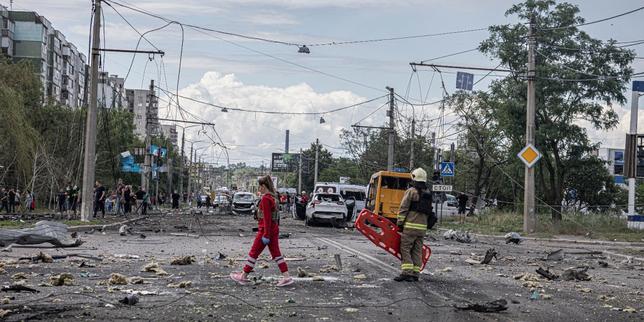
Continuous Russian ballistic and drone strikes against Ukrainian energy infrastructure have forced the government to treat utility management as a direct military theater. The appointment of an energy executive to the highest administrative post in the cabinet is a direct response to this vulnerability. The government must manage severe electricity deficits, distribute emergency generation capacity, and secure critical import lines from Central Europe before winter operational demands spike.
Symmetrical Economic Sanctions
Kyiv has simultaneously scaled up its long-range drone campaign against Russian energy assets, such as the repeated targeting of the Syzran Oil Refinery and logistics infrastructure in the Azov-Black Sea maritime canal. These operations are designed to impose direct economic costs on Moscow, triggering localized domestic fuel shortages and rationing.
This creates a critical strategic loop: as Ukraine increases the operational cost for Russia via infrastructure degradation, it must simultaneously fortify its own domestic administrative machinery to withstand the inevitable asymmetric retaliation.
Strategic Recommendation
The executive overhaul should not be interpreted as a sign of institutional instability, but rather as an aggressive optimization of limited administrative capital. The upcoming confirmation votes in the Verkhovna Rada will expose the exact margins of Zelenskyy's remaining legislative support.
The primary strategic priority for the incoming premier must be the immediate integration of the domestic defense-industrial complex with foreign supply chains, insulating production facilities underground while ensuring the continuous flow of capital from bilateral agreements managed by newly deployed envoys like Svyrydenko.