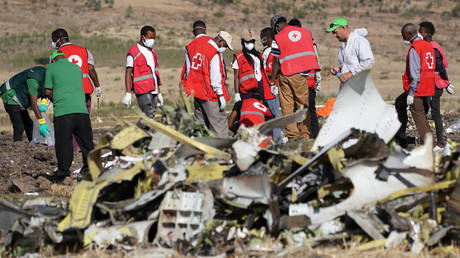
Corporate risk assessment models generally treat civil litigation damages as predictable variables bounded by historic jurisdiction baselines. However, a federal jury in Chicago shattered these conventional actuarial expectations by ordering Boeing to pay $49.5 million to the estate of Samya Rose Stumo, a 24-year-old public health worker killed in the March 2019 Ethiopian Airlines Flight 302 disaster.
The verdict represents the highest single-victim award to date stemming from the 737 MAX structural and software failures, which claimed 346 lives across two aviation disasters. Because Boeing had previously entered into a 2021 stipulation admitting sole liability for the operational failure of the aircraft, the trial was completely insulated from the question of fault. The proceeding focused entirely on quantifying compensatory damages.
To analyze how a jury arrived at a $49.5 million valuation for a single life without the presence of punitive instructions, corporate strategists must examine the underlying legal mechanics, the breakdown of the damages, and the ongoing structural impact on the manufacturer's balance sheet.
The Tri-Partite Function of Compensatory Valuation
When a corporate defendant admits liability in a catastrophic wrongful death action, the defense strategy aims to compress the valuation of a human life using actuarial tables, future earning capacity calculations, and historic regional benchmarks. In this instance, the plaintiff's counsel successfully bypassed standard corporate valuation ceilings by dividing the compensatory claim into three distinct emotional and experiential tranches.
The jury’s total award of $49.5 million is broken down into specific operational components:
- Pre-Impact Pain and Suffering ($21.0 Million): This allocation addresses the decedent's conscious experience during the final moments of the flight. The physical mechanics of the 737 MAX flight control failures involved a series of uncommanded, nose-down pitches caused by conflicting Maneuvering Characteristics Augmentation System (MCAS) inputs. The premium placed on this specific category indicates that the jury calculated a high intensity of terror and cognitive awareness prior to impact.
- Loss of Companionship ($16.5 Million): This metric evaluates the systemic disruption to the familial unit, calculating the long-term void left by the departure of a highly capable individual. The decedent's role as a public health professional working with an international non-governmental organization provided a tangible framework for long-term societal and familial utility.
- Familial Grief and Mental Suffering ($12.0 Million): This component measures the ongoing psychological trauma inflicted upon the surviving parents and immediate relatives, operating independently of the decedent's direct physical experience.
This distribution reveals a critical lesson for corporate risk management: when a trial is stripped of liability debates, the jury's punitive impulses do not disappear. Instead, they are redirected into compensatory categories. The $21 million award for pre-impact pain and suffering demonstrates how a jury can utilize non-economic damages to penalize systemic corporate negligence, effectively inflating standard compensatory baselines into proxy punitive awards.
Judicial Anchoring and the Escalation of Out-of-Court Settlement Premiums
The Stumo verdict does not exist in a vacuum; it serves as a new judicial anchor that fundamentally alters the settlement dynamics for all remaining unresolved civil claims against Boeing. In tort negotiations, plaintiffs and defendants rely on the "shadow of the law"—the predictive value of the most recent jury verdicts—to establish the fair market value of a claim.
The rapid escalation of these benchmarks is clear when tracking recent civil trials involving the 737 MAX in the same jurisdiction:
November Verdict (Shikha Garg Estate) ---------> $28.45 Million
May Verdict (Samya Stumo Estate) --------------> $49.50 Million
The difference between the $28.45 million verdict and the $49.5 million award represents a 74% increase in the baseline valuation for a single passenger casualty within a six-month window. This escalation breaks down standard defense risk models.
For the remaining unresolved cases heading toward public trial—including the upcoming August proceedings concerning Irish citizen Michael Ryan—the Stumo verdict establishes an aggressive floor for settlement demands. Plaintiff attorneys will use the $49.5 million figure to reject standard corporate settlement offers, driving up the ultimate cash outflows required to clear the rest of the litigation backlog.
The Legal Maneuvers: The Appeal Lever vs. Punitive Reinstatement
Boeing’s immediate risk mitigation options rely on the appellate court system. Corporate defense counsel frequently uses the threat of a prolonged appeals process to force a post-verdict settlement at a discounted rate. In this case, Boeing’s appellate strategy will likely rest on two distinct legal arguments.
The first argument centers on the physical prerequisites for pain and suffering. The defense can argue that non-economic damages for pre-impact terror require proof of physical injury before death, asserting that post-impact conscious suffering was impossible due to the nature of the high-velocity aircraft impact.
The second argument relies on the principle of judicial excessiveness. By comparing the $49.5 million award to the historic average of wrongful death payouts in Illinois federal courts, defense attorneys will attempt to show that the jury let emotional bias override objective compensation principles.
However, this appellate strategy carries reciprocal risk. While Boeing seeks to compress the compensatory award, the plaintiff's legal team is launching a cross-appeal to reinstate punitive damage claims against Boeing executives and original equipment manufacturers. These claims were dismissed before the civil trial under the assumption that the 2021 liability agreement foreclosed them.
If an appellate court reinstates the punitive track, Boeing would lose its liability shield. This would force a new trial where internal corporate emails, engineering trade-offs, and regulatory deception could be presented to a jury, exposing the firm to uncapped financial penalties.
Macro-Financial Context: Industrial Recovery Amid Billions in Payouts
To evaluate the long-term operational health of the manufacturer, this $49.5 million verdict must be placed within the broader context of its total regulatory, criminal, and civil financial liabilities.
The cumulative financial toll of the 737 MAX design and quality control failures exceeds $3.85 billion. This total is distributed across several distinct operational and legal categories:
- Commercial Airline Indemnification ($1.77 Billion): Direct compensation paid to global operators to cover revenue losses resulting from the historic 20-month worldwide grounding of the fleet.
- Direct Crash Victim Compensation Funds ($944 Million): Capital deployed to resolve over 90% of the 150+ wrongful death lawsuits via confidential out-of-court settlements.
- Criminal Fraud Dismissal Penalties ($487 Million): Fines levied by the US Department of Justice following structural updates to the company's non-prosecution agreements.
- Mandated Safety and Compliance Capital ($453 Million): Ring-fenced capital dedicated to restructuring internal engineering quality controls and safety management systems.
- Securities and Exchange Commission Settlements ($200 Million): Penalties incurred to resolve regulatory charges of public and investor deception regarding aircraft stability characteristics.
The $49.5 million judgment is a drop in the bucket compared to billions in total losses, yet the company's financial survival depends on its production capacity rather than its litigation reserves. Under the leadership of CEO Kelly Ortberg, the manufacturer has successfully negotiated a non-prosecution agreement with the Department of Justice, avoiding the threat of a criminal felony trial that could have disrupted its lucrative defense contracts.
Concurrently, the Federal Aviation Administration has permitted production rates for the 737 MAX line to rise to 42 aircraft per month. This supply-side acceleration is met with strong market demand, as evidenced by 284 net new orders placed in early 2026.
The cash flow generated by this production ramp-up, backed by an order backlog for the upcoming MAX 7 and MAX 10 variants, provides the liquid capital needed to absorb escalating litigation costs. However, the operational framework has changed permanently: the FAA now retains direct, individual inspection sign-off authority over every aircraft leaving the factory, removing the self-certification privileges that created the initial software design vulnerability.
Corporate risk officers must respond to the Chicago federal verdict by immediately adjusting the settlement reserves for all outstanding product liability claims. The Stumo judgment proves that admitting liability no longer limits financial exposure when the details of a catastrophic system failure are widely known. Juries will simply convert their unexpressed punitive intent into high non-economic compensatory awards.
The strategic imperative is to settle remaining civil claims using the $28.45 million Shikha Garg verdict as a historical reference point, rather than risking a trial that could establish a permanent $50 million baseline per casualty. Simultaneously, corporate treasury teams must protect current cash flows from production lines to fund these rising settlement premiums, ensuring that legal liabilities do not interrupt the manufacturing recovery.