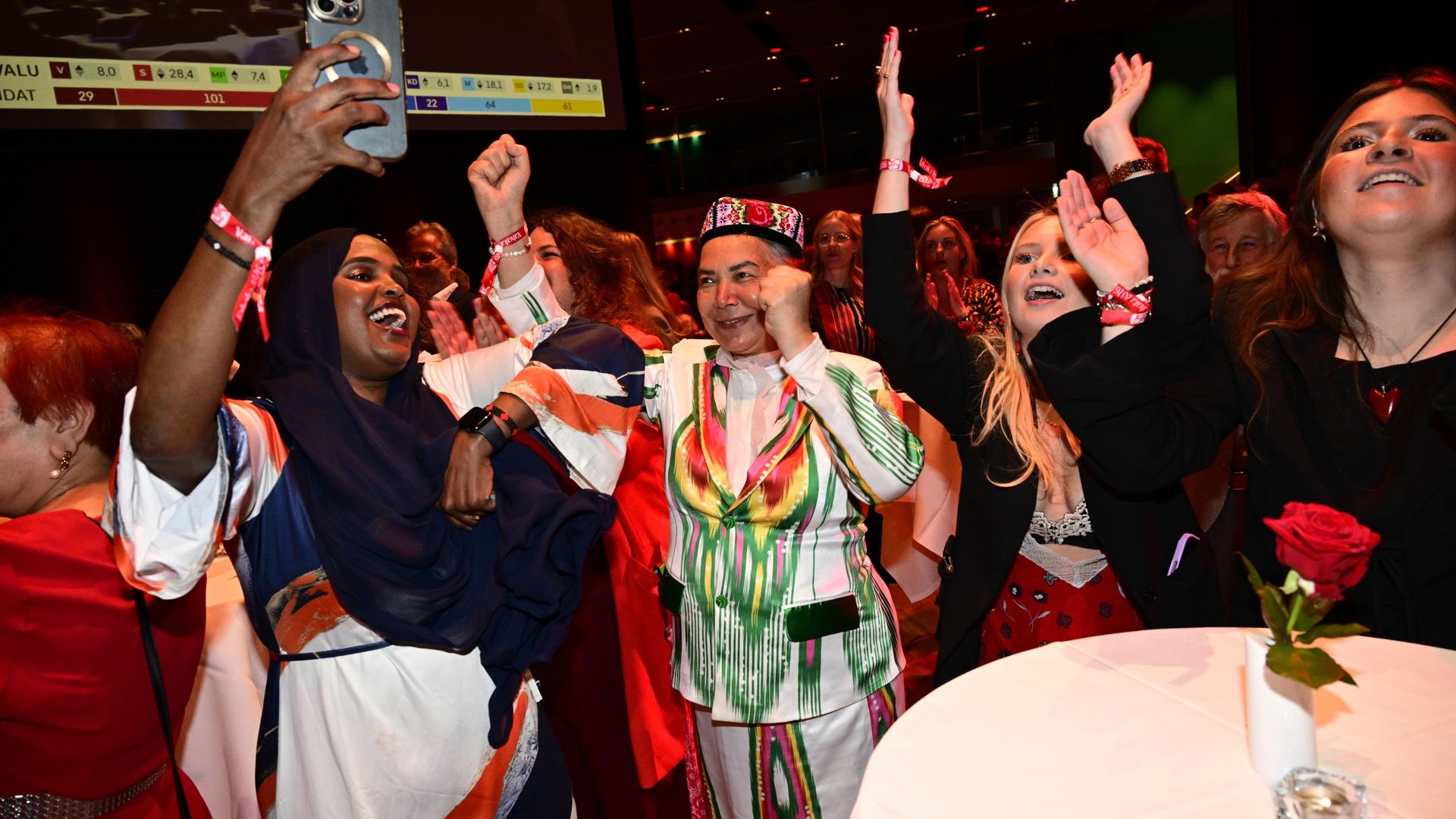
Sweden's political architecture is built on consensus, but the latest parliamentary math has delivered a high-stakes cliffhanger that exposes deep structural fractures. When preliminary counts from the Swedish Election Authority reveal a razor-thin margin—leaving the centre-left opposition and right-wing blocs separated by mere digits in the 349-seat Riksdag—the immediate headlines focus on seat counts and bloc arithmetic. Yet treating this election as a simple horse race misses the systemic institutional fatigue gripping Scandinavian governance.
A single-digit or three-seat majority in a proportional representation system is not a mandate to govern. It is a straightjacket.
To understand how Sweden reached this precarious precipice, one must look beyond the nightly ticker of provisional tallies. The underlying grievances that shaped voter behavior are structural, rooted in years of compounding policy friction. Gang violence, energy market volatility, integration bottlenecks, and the soaring cost of living have transformed what used to be predictable electoral cycles into volatile battlegrounds. When inflation bites hard and public services strain under demographic shifts, the electorate fragments.
Traditional political lines have blurred. The rise of populist factions like the Sweden Democrats permanently altered the bargaining table, forcing historic ideological realignments. Conservative parties that once drew sharp boundaries against the far right found themselves entering structured confidence-and-supply agreements out of sheer pragmatic necessity. Meanwhile, the centre-left coalition, anchored by the Social Democrats, has had to stitch together an increasingly uneasy alliance of urban progressives, rural centrists, and left-wing purists.
This ideological patchwork creates a governing crisis before a single bill is even drafted.
Consider the mechanics of legislative paralysis under a micro-majority. In a theoretical parliamentary scenario where a coalition commands a mere one-to-three seat cushion, party discipline ceases to be a tool and becomes a matter of biological survival. If a single lawmaker catches the flu, or if an internal party defector decides to exercise a point of principle, entire legislative agendas evaporate. Compromise becomes non-negotiable, but the ideological distance between the political extremes leaves very little room for genuine middle ground.
Prime Ministers operating under these conditions spend more time managing internal rebellions than executing national policy. Every budget negotiation turns into an exhausting exercise in political extortion. Fringe parties, despite representing relatively small slices of the total electorate, acquire outsized leverage. They can dictate terms, water down vital reforms, and stall long-term infrastructure planning because the ruling coalition cannot afford to lose their votes.
The consequences for national stability are profound. Sweden faces significant structural modernization demands, from green industrial transitions to deep-seated integration reforms. These challenges require long-term capital allocation and sustained political willpower—commodities that are entirely scarce when a government is perpetually one parliamentary absence away from collapse.
Foreign observers often romanticize proportional representation as the purest expression of democratic will. It ensures that minority voices find a home in the legislature. But purity of representation frequently comes at the direct expense of executive efficacy. When the dust settles on the final overseas ballots and the definitive seat distribution is certified, the victors will inherit a poisoned chalice.
Governance requires authority, and authority requires a stable foundation. Until the underlying societal fractures heal, Swedish politics will remain trapped in this high-wire act, where stability is always temporary and every vote is an existential crisis.
This video provides a direct visual and analytical breakdown of the preliminary vote tallies and the exact seat distribution dynamics shaping the Swedish election results.