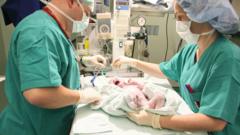
The convergence of acute emotional stress, physiological exhaustion, and systemic infrastructure bottlenecks creates a highly predictable lethal risk profile for middle-aged travelers. When a 55-year-old British tourist collapsed and died from sudden cardiac arrest at Kalavryta Hospital in Greece while his wife received first aid, the public narrative focused entirely on the tragic nature of the event. A clinical and operational analysis reveals that this was not an isolated anomaly, but rather a classic demonstration of stress-induced cardiovascular failure compounding a pre-existing medical emergency. To mitigate these risks, international travelers and medical systems must treat acute psychological stress as a critical medical variable.
The biological mechanisms that drive sudden cardiovascular collapse under these conditions operate through a distinct physiological cost function.
The Physiological Cost Function of Acute Caregiver Stress
When an individual manages a partner's sudden illness, the central nervous system initiates an immediate hyper-activation of the sympathetic-adrenal-medullary axis. This surge releases a massive volume of catecholamines—specifically epinephrine and norepinephrine—into the bloodstream.
For a 55-year-old demographic, this hormonal spike shifts the cardiovascular system into a critical state defined by three compounding variables:
- Myocardial Oxygen Demand Disparity: The sudden influx of adrenaline forces an immediate increase in heart rate (chronotropy) and myocardial contractility (inotropy). This rapidly elevates the cardiac workload, requiring an immediate escalation of oxygen delivery to the heart tissue.
- Microvascular Vasoconstriction: Simultaneously, circulating catecholamines bind to alpha-adrenergic receptors on peripheral and coronary blood vessels. This triggers acute vasoconstriction, restricting total coronary blood flow at the precise moment the heart muscle requires peak oxygenation.
- Arrhythmogenic Substrate Activation: The electrical stability of the myocardium becomes profoundly compromised. High concentrations of stress hormones disrupt the normal exchange of sodium, potassium, and calcium ions across cardiac cell membranes, lowering the threshold for ventricular fibrillation.
This mismatch between oxygen supply and oxygen demand creates localized myocardial ischemia. If the individual possesses underlying, asymptomatic coronary artery disease—common in males over 50—the sudden stress can rupture unstable arterial plaques, leading to instant arterial occlusion and subsequent cardiac arrest.
The Operational Bottleneck of Rural Healthcare Infrastructure
The vulnerability of a tourist in a medical crisis is multiplied by the operational geography of regional health networks. Kalavryta Hospital operates as a regional medical facility within the Peloponnese healthcare network. These regional facilities are optimized for primary care, stabilization, and triaging, rather than high-throughput tertiary interventions such as advanced cardiac catheterization or immediate percutaneous coronary intervention.
The systemic bottleneck in rural travel medical emergencies can be mapped across specific operational constraints:
- Resource Allocation Asymmetry: When a couple enters a small regional clinic with one actively symptomatic patient, 100% of the immediate medical and nursing staff are allocated to the primary patient's triage and stabilization. The accompanying spouse is classified as a non-patient bystander, removing them from clinical monitoring.
- The Resuscitation Paradox: Even when a cardiac arrest occurs directly inside a medical facility, the survival rate for out-of-hospital cardiac arrest presentations inside an emergency room waiting area or bedside remains lower than expected if advanced life support systems are already fully utilized. The transition from active caregiver to critical patient requires an immediate, total reallocation of emergency personnel, creating a chaotic handoff window.
- Advanced Care Transfer Latency: Regional hospitals lack on-site cardiothoracic surgery or interventional cardiology suites. If a patient experiences a complex arrhythmia or refractory cardiac arrest, survival depends on stabilization followed by emergency transport to a tertiary hub (such as the University General Hospital of Patras). The geographic and logistics latency of this transfer window reduces the statistical probability of a positive outcome.
The Travel Risk Multiplier Framework
Global travel introduces unique environmental and physiological stressors that systematically degrade baseline health reserves. Analysts evaluating tourist mortality patterns must account for the cumulative impact of these variables, which act as a force multiplier on standard cardiovascular risks.
[Travel Multiplier: Fatigue + Thermal Stress + Circadian Disruption]
                          │
                          ▼
[Altered Baseline: Fluid Deficit & Elevated Hemoconcentration]
                          │
                          ▼
[Acute Trigger: Sudden Caregiver Stress Surge]
                          │
                          ▼
[System Shock: Ventricular Fibrillation / Plaque Rupture]
The first variable is fluid volume depletion. Travelers frequently experience mild, subclinical dehydration due to altered consumption patterns, prolonged transit times, and unfamiliar microclimates. Dehydration directly reduces total blood volume, forcing the heart to beat faster to maintain a stable cardiac output. This elevates baseline myocardial oxygen consumption before any external stressor is applied.
The second variable is hypercoagulability. Long-distance travel and altered daily routines alter blood rheology. Dehydration increases blood viscosity and hemoconcentration, which elevates the baseline risk of thrombus formation. When combined with the endothelial stress caused by a sudden adrenaline surge, the physical environment of travel creates the ideal conditions for an acute ischemic event.
The third variable is the communication barrier and navigational stress. Navigating a foreign healthcare system during an acute crisis introduces an exceptional layer of cognitive load. The logistical strain of transporting an ailing spouse to an unfamiliar facility, communicating symptoms across language barriers, and managing foreign administrative processes escalates the sympathetic nervous system response far beyond the levels experienced during a domestic medical emergency.
Strategic Protocols for High Risk Demographics
Mitigating the incidence of sudden tourist mortality requires a structural shift in how both individuals and travel providers manage emergency logistics. Relying on reactive local medical infrastructure is an incomplete strategy; risk management must be integrated into travel preparation.
High-risk travelers—specifically individuals over the age of 50 with existing cardiovascular risk factors—must maintain a standardized medical dossier accessible via local emergency data systems on mobile devices. This dossier must include recent electrocardiogram data, current pharmacological regimens, and explicit emergency contact protocols. This eliminates information latency during the initial triage phase.
When an emergency occurs, the accompanying partner must be explicitly monitored by medical staff for secondary stress reactions. Emergency facility design should incorporate automated protocols where caregivers of critically ill patients are systematically screened for vital sign anomalies, particularly if they exhibit signs of extreme psychological distress.
The final strategic pivot rests on the utilization of specialized international medical assistance networks. Rather than relying solely on local emergency infrastructure, travelers must secure medical evacuation and assistance memberships that provide immediate, direct access to bilingual medical directors. These directors can interface directly with regional clinicians, bypassing local communication bottlenecks and accelerating the logistical path toward tertiary care facilities before a secondary physiological collapse occurs.