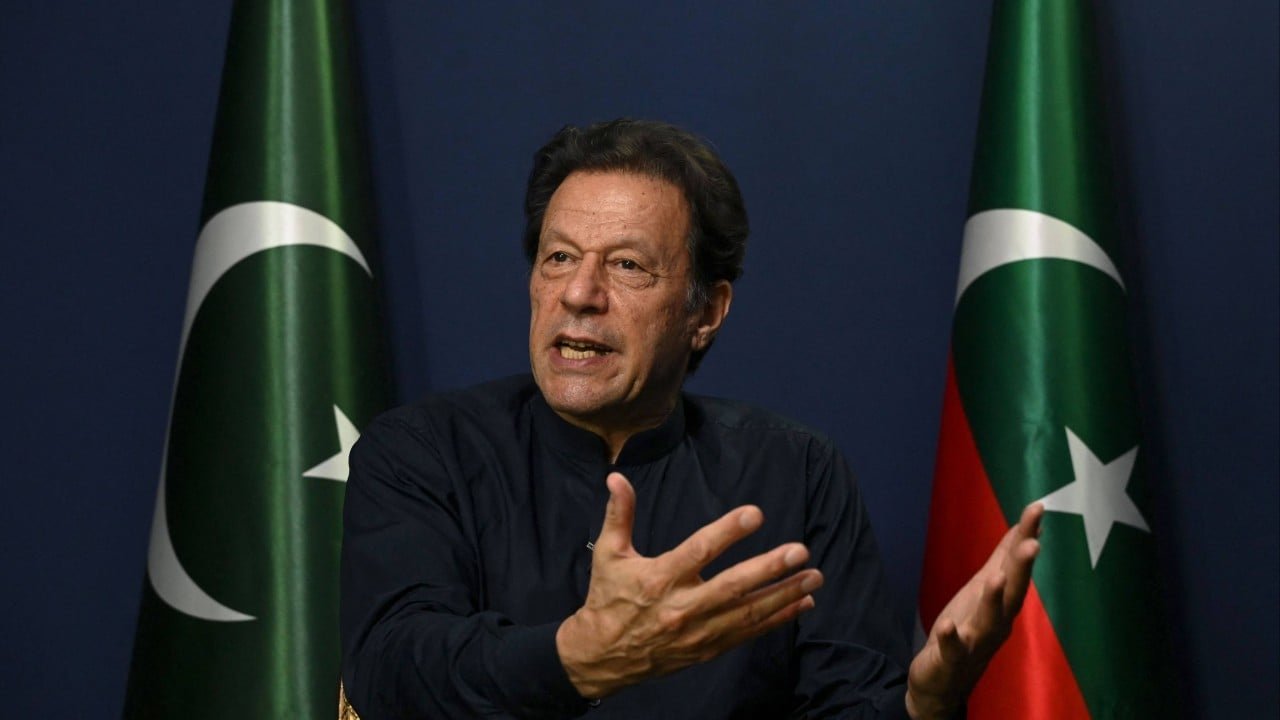
The mechanics of state incarceration operate on a dual track: the penal enforcement of judicial verdicts and the institutional preservation of high-value political detainees. When a state detains a former head of government for an extended duration, the political cost function shifts from penal containment to bio-political risk management. The directive issued by the Supreme Court of Pakistan mandating the transfer of former Prime Minister Imran Khan from Adiala Jail to Islamabad's Shifa International Hospital represents a textbook intervention in institutional risk mitigation. This analysis deconstructs the structural variables, clinical indicators, and systemic pressures governing high-stakes state detention dynamics.
The Tripartite Matrix of Custodial Accountability
State custody of a prominent political figure creates a tripartite friction point involving the judiciary, the executive administrative apparatus, and the detained individual's political network. Each entity operates under conflicting utility functions.
The executive administration, represented by prison authorities and federal ministries, seeks containment stability. Their reporting mechanisms typically emphasize routine compliance, citing baseline medical consultations to neutralize claims of administrative negligence. Conversely, the judiciary operates as a constitutional circuit breaker. When cumulative data regarding a detainee's physical deterioration—such as documented fluctuations in blood pressure, elevated anxiety metrics, and acute ophthalmological degradation like central retinal vein occlusion—reach an inflection point, the apex court must intervene to prevent irreversible physiological liability.
The third variable is the political opposition and familial network, which weaponize information asymmetry. Because prolonged solitary confinement creates a vacuum of verified facts, external actors rely on worst-case extrapolations regarding the prisoner's health. The Supreme Court's mandate to establish an independent medical board including personal physicians acts as an institutional audit mechanism designed to replace speculation with verifiable clinical data.
The Physiological Cost Function of Prolonged Isolation
Incarceration parameters directly dictate biological degradation rates, particularly for aging detainees. Imran Khan, aged 73, has faced continuous detention since August 2023. The physiological toll of high-security confinement manifests across distinct vectors:
- Autonomic Nervous System Stress: Prolonged isolation and restricted spatial mobility stimulate chronic cortisol production, driving systemic hypertension and abnormal pulse metrics. Clinical logs recording readings such as blood pressure spikes and depressed pulse rates indicate an autonomic system under sustained duress.
- Sensory and Ophthalmological Vulnerability: The management of localized pathologies, such as retinal vein occlusion, requires high-precision tertiary care. Institutional prison infirmaries lack the diagnostic infrastructure to prevent permanent functional loss, transforming treatable conditions into structural liabilities for the state.
- Information Deprivation Effects: Complete denial of external communications accelerates cognitive fatigue and psychological disorientation, which compound physical ailments through psychosomatic pathways.
The state's argument that regular prison doctor visits satisfy the duty of care ignores the economic and operational reality of tertiary medicine. Standard prison medical units are built for triage, not for managing complex geriatric profiles under high-stress conditions.
Information Asymmetry and the Political Risk Premium
The operational friction surrounding Khan's detention highlights the hazards of information blackouts in modern statecraft. When access for legal teams, family members, and independent physicians is restricted for extended periods, the political risk premium escalates exponentially.
- The Vacuum Effect: Without transparent, regularized medical bulletins, rumors regarding terminal illness or physical abuse propagate unchecked across digital networks.
- Mobilization Catalyst: Information scarcity serves as a primary coordination mechanism for street-level political resistance. Every restriction on visitation rights functions as an unintended recruitment tool for the Pakistan Tehreek-e-Insaf (PTI) base.
- Judicial Intervention Thresholds: The apex court's decision to mandate hospitalization until the next judicial review date on September 16 effectively strips the executive branch of its monopoly on physical access management. By setting clear parameters—including supervised family interaction and structured communication with exiled relatives—the court attempts to deflate the crisis valuation.
Institutional Mechanics of the Shifa Transfer Protocol
Moving a high-security political prisoner to a private tertiary facility introduces a complex operational protocol designed to balance security mandates with clinical necessity.
The court order stipulates specific structural controls:
- Treatment costs are assumed directly by the detainee's family, removing fiscal friction from the administrative ledger.
- A hybrid medical board is instituted, blending institutional specialists with personal physicians like Faisal Sultan to ensure output legitimacy and eliminate allegations of state-administered foul play.
- Strict behavioral covenants are imposed on political organizers, explicitly prohibiting mass gatherings or public demonstrations outside the hospital perimeter to decouple clinical care from street mobilization.
This framework illustrates a calculated judicial effort to firewall medical treatment from political theater. However, the success of this protocol depends entirely on adherence by both the security apparatus and the political opposition. If the state attempts to use the hospital environment to continue covert isolation tactics, or if the political wing violates the injunction against public mobilization, the fragile equilibrium established by the bench will collapse.
Establish a direct administrative pipeline between the independent medical board and the Supreme Court registry, bypassing executive intermediaries entirely, to ensure that clinical findings regarding the former prime minister's recovery trajectory remain immune to partisan manipulation ahead of the September judicial review.