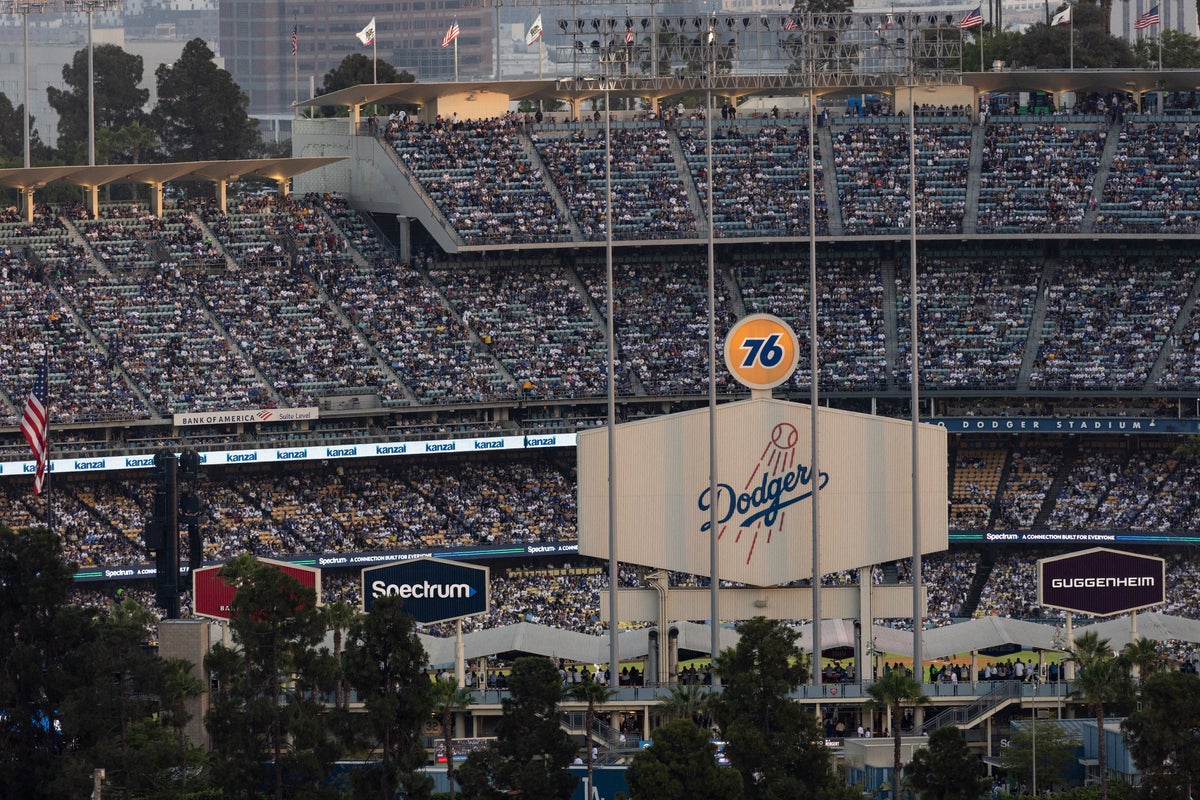
When a spectator attending a Major League Baseball game sustains a traumatic physical injury from an object dropped or thrown from an upper tier, public discourse routinely reduces the event to an unfortunate anomaly. Legal filings tell a different story. The recent lawsuit involving a patron struck by a mobile device falling from the upper deck of Dodger Stadium exposes structural vulnerabilities in venue safety governance. Standard venue risk management models rely heavily on the baseball rule, an ancient legal doctrine that historically shielded stadium operators from liability for batted balls entering the seating bowl. Objects falling from the physical superstructure, however, occupy an entirely distinct legal and operational category. This analysis deconstructs the mechanics of vertical hazard propagation in high-density entertainment venues, evaluates the boundaries of premises liability, and maps the operational adjustments required to eliminate overhead projectile vectors.
The Economic and Legal Mechanics of Stadium Liability
Premises liability law governs the relationship between venue operators and ticket holders. Property owners owe invitees a duty of reasonable care to maintain safe premises. Historically, the baseball rule blunted this obligation for airborne objects inherent to the game, such as foul balls and flying bats. The underlying legal rationale rested on the doctrine of primary assumption of risk: spectators purchasing seats understand that a baseball leaving the field of play represents an open and obvious hazard. You might also find this related article useful: Where the Water Turns to Glass.
A mobile phone or personal item plummeting from an elevated mezzanine defies this foundational defense. Falling consumer electronics do not constitute an inherent risk of watching a baseball game. Consequently, the legal threshold shifts from assumption of risk to ordinary negligence. To establish liability, a plaintiff must demonstrate that the venue operator breached a duty of care, that the breach directly caused the injury, and that foreseeable risks were ignored.
The economic incentives governing venue management dictate a continuous friction between guest freedom and operational control. Maximizing seating density and encouraging pervasive device usage during events drives revenue. Yet, high device usage directly increases the probability of accidental drops. When a consumer uses a smartphone near an elevated railing, kinetic energy transforms that device into a heavy projectile. As reported in detailed articles by ESPN, the effects are significant.
[Device in Use at Elevation] -> [Loss of Grip / Impact with Railing] -> [Deceleration via Vertical Free Fall] -> [Kinetic Energy Transfer to Target]
Venue operators face a complex cost function. Mitigating overhead hazards requires either physical containment infrastructure, such as netting or vertical barriers, or behavioral interventions, such as strict policing of device handling in upper tiers. Both approaches incur capital expenditure and potential friction with the consumer experience. When operators prioritize frictionless consumer mobility over containment, they absorb the tail risk of catastrophic tort liability.
Categorizing the Variables of Vertical Projectile Risk
Evaluating stadium safety through a systems engineering lens requires isolating the primary vectors contributing to overhead incidents. Three distinct variables dictate the severity and frequency of falling object hazards in multi-tier venues.
- Architectural Elevation and Slope: The gradient and height of upper decks dictate the terminal velocity and trajectory angle of a dropped item. Steeper mezzanines increase the horizontal displacement of a falling object, allowing items to clear lower-tier protective overhangs and strike patrons deeper within the seating bowl.
- Ergonomic Design of Viewing Portals: Cup holders, tray tables, and narrow armrests adjacent to vertical drops create systemic vulnerabilities. When storage infrastructure is inadequate, patrons balance devices, beverages, and personal belongings on unstable surfaces or vertical retaining walls.
- Behavioral Density and Distraction: The proliferation of digital engagement inside modern venues splits spectator attention. A consumer monitoring real-time statistics or capturing media simultaneously loses tactile awareness of their physical environment, increasing drop frequency during high-excitement sequences.
These variables interact dynamically. An increase in crowd density restricts the natural dispersion of a falling object, while simultaneous high-attention moments on the field synchronize spectator movements, raising the probability of simultaneous drops across multiple bays.
The Failure Modes of Existing Safety Infrastructure
Traditional venue safety audits focus heavily on field-level protections. Protective netting behind home plate and along the baselines has expanded significantly across professional sports leagues over the past decade. This expansion addresses horizontal vectors driven by batted balls. However, vertical vectors remain largely unaddressed by structural engineering controls.
Most upper-deck safety barriers consist of glass panels, metal mesh, or horizontal railings designed solely to prevent human falls. These barriers are optimized for static load resistance rather than dynamic projectile containment. A standard glass windscreen or open-cable railing prevents a person from tumbling over the edge, but it creates a launching pad for smaller items. If a phone strikes the top rail of a glass partition, the rigid surface can deflect the item outward, altering its descent trajectory and projecting it further into the crowd below than a direct vertical drop would allow.
Furthermore, operational oversight in upper decks relies predominantly on passive monitoring. Usher-to-spectator ratios in upper tiers are frequently lower than those in premium seating sections. Security personnel stationed in these zones are trained primarily to manage crowd congestion and seating verification, not to monitor micro-behaviors like secure device handling near vertical thresholds. This creates a supervisory blind spot where hazardous behaviors persist unchecked until an incident occurs.
Quantifying the Kinetic Threat
Analyzing the physical severity of a falling object requires evaluating mass, velocity, and impact surface area. A standard contemporary smartphone weighs approximately two hundred grams. The upper deck of a modern baseball stadium can easily range from fifty to one hundred feet above lower-tier seating rows.
Utilizing standard physics equations for free-fall motion under gravity, an object dropped from a height of seventy feet achieves a substantial impact velocity upon reaching the lower seating bowl. The kinetic energy delivered upon impact with a human skull or shoulder is sufficient to cause severe lacerations, concussions, or structural bone fractures.
Mass: 0.20 kg (Average Smartphone)
Drop Height: 21.3 meters (Approximate Upper Deck)
Impact Velocity: ~20.4 meters per second (~45 mph)
Kinetic Energy: ~41.6 Joules
While forty-one joules of kinetic energy may appear modest compared to a ninety-five-mile-per-hour baseball, the concentrated point of impact of a metallic and glass device transforms that energy into localized high-pressure trauma. Unlike a soft-surface object, a smartphone features rigid chassis edges and glass displays that act as cutting instruments upon rapid deceleration against human tissue.
Strategic Interventions for Venue Operators
Eliminating the liability associated with vertical projectile hazards demands a fundamental redesign of venue risk mitigation protocols. Operators must transition from reactive legal defense to proactive structural containment.
The implementation of overhead safety netting systems extending beneath upper-deck overhangs represents the most direct engineering countermeasure. While architectural purists resist the aesthetic impact of extensive netting, the deployment of high-transparency, low-visibility Spectra or Dyneema mesh provides an effective physical barrier without obstructing sightlines. These materials capture falling debris before it crosses the vertical threshold into lower seating tiers.
In addition to physical netting, venue operators must redesign seating integration zones. Cup holders and device tethers integrated into upper-deck seating structures eliminate the need for patrons to balance items on retaining walls. Requiring or distributing lanyard systems for devices in upper tiers during high-risk events introduces an administrative control that directly addresses the root human-error variable.
Finally, risk management frameworks must incorporate predictive analytics regarding crowd behavior. By mapping historical incident data against specific game situations, such as high-stakes late-inning moments, venues can deploy targeted digital warnings or increase security presence in high-risk zones precisely when distraction levels peak.
Legal exposure in modern sports entertainment is no longer confined to the playing field. As stadiums grow taller and consumer reliance on mobile technology deepens, the airspace above the spectator bowl becomes an active operational risk. Venue operators that fail to secure this vertical corridor face compounding liabilities that traditional legal doctrines can no longer absorb.