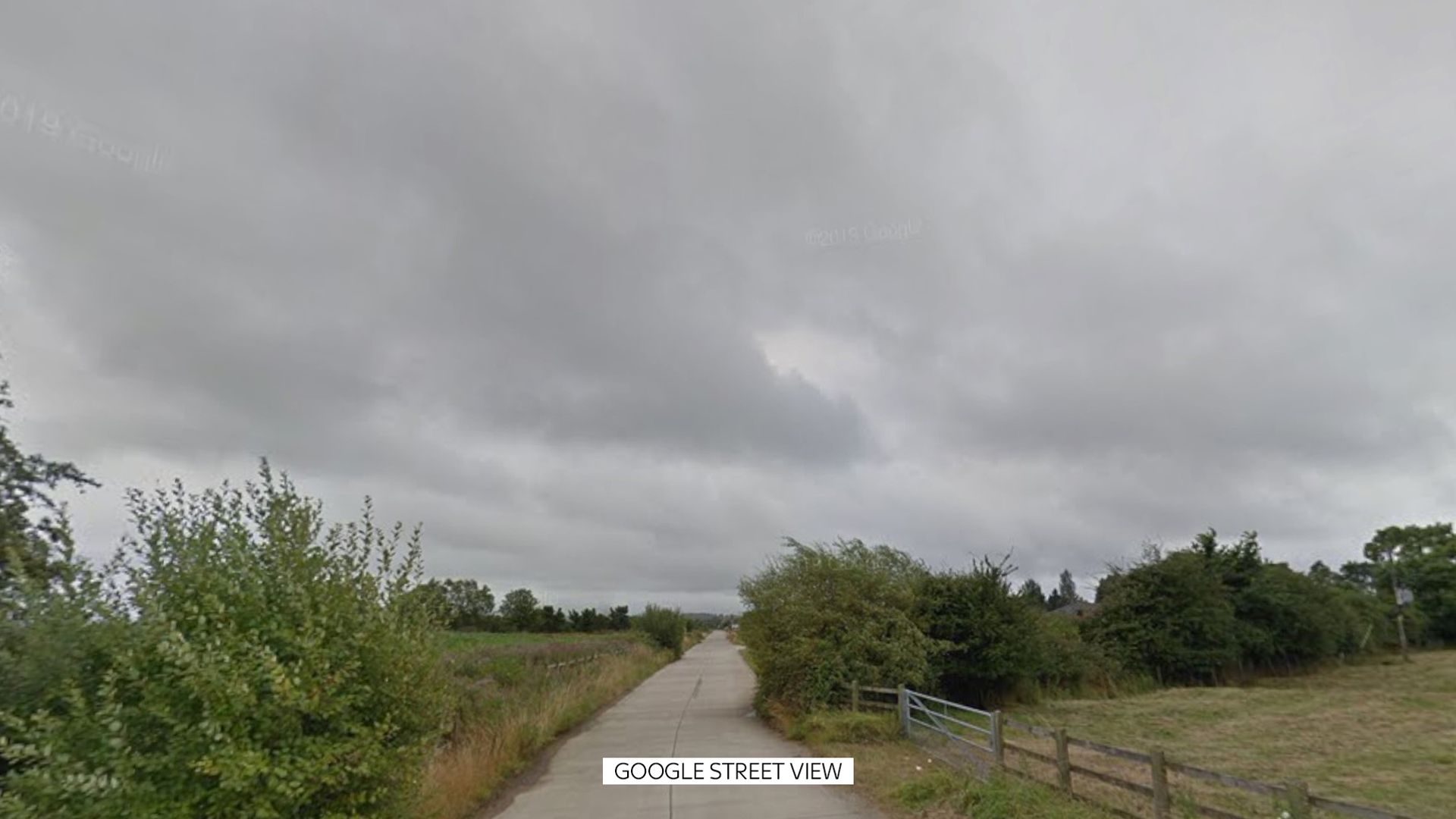
The operational parameters of an active homicide investigation initiated within a localized jurisdiction dictate a strict sequence of evidentiary preservation, custodial containment, and forensic accounting. Following the dispatch response to a fatal shooting at a residential Traveller site in Calcutt, near Cricklade, Wiltshire Police established an immediate operational perimeter. The core parameters involve a man in his 30s declared deceased at the scene, alongside the subsequent apprehension of a man in his 70s and a woman in her 40s on suspicion of firearms possession and assisting an offender. Deconstructing this event requires analyzing the investigative mechanics, legal classifications, and jurisdictional response protocols that govern rural crime containment.
The Tripartite Framework of Initial Response Dynamics
The deployment of emergency services to an isolated or distinct residential compound relies on an immediate triage of variables. In this instance, the sequence began at approximately 08:15 local time following notification from the South Western Ambulance Service. The structural response framework comprises three operational phases executed concurrently by law enforcement agencies:
- Evidentiary Containment: Establishment of a physical cordon to prevent biological and ballistic contamination of the primary crime scene. Road closures isolate ingress and egress points, reducing the variable set for forensic investigators.
- Custodial Interception: Identification, location, and apprehension of persons of interest. The distinction between principal suspects and secondary actors—such as those arrested on suspicion of assisting an offender—establishes the initial matrix of culpability.
- Jurisdictional Resource Allocation: Mobilization of specialist homicide detectives, scene-of-crime officers, and localized patrols to maintain public order and manage community relations during the acute phase.
The initial arrests of a septuagenarian man and a woman in her forties on specific statutory suspicions rather than immediate murder charges indicate a tiered investigative posture. Investigators often utilize preliminary statutory powers regarding accessory actions or weapons possession to secure individuals while forensic teams process ballistic signatures and trace evidence.
Ballistic Traceability and Weapon Recovery Vectors
The utilization of a firearm within a localized, closed-community setting introduces complex variables regarding provenance, concealment, and ballistic fingerprinting. Firearms identified in rural or semi-nomadic community settings frequently present distinct chain-of-custody challenges.
When law enforcement executes a murder inquiry involving ballistic evidence, the analytical protocol demands three distinct data streams:
- Toolmark Analysis: Matching recovered cartridge casings and projectiles to the specific internal rifling characteristics of a seized firearm via comparison microscopy.
- Gunshot Residue Distribution: Swabbing suspects and surrounding environmental surfaces to establish proximity to discharge events, noting the degradation rates of organic and inorganic residues over elapsed time.
- Chain of Possession Mapping: Reconstructing the acquisition, transfer, and storage lifecycle of the firearm to establish possession timelines prior to the fatal incident.
The arrest profile—focusing on possession and obstruction—suggests that the primary physical weapon may either be undergoing forensic recovery or that investigators are building a circumstantial web of liability while ballistic tests are processed off-site.
Legal Mechanics of Accessory and Principal Liability
The categorization of arrests in high-severity violent crimes provides insight into the prosecution's early evidentiary posture. Under English criminal law, an individual can be detained under suspicion of murder, but the dual arrest for firearms possession and assisting an offender points toward a segmented theory of the crime.
Principal liability requires establishing direct causation between the accused's actions and the victim's cessation of life. Conversely, secondary liability or the offense of assisting an offender requires proving that an individual acted with knowledge of an offense having been committed, with the intent to impede the apprehension or prosecution of the primary actor.
In closed residential sites, familial and social proximity frequently accelerates the formation of post-incident obstruction networks. Investigators deploy targeted interrogation strategies to isolate timelines, separating the actions taken during the primary conflict from those executed during the immediate containment window.
Community Policing and Information Architecture
High-profile incidents within distinct demographic communities require deliberate communication strategies to mitigate operational friction. Police forces managing investigations within Traveller and nomadic sites navigate specific sociological boundaries. Trust deficits can impede witness testimony, forcing investigative teams to rely more heavily on technical forensics, automatic number plate recognition (ANPR) systems, and telecommunications data than on cooperative eyewitness accounts.
The public appeal issued by Detective Chief Inspector Phil Walker emphasizes logistical cooperation: securing witness accounts of suspicious activity preceding the 08:15 hour threshold. The information architecture of a rural murder probe depends on closing temporal gaps between the last confirmed sighting of the victim alive and the dispatch timestamp of the emergency services.
Strategic Execution and Next-Phase Directives
To transition from an initial containment posture to a formal Crown Prosecution Service charging decision, the investigative team must execute three sequential protocols:
- Complete the comprehensive forensic sweep of the Calcutt site cordon, exhausting all biological, digital, and ballistic collection vectors.
- Analyze digital extraction reports from seized mobile devices to reconstruct the communication network active among the arrested parties and the deceased prior to the incident.
- Cross-reference ballistic database entries with regional intelligence holdings to determine the legal or illicit origin of the firearm utilized in the fatal discharge.