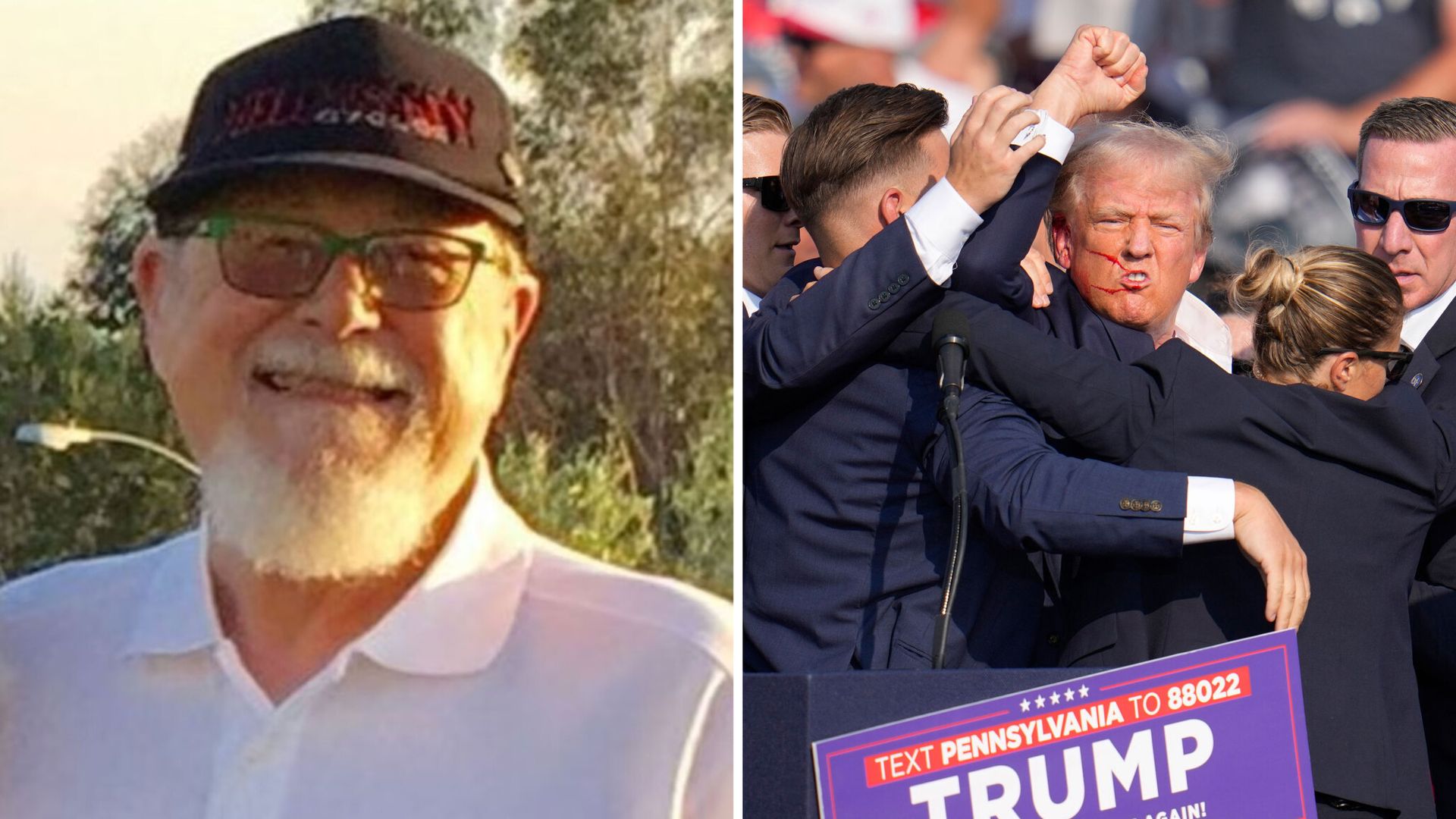
The assassination attempt against former President Donald Trump during a 2024 campaign rally in Butler, Pennsylvania, exposed critical fractures in modern protective intelligence, spatial risk assessment, and tactical deployment. While public discourse often focuses on the chaotic immediacy of the event, a rigorous post-mortem reveals a cascade of systemic breakdowns. The subsequent death of rally attendee Corey Comperatore on-site, alongside critical injuries sustained by other spectators—including James Copenhaver, who later succumbed to complications stemming from his wounds—demands an unvarnished examination of the operational mechanisms that enabled the breach.
The Spatial Risk Deficit
Security management for open-air political events operates under an inherently unfavorable asymmetry. Unlike hardened federal facilities, a campaign rally at an agricultural fairground or outdoor venue presents an expansive, porous perimeter. The fundamental metric of executive protection is the denial of elevated, line-of-sight vantage points within effective rifle range.
In the Butler incident, the primary point of failure originated outside the inner sterile zone. The AGR International building, situated roughly 400 feet from the podium, offered an unobstructed trajectory and a stable firing platform.
- Perimeter Definition Error: The outer perimeter was established too narrowly, relegating tactical observation of key high-ground features to local law enforcement resources stretched beyond their operational capacity.
- The Line-of-Sight Vulnerability: Any topographical or architectural feature within a 500-yard radius capable of supporting a high-velocity rifle platform represents a high-priority tactical sector. Leaving such a sector outside immediate physical interdiction zones introduces an unacceptable probability of failure.
- Communication Friction: Law enforcement spotters identified the perpetrator moving suspiciously near magnetometers nearly an hour before shots were fired. The failure was not a lack of localized observation, but the latency and degradation of communication channels transmitting that intelligence up the tactical chain to response units.
The Cost Function of Retaliatory Accountability
In the wake of the shooting, administrative fallout focused on institutional culpability. Internal reviews and congressional oversight committees produced dozens of recommendations, leading to limited disciplinary suspensions for select Secret Service personnel. However, viewing institutional reform through the lens of punitive suspensions misdiagnoses the core pathology.
When operational redundancies fail, assigning individual blame without altering structural architecture creates a false sense of security. The cost function of tightening security at open-air political events involves balancing public accessibility against absolute risk mitigation. Agencies frequently default to administrative compromise, trimming resource allocation under the assumption that historical threat baselines will hold. The 2024 incident proved that low-frequency, high-consequence actors do not conform to historical baselines.
Tactical Response Latency
The timeline of the engagement illustrates the lethal cost of tactical latency. Approximately twelve seconds elapsed between the initial shots fired by the assailant and the neutralizing round delivered by the counter-sniper team. During this window:
- The target sustained a wound to the right ear.
- Civilians positioned in the direct line of fire absorbed lethal and critical ballistic impacts.
- Protective details were forced into reactive scrambling rather than preemptive neutralization.
The core objective of advanced sniper-observer teams is pre-engagement deterrence and instantaneous threat termination upon weapon presentation. The delay in neutralizing the elevated threat underscores a structural deficiency in counter-sniper positioning and proactive engagement authorization thresholds when potential threats are spotted outside the immediate barrier but within lethal range.
Strategic Outlook
Mitigating future vulnerabilities in political gathering security requires an uncompromising overhaul of asset deployment protocols. Jurisdictional handoffs between federal protection details and local municipal or county emergency services units must be unified under a single, centralized operational command structure. Multi-agency coordination cannot rely on ad-hoc radio interoperability or informal observation sharing.
The baseline assumption for any high-profile public assembly must treat adjacent elevated terrain not as an external variable, but as part of the core defensive perimeter. Until protective intelligence frameworks integrate comprehensive topographical control into every outdoor venue design, the margin for catastrophic failure will remain unacceptably narrow.