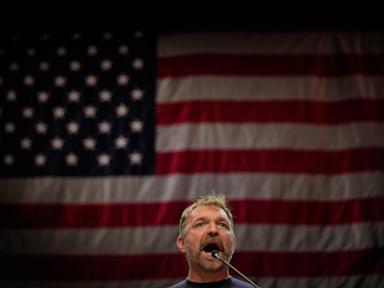
Campaign opposition research operates on a foundational axiom: an unmitigated internal liability will inevitably become a public asymmetry. The recent structural failure within the Maine U.S. Senate campaign of Democratic challenger Graham Platner highlights a critical execution breakdown in political risk assessment. When Platner’s wife, Amy Gertner, disclosed historical, sexually explicit digital communications to then-political director Genevieve McDonald during a formal internal vetting cycle, the campaign miscalculated the transition velocity from private liability to public liability.
Standard political journalism treats this disruption as a moral or domestic narrative. A precise, mechanics-driven analysis reveals it is a textbook case of architectural failure in non-disclosure protocols, asymmetric information distribution, and flawed crisis containment.
The Strategic Failure Mode of Self-Vetting
A political campaign operates as an organization designed to secure a plurality of votes under compressed time horizons. In high-stakes environments, such as a challenge to a long-term incumbent like Senator Susan Collins, the internal information asset distribution must be tightly managed. The structural failure of the Platner operation can be broken down into three distinct components.
[Internal Disclosure] -> [Absence of Binding Legal Guardrails] -> [Information Arbitrage (Leak)]
The Trust Dependency Bottleneck
Gertner initiated the disclosure to campaign leadership to preemptively evaluate the candidate's strategic vulnerabilities. This created a structural vulnerability. The campaign substituted an interpersonal trust model for an institutional compliance model. Aides determined that historical communications with between six and twelve women on platforms including Kik were a private matter currently mitigated by behavioral counseling. By relying on a subjective assessment of personal loyalty rather than immediate legal or structural isolation of the risk, the campaign created a single point of failure.
The Leak Mechanism and NDA Absence
Information within a campaign possesses a specific decay rate and an external arbitrage value. Genevieve McDonald resigned her position following separate controversies involving Platner’s historical digital footprint, including deleted Reddit posts. Because McDonald left the organization without executing a binding severance agreement or non-disclosure agreement (NDA), the campaign lost structural control over its internal risk database. The data was subsequently transferred to primary media outlets, including The Wall Street Journal and The New York Times. The mechanism of the leak is entirely structural: when the cost of disclosure to an individual is lower than the perceived ethical or political utility of exposure, disclosure occurs.
Asymmetric Verification Dynamics
The public fallout illustrates the classic trap of partial denials. Platner stated to reporters that McDonald’s specific narrative was "not true," yet campaign officials concurrently verified the core reality of the explicit communications to major networks. This structural friction—where the candidate attempts to litigate nuance while the organization concedes the underlying fact—destroys communication alignment. It shifts the media narrative from the historical infraction to the active management capability of the candidate.
Weaponized Domestic Solidarity
The deployment of a candidate's spouse to counter negative media amplification follows a highly specific crisis management framework. Gertner’s public response, delivered via a five-minute, informal video and official campaign statements, attempted to alter the transaction costs of the story by shifting the framing from political character to institutional privacy.
- The Gossip Reframing Strategy: By classifying detailed investigative journalism from national outlets as "gossip," the campaign attempts to downgrade verified corporate outputs into unverified interpersonal noise.
- The In-Group/Out-Group Dynamic: Gertner’s statements positioned the former political director’s disclosure as an explicit betrayal of a personal friendship. This tactic attempts to penalize the whistleblower using social norms rather than political arguments, neutralizing the policy implications of the data by focusing on the ethics of its transmission.
- The Imperfect Marriage Defense: Acknowledge a baseline level of marital friction ("being married is hard") to normalize the underlying behavior. By framing counseling as a proactive optimization process rather than a reactive damage-control measure, the campaign attempts to neutralize the negative utility of the initial infraction.
This framework rarely alters the trajectory of hard opposition research. While it solidifies the existing base of support, it fails to address the underlying data points processed by independent or uncommitted voters.
Endorsement Retention and Electoral Math
The impact of information shocks on a political campaign can be quantified by monitoring endorsement volatility and polling deviations. The Platner campaign maintains a paradoxical position: despite a compounding series of digital footprint disclosures, the institutional scaffolding of the Democratic Party has remained intact.
| Endorsing Entity | Strategic Rationale for Retention |
|---|---|
| Sen. Bernie Sanders | Protection of a high-value populist platform targeting economic inequality. |
| Rep. Ro Khanna | Alignment on specific anti-establishment and anti-war foreign policy vectors. |
| National Party Infrastructure | High structural barrier to replacing a presumptive nominee after the withdrawal of primary alternatives. |
The retention of these endorsements is not a validation of the candidate's behavior, but a calculation of structural substitution costs. Because the state’s primary landscape had already consolidated around Platner after high-profile dropouts, the transaction cost of forcing a candidate replacement late in the election cycle exceeds the projected liability of defending a damaged incumbent-challenger.
Strategic Playbook for Risk Mitigation
To arrest the current downward trajectory and isolate the cascading risk of further digital asset disclosures, the campaign executive team must immediately execute a structural pivot. The current strategy of ambiguous public denials paired with trailing spouse videos has reached a point of diminishing returns.
The campaign must transition to an absolute disclosure protocol. The internal compliance team must conduct an unmitigated audit of all remaining digital communications from the past 15 years, compiling every potentially damaging asset into a single internal repository.
Rather than allowing independent actors to control the timing and distribution of subsequent leaks, the campaign must systematically publish any remaining problematic material in a single, controlled corporate release. This structural dump artificially compresses the news cycle, forcing media competitors to process all negative data points simultaneously rather than allowing a prolonged burn that drains campaign resources over months.
Simultaneously, all operational communications must switch to mandatory end-to-end encrypted platforms with zero-retention parameters, legally insulating the remaining staff via retroactive, enforceable non-disparagement frameworks tied to severance structures. The candidate must cease all public litigation of historical details and pivot 100% of public delivery to macroeconomic metrics, specifically regional healthcare infrastructure and wage stagnation indexes, effectively raising the cognitive processing cost for voters who wish to focus on non-policy variables.