The relocation of Indonesia's capital from Jakarta to Nusantara is not merely an administrative shift; it is a high-stakes stress test of infrastructure resilience, ecological engineering, and logistical execution. When environmental pressures, specifically seasonal forest and land fires, intersect with a mega-project still in its foundational phase, the vulnerabilities of the master plan are exposed. Analyzing this crisis requires stripping away political rhetoric and examining the structural mechanics of how environmental volatility threatens large-scale urban development in tropical biomes.
The Geographic Realities of East Kalimantan
Nusantara is being constructed within the forest-heavy terrain of East Kalimantan, a region historically susceptible to land-clearing practices, peatland vulnerability, and seasonal drought intensification driven by climate oscillations like El Nino. The fundamental operational error in early-stage regional planning often involves underestimating baseline ecological volatility. Planners frequently treat land as a blank canvas rather than a dynamic, reactive system.
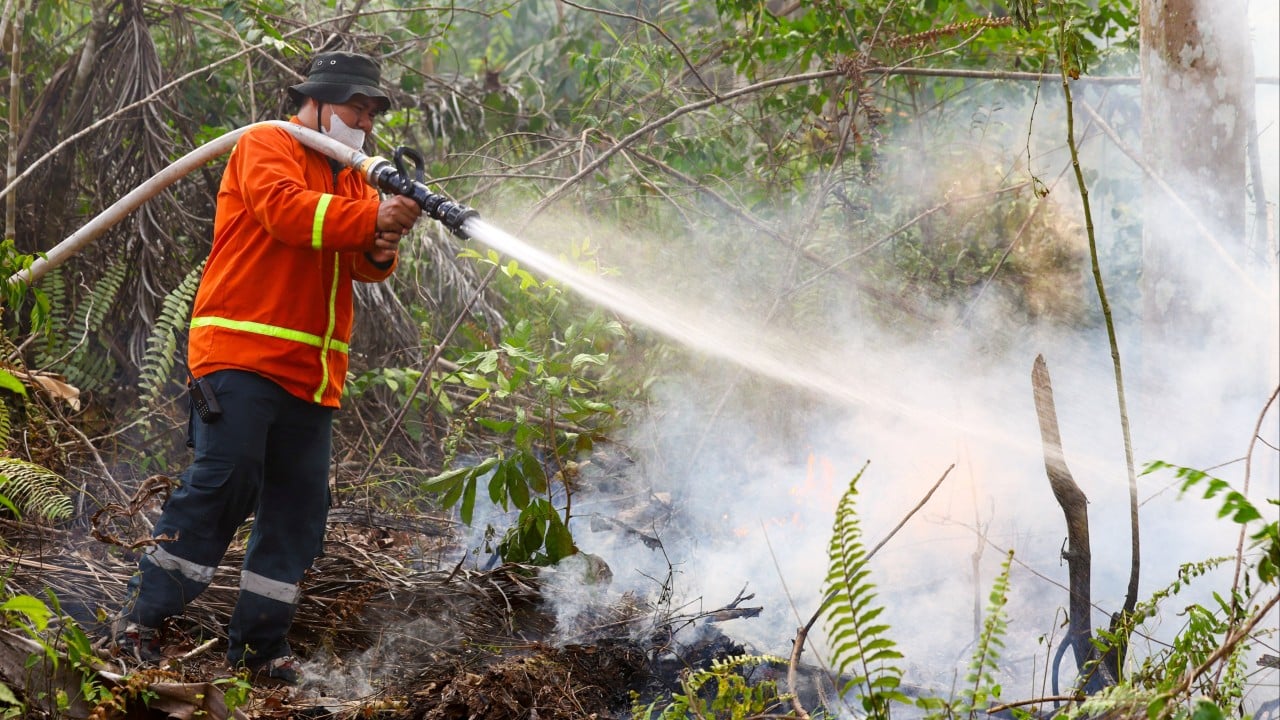
When fires approach the perimeter of a new administrative center, they trigger a cascade of systemic failures:
- Logistical Bottlenecks: Heavy construction traffic shares narrow regional arteries with emergency response units, restricting the rapid deployment of specialized assets such as water-bombing aircraft or heavy ground suppression teams.
- Air Quality Deterioration: Particulate matter concentrations spike rapidly, dropping labor productivity on open-air construction sites and forcing project delays to protect worker health.
- Resource Reallocation: Capital and personnel normally dedicated to structural completion must be immediately diverted to perimeter defense and asset protection, halting expansion momentum.
The Logistics of Crisis Intervention
The tactical decision to order in specialized carriers and external emergency assets highlights a reactive posture rather than a proactive defense grid. In mega-project management, relying on reactive logistics implies a failure of contingency modeling.
When a critical asset like a new capital city faces systemic environmental threats before basic occupancy thresholds are met, the cost function shifts dramatically. The financial exposure is not limited to the physical damage of timber or undergrowth. The true cost is found in the erosion of investor confidence, the delay of target operational dates, and the compounding expenses of emergency logistics. Deploying heavy transport and aerial firefighting units to East Kalimantan underscores the reality that buffer zones around the new city limits were insufficiently wide or ecologically hardened to absorb dry-season fire pressures.
The Economic Mechanics of Relocation Pressure
Capital city relocations are designed to decentralize economic activity from Java and alleviate Jakarta’s chronic subsidence and congestion. However, shifting the administrative core into an active ecological frontier creates a dual-risk profile.
The first risk is structural vulnerability to natural hazards. Concrete and steel cannot easily negotiate an active wildfire front without comprehensive firebreaks, subterranean water networks, and immediate suppression capabilities. The second risk is opportunity cost. Every rupiah spent on emergency environmental mitigation in the early phases of Nusantara represents capital diverted from core municipal utilities, digital infrastructure, and transport grids.
Operationalizing Forest Defense in Tropical Urbanism
Securing a forest-embedded metropolis requires a fundamental shift from traditional urban planning to defensive ecological management.
- Establishment of Green Firebreaks: Implementing native, high-moisture vegetation buffers around municipal boundaries to naturally retard flame spread without relying solely on artificial barriers.
- Decentralized Water Reservoirs: Constructing dedicated multi-use retention basins that serve both daily urban water needs and high-pressure fire suppression systems during dry periods.
- Automated Early Detection Grids: Deploying thermal imaging sensors and IoT-enabled particulate monitors across the surrounding forest canopy to identify ignition points before they transition into crown fires.
Urban projects built within vulnerable biomes must internalize environmental friction as a permanent operational variable. The friction observed in East Kalimantan demonstrates that physical construction velocity must never outpace ecological stabilization.
Strategic Horizon for Regional Stabilization
The long-term viability of Nusantara hinges entirely on separating political deadlines from environmental realities. Rushing the relocation timeline while the surrounding forestry management framework remains immature invites recurring logistical crises. To neutralize future threats, the administrative authority must transition from emergency asset deployment to institutionalizing permanent, predictive ecological monitoring. Capital must be permanently locked into defensive environmental engineering rather than treated as a flexible line item subject to reallocation when construction delays mount. The success of the move depends not on how fast concrete is poured, but on how effectively the urban perimeter can metabolize and resist the natural volatility of the Bornean ecosystem.