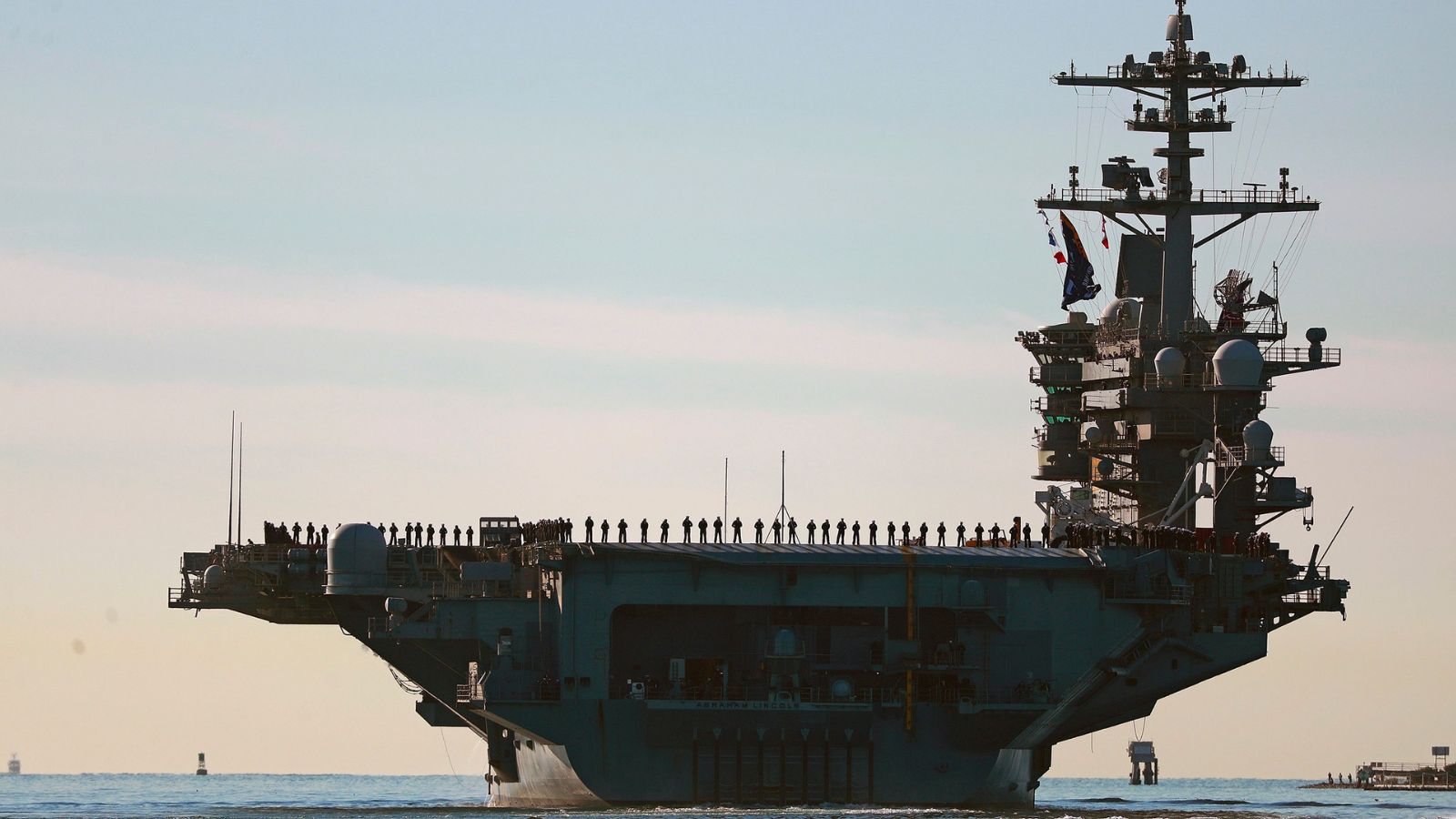
Evaluating the assertion that the United States can sustain a naval blockade of Iran indefinitely requires shifting away from political rhetoric and examining the underlying logistics, economic friction, and strategic trade-offs. Pete Hegseth’s assessment regarding an open-ended maritime interdiction campaign overlooks the complex variables governing modern naval warfare, choke point vulnerability, and endurance economics. A maritime blockade is not a static wall of steel; it is a dynamic, resource-intensive filter that exacts a continuous toll on both the enforcer and the target. Deconstructing the viability of an indefinite blockade requires analyzing three core operational dimensions: resource consumption and asset rotation, geographic choke points under asymmetric threat, and the macro-level economic feedback loops that dictate staying power.
The Operational Mechanics of Maritime Interdiction
A sustained blockade of Iranian ports and transit corridors requires continuous presence across multiple maritime domains: the Strait of Hormuz, the Gulf of Oman, and the broader approaches of the northwestern Indian Ocean. Naval architecture dictates that surface combatants, particularly guided-missile destroyers and aircraft carriers, operate on tightly regulated maintenance cycles. Hull wear, engineering plant fatigue, and munitions replenishment impose a hard ceiling on how long a single strike group can remain on station without rotating back to a deep-maintenance facility such as regional dry docks in Bahrain or home ports in the continental United States.
Indefinite enforcement demands a minimum operational tempo that accelerates the degradation of high-value assets. Each carrier strike group operates under a structured deployment lifecycle designed to prevent systemic burnout of both crew and machinery. Maintaining a continuous presence of combat-ready hulls capable of enforcing a strict embargo requires a force multiplier of auxiliary ships, including fleet replenishment oilers, dry cargo carriers, and repair vessels. If the logistics train experiences a disruption—whether through contested sea lanes or dry-dock shortages—the blockade transitions from a hermetic seal to an intermittent patrol, drastically reducing its strategic utility.
Furthermore, the personnel component introduces a compounding friction. Surface warfare officers, flight crews, and enlisted technicians face unrelenting operational stress during prolonged combat-readiness postures. Fatigue degrades reaction times, increases maintenance error rates, and strains retention across specialized technical ratings. The assumption of indefinite duration ignores human capital depletion, treating naval forces as infinite inputs that do not suffer from cumulative wear.
Asymmetric Geography and the Cost Asymmetry of Force Protection
Geography heavily favors defenders operating from interior lines when the contested zone is a confined body of water like the Persian Gulf. Iran has spent decades developing an anti-access area-denial architecture designed specifically to make surface operations prohibitively expensive for an adversary. This network integrates coastal defense cruise missiles, fast attack craft armed with heavy weaponry, mine warfare capabilities, and an extensive inventory of loitering munitions and ballistic missiles.
The core economic vulnerability of a blockade lies in the fundamental cost asymmetry of modern ammunition expenditure. Enforcing a blockade requires surface assets to maintain close proximity to potential launch vectors. When asymmetric actors deploy low-cost uncrewed aerial systems or anti-ship missiles against blockading vessels, the defensive response demands the expenditure of multi-million-dollar interceptors, such as Standard Missiles or Evolved SeaSparrow Missiles.
Asymmetric Cost Dynamic:
Low-Cost Threat Vector (Drones/Missiles) -> High-Cost Interceptor Expenditure -> Depletion of Magazine Depth
This creates an unsustainable replacement equation. A blockading fleet can deplete its vertical launch system magazine depth faster than the industrial base can replenish it, particularly during a protracted engagement. If the blockade relies on clearing mines from heavily mined shipping lanes or shallow coastal waters, the mine countermeasures fleet faces severe vulnerabilities. Dedicated mine-sweeping vessels are slow, fragile, and prime targets for asymmetric swarm attacks, making the physical clearance of chokepoints a high-risk operational bottleneck.
Economic Feedback Loops and Global Market Tolerances
An indefinite blockade cannot be evaluated solely through a military lens; it functions as a profound economic shock to global energy markets. Iran’s primary geopolitical leverage relies on its ability to disrupt petroleum flows through the Strait of Hormuz, a critical transit artery through which a significant percentage of the world's liquefied natural gas and crude oil passes.
When a blockade is imposed, the immediate market reaction is a contraction of export capacity from the northern Persian Gulf. Even if regional producers such as Saudi Arabia or the United Arab Emirates attempt to offset lost Iranian volume through spare capacity pipelines or alternative terminals, global crude prices experience an immediate upward surge. This price volatility ripples through international supply chains, generating severe inflationary pressures that disproportionately affect allied economies in Europe and Asia.
The political will required to sustain an open-ended blockade erodes rapidly as domestic constituents in democratic nations absorb the costs of elevated energy prices, transport inflation, and potential supply shortages. An indefinite timeline assumes that domestic political tolerances for economic hardship remain flat. In reality, coalition cohesion fractures as the cumulative cost of sustained naval operations and high energy prices outpaces the perceived strategic gains of denying Iranian hydrocarbon exports.
Strategic Strain on the Supply Chain
Sustaining a high-tempo maritime exclusion zone thousands of miles from the industrial heartland of the United States creates a fragile logistical pipeline. Ordnance transport, aviation spare parts, and fuel supply lines must remain open across thousands of ocean miles. Any disruption to these sea lines of communication—whether through contested cyber domains, regional escalations, or industrial bottlenecks in domestic defense manufacturing—directly impacts the operational readiness of the blockading force.
The defense industrial base operates on a just-in-time manufacturing model for complex munitions and specialized naval components. Surging production to meet the unending expenditure of a protracted blockade strains raw material availability, particularly specialized alloys, rare earth elements, and microelectronics. When the rate of consumption exceeds the rate of replenishment, the naval force loses its operational depth, forcing commanders to trade strategic coverage for asset preservation.
The Strategic Reality of Maritime Interdiction
A naval blockade against a regional power with asymmetric anti-access capabilities cannot be maintained indefinitely without incurring catastrophic financial, operational, and political costs. The structural limitations of fleet maintenance, the punishing economics of asymmetric defense, and the global fallout of energy market disruptions establish a definitive limit on operational endurance. Rather than a permanent tool of coercion, a sustained maritime exclusion zone acts as a compressed-timeline instrument that must achieve its political objectives before the cumulative friction of logistics and economics forces an operational pivot. Policy assessments that ignore these mechanical realities underestimate the friction of protracted naval campaigns and overestimate the elasticity of military and economic endurance.