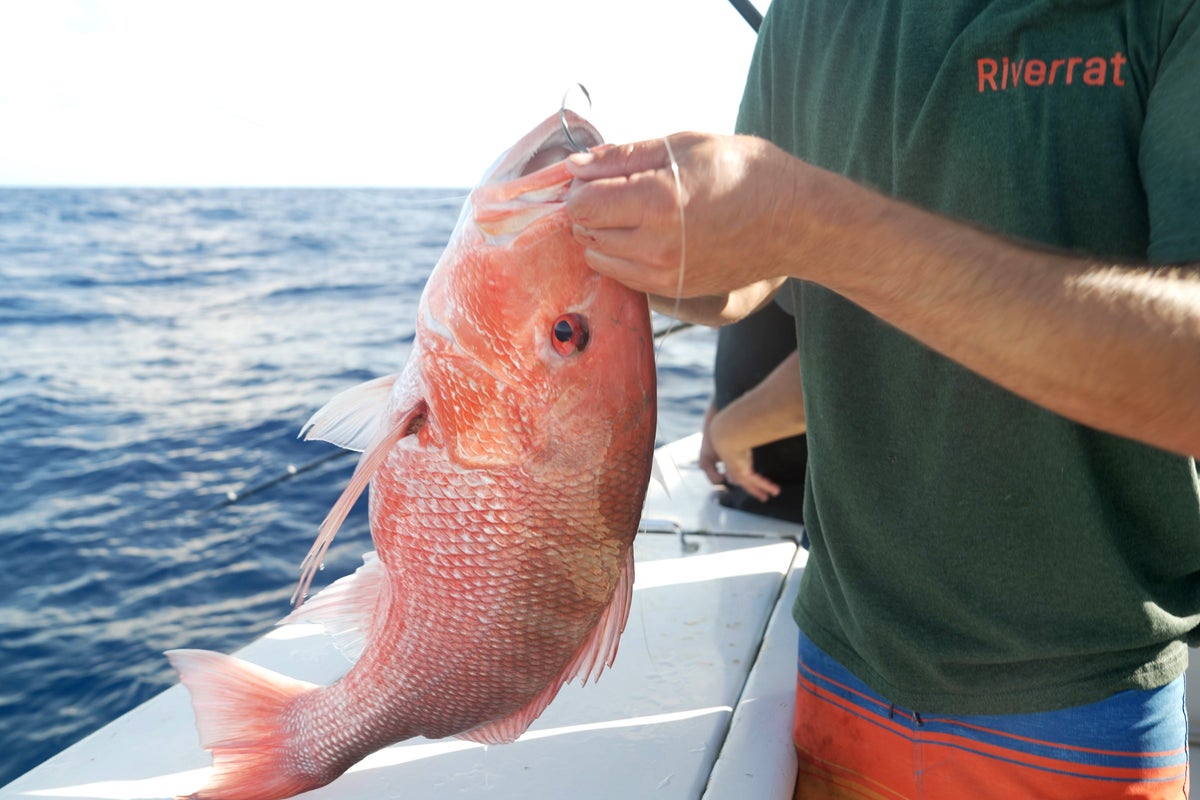
The collision between federal statutory mandates and localized resource extraction reached a critical bottleneck on May 21, 2026. A preliminary injunction issued by the U.S. District Court for the District of Columbia dismantled a high-stakes experiment in cooperative federalism hours before its execution. The issuance of Exempted Fishing Permits (EFPs) by the National Oceanic and Atmospheric Administration (NOAA) to Florida, Georgia, South Carolina, and North Carolina was designed to bypass the restrictive federal oversight of the Magnuson-Stevens Fishery Conservation and Management Act. By attempting to expand recreational seasons from a historic baseline of one to two days up to an unprecedented 39 to 62 days, the Trump administration sought to test the boundaries of decentralized environmental governance.
The resulting legal halt exposes a structural flaw in the economics of common-pool resource management. The dispute is not merely a political skirmish over state versus federal jurisdiction; it is an analytical case study in asymmetrical data collection systems, rivalrous consumption, and the math of marine stock rebuilding.
The Economic Conflict: Asymmetric Incentives and Rivalrous Consumption
To evaluate the breakdown of the red snapper pilot programs, the fishery must be analyzed through the lens of a classic common-pool resource. Marine biomass is highly subtractable; a fish harvested by a recreational angler is inherently unavailable to a commercial harvester. This creates a zero-sum economic conflict governed by disparate operational models.
The commercial sector operates under strict Individual Fishing Quotas (IFQs) and rigid commercial catch limits. For commercial operators, the fishery is a highly capitalized business optimized for supply-chain predictability and international market competition against imported seafood. Overharvesting by the recreational sector presents a direct threat to the commercial sector's long-term asset value. If recreational expansion triggers an overfishing determination under federal law, the Magnuson-Stevens Act mandates automatic reductions in total allowable catch (TAC) for subsequent years. Because the commercial sector features highly accurate, census-based electronic trip reporting, its participants bear the brunt of statutory enforcement mechanisms, face shortened seasons, and suffer depressed asset valuations for their fishing permits.
Conversely, the recreational sector functions under an open-access model characterized by diffuse, unmonitored participation. The sector's economic output is distributed across decentralized coastal hospitality economies, including charter boat operations, tackle shops, and marine fuel distributors. Rather than optimizing for the long-term biomass yield of the stock, the recreational sector maximizes immediate utility through expanded access and days at sea. When state leaders frame access to federal waters as a fundamental right, they align with the recreational sector’s incentive structure to externalize the long-term biological costs of overharvesting onto the commercial sector and the broader marine ecosystem.
The Mathematical Breakdown: The Yield Function and Stock Rebuilding Misconceptions
The biological dispute centers on a fundamental misunderstanding of fish population dynamics. Anglers on the water frequently report unprecedented densities of red snapper, citing high catch rates as empirical proof of an fully recovered stock. This localized observation, however, runs into a mathematical reality defined by the age-structured population model of Lutjanus campechanus.
Red snapper are long-lived apex predators capable of living over 50 years. The reproductive capacity of the species is non-linear; it scales exponentially with age and body mass. A single 10-year-old female red snapper produces significantly more viable eggs per spawning cycle than dozens of younger, 3-year-old fish combined.
The stock in the South Atlantic is currently classified as a rebuilding fishery. While decades of conservation efforts have successfully triggered a surge in recruitment—manifested as a dense population of younger, 2-to-5-year-old fish—the stock lacks the demographic depth of mature, highly fecund individuals required for long-term population stability.
$$Y(t) = F \cdot B(t)$$
The yield equation dictates that total harvest ($Y$) is the product of fishing mortality ($F$) and biomass ($B$). If deregulation artificially inflates fishing mortality by widening the seasonal window by up to 3000%, the extraction rate outpaces the recruitment velocity of the stock.
Data compiled by the Ocean Conservancy during the injunction proceedings exposed this mathematical divergence. The federal recreational catch limit for the South Atlantic was established at 22,797 fish. Historical data showed that a standard two-day open season in Florida alone resulted in an actual landed catch of 24,885 fish, already violating the annual quota. Extrapolating this harvesting velocity across the proposed 39-day Florida season yielded a projected harvest of approximately 485,000 fish. This represents an overages factor of more than 20 times the scientifically prescribed limit. No rebuilding stock can endure a twenty-fold surge in extraction pressure without reversing its recruitment curve and depleting its reproductive capital.
The Data Bottleneck: Federal MRIP vs. State App-Based Census Models
The underlying driver of this regulatory conflict is a structural breakdown in data collection methodology. For decades, federal fisheries management has relied on the Marine Recreational Information Program (MRIP). This system utilizes a combination of dockside intercept surveys and historical statistical modeling to estimate total recreational catch.
The recreational sector widely criticizes MRIP for severe structural limitations:
- High Proportional Standard Errors (PSE): Because the sampling size is small relative to the total number of private boat outings, the statistical variance is massive, leading to erratic data swings.
- Reporting Lags: Federal data processing frequently takes months to materialize, meaning that a quota overage is typically discovered long after the season has closed, preventing real-time adaptive management.
To resolve this data bottleneck, the state-led EFPs proposed a structural pivot toward electronic, app-based reporting systems. Under the pilot programs designed by Georgia, South Carolina, and North Carolina, anglers would be legally mandated to log catches directly into a centralized digital ledger.
This technical solution introduces its own operational vulnerabilities. While a mandatory app-based system theoretically transitions data collection from an imperfect statistical sample to a real-time census, it introduces severe non-compliance and self-reporting bias risks. Unlike commercial vessels, which are outfitted with mandatory Vessel Monitoring Systems (VMS) and subjected to strict enforcement audits, the private recreational fleet lacks the capital infrastructure for comprehensive oversight.
If an app-based system suffers from low compliance rates or under-reporting by anglers anxious about hitting their one-fish-per-day bag limit, the resulting data stream will artificially understate actual fishing mortality. Judge Rudolph Contreras’s ruling explicitly faulted the state agencies for failing to present rigorous, predictive harvest projections to counter federal models. By demanding expanded access before demonstrating the technical efficacy of their state-level data infrastructure, the states created an analytical vulnerability that environmental litigators easily exploited.
The Structural Breakdown of Catch-and-Release Mortality
A hidden variable that disrupts the political rhetoric of deregulation is discard mortality. Red snapper are demersal fish, inhabiting deep offshore reefs and structures 100 to 150 feet below the surface. When brought rapidly to the surface by anglers, the sudden decrease in hydrostatic pressure causes severe barotrauma. The fish's swim bladder expands violently, protruding from its mouth and damaging internal organs.
Federal law mandates the use of specialized tools—such as venting needles to puncture the swim bladder or descending devices to return the fish to its native depth—to mitigate this trauma. However, NOAA’s own empirical studies confirm that approximately 25% of all released red snapper die post-release due to barotrauma or acute predation by sharks while descending.
This catch-and-release mortality rate introduces a devastating feedback loop when seasons are extended:
- Increased Target Effort: As the season expands from two days to two months, total vessel trips scale exponentially.
- Regulatory Discards: Anglers are restricted to a strict bag limit of one fish per day. Once that limit is reached, or when sub-optimal fish are caught, catching continues under a catch-and-release framework.
- Uncounted Extraction: For every four fish caught and released by an enthusiastic angling public, one fish dies. In a high-volume recreational environment, this uncounted mortality function can easily eclipse the entire legal commercial quota, undermining the biological survival of the fishery regardless of state data monitoring.
The Strategic Path Forward
The resolution of the South Atlantic red snapper conflict requires moving past both centralized federal stagnation and unchecked state-level deregulation. The current legal gridlock damages the entire economic ecosystem, leaving supply chains broken and coastal businesses paralyzed by regulatory uncertainty.
The optimal strategic play requires a mandatory, tiered data integration framework executed before access is expanded:
- Phase 1: Validation of the State Ledger. Before any extension of season length is granted, states must operate their app-based reporting systems concurrently with existing federal frameworks during a restricted baseline season. This step is necessary to establish a statistical calibration coefficient, proving the app's accuracy and measuring actual compliance rates.
- Phase 2: Decentralized Quota Buffers. Rather than completely bypassing the Magnuson-Stevens Act through sweeping exemptions, NOAA should implement a dynamic allocation model. States should receive direct custody of a localized quota allocation, backed by automatic, real-time closure triggers built directly into the state reporting software. The moment the electronic ledger projects that the state-specific quota has been exhausted, the state-managed season must automatically lock down.
- Phase 3: Technological Enforcement Parity. To achieve true regulatory equilibrium, private vessels participating in expanded state seasons must be subjected to random digital validation. This can be achieved by integrating geo-fenced smartphone tracking within the reporting apps to cross-reference dockside enforcement logs with active offshore trips.
Until state agencies replace political rhetoric with verifiable, real-time data architectures capable of accounting for discard mortality and non-compliance, federal courts will continue to block efforts to deregulate the common-pool resources of the open sea. True regulatory modernization is not achieved by eliminating rules, but by building superior systems of verification.