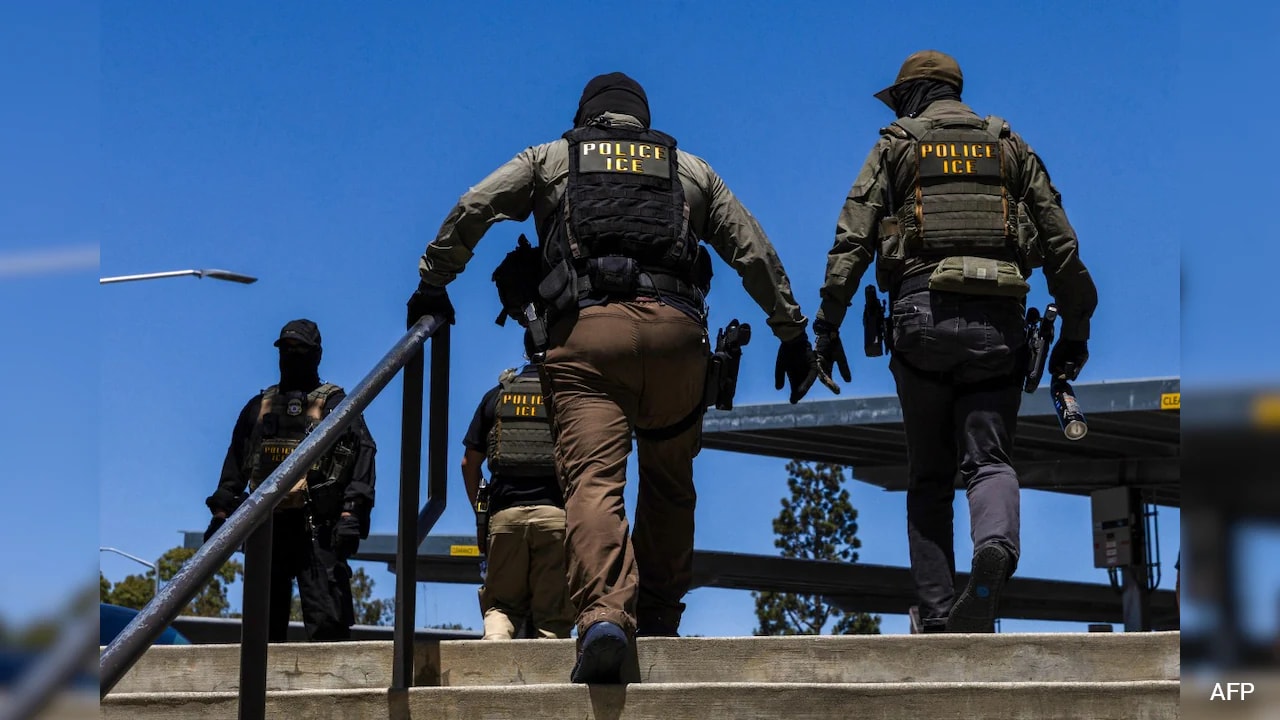
The Department of Homeland Security procurement notice allocating up to twenty million dollars for electric shock gloves deployed by Immigration and Customs Enforcement introduces a critical vector for systemic operational failure. The acquisition targets the Generated Low Output Voltage Emitter, a device that transforms ordinary patrol gear into a concealed electrical compliance instrument via a manual switch. Evaluating this procurement requires stripping away conventional political rhetoric and analyzing the underlying operational variables: friction coefficients in apprehension, force application metrics, oversight architecture limits, and the economic parameters of public safety liabilities.
The operational architecture of immigration enforcement relies heavily on physical compliance mechanics during field extractions, vehicle removals, and custodial transfers. Traditional nonlethal tools, such as compressed-air conducted electrical weapons or chemical agents, possess high visual and situational friction. They require drawing a distinct weapon, aiming, and deployment, which inherently signals an escalation step visible to bystanders, body cameras, and subjects alike.
The integration of electrical stimulus directly into standard-issue handwear changes this calculus entirely. By eliminating the necessity of drawing a separate apparatus, the procurement shifts the force continuum. The primary mechanism of action relies on direct skin contact to deliver an electric current designed to induce localized pain and disrupt neuromuscular coordination. The strategic intent is rapid compliance induction without the ballistic trajectory or contact marking associated with legacy tools. However, the architectural flaw lies in the compression of the decision loop.
When a tactical tool is embedded directly into the operator's hands, the threshold for deploying pain compliance decreases. The cognitive friction required to transition from open-hand control techniques to pain induction is minimized. This architectural compression creates an escalation hazard. Without the distinct pause required to unholster a discrete weapon, agents may substitute mechanical wrestling and de-escalation protocols with immediate electrical stimulation.
The institutional risk profile is further magnified by the absence of an integrated, automated telemetry logging system on the device level. Effective high-liability law enforcement hardware typically incorporates activation logs that record timestamp, duration, and voltage output upon every use. Without mandatory, tamper-proof hardware auditing, oversight mechanisms depend entirely on post-incident reporting by the operator.
Historical data from municipal jails and correctional facilities utilizing these specific instruments reveal systemic vulnerabilities regarding duration compliance. Manufacturer guidelines specify precise time caps per application, yet internal investigations in prior municipal deployments documented single continuous applications lasting up to six times recommended thresholds. When enforcement agencies operate under high-stress conditions with distributed accountability, unmonitored compliance thresholds translate directly into institutional liability.
The financial economics of the procurement reveal a stark cost-benefit imbalance. While the line-item allocation ranges from ten to twenty million dollars to outfit thousands of agents, the secondary cost function includes potential civil rights litigation, wrongful death claims, and structural erosion of public trust. Legal exposure scales non-linearly with the introduction of covert pain delivery systems. Because the activation mechanism is concealed within a standard glove, third-party observers, legal counsel, and internal affairs investigators face extreme evidentiary verification hurdles. Distinguishing between lawful open-hand redirection and unlawful electrical torture during a chaotic physical struggle relies heavily on subjective testimony unless clear forensic markers are left behind. Unlike traditional probe-based systems that leave distinct dermal signatures, direct-contact low-voltage emitters present minimal post-incident physical evidence, complicating independent verification.
The operational justification provided by federal agencies frames the equipment as a necessary enhancement for officer safety during high-resistance apprehensions. Yet, operational safety metrics in law enforcement demonstrate that the introduction of higher-pain modalities rarely correlates with a reduction in suspect injury rates unless accompanied by stringent, independently audited training constraints and cultural shifts toward de-escalation. When tools are procured via expedited mechanisms without transparent public vetting, internal training standardization often degrades under the pressure of field deployment quotas.
To mitigate systemic failure, the deployment vector must be re-engineered. Mandatory hardware modifications must include real-time kinematic data logging that transmits activation duration directly to secure cloud servers, removing the reporting burden from the field agent. Furthermore, deployment criteria must establish rigid operational boundaries that prohibit use during passive resistance or verbal non-compliance, enforcing strict administrative penalties for threshold violations.
The procurement represents an unmeasured systemic risk. Until hardware telemetry and independent oversight mechanisms match the velocity of technological lethality, the deployment of concealed compliance tools will amplify operational friction rather than resolve it.