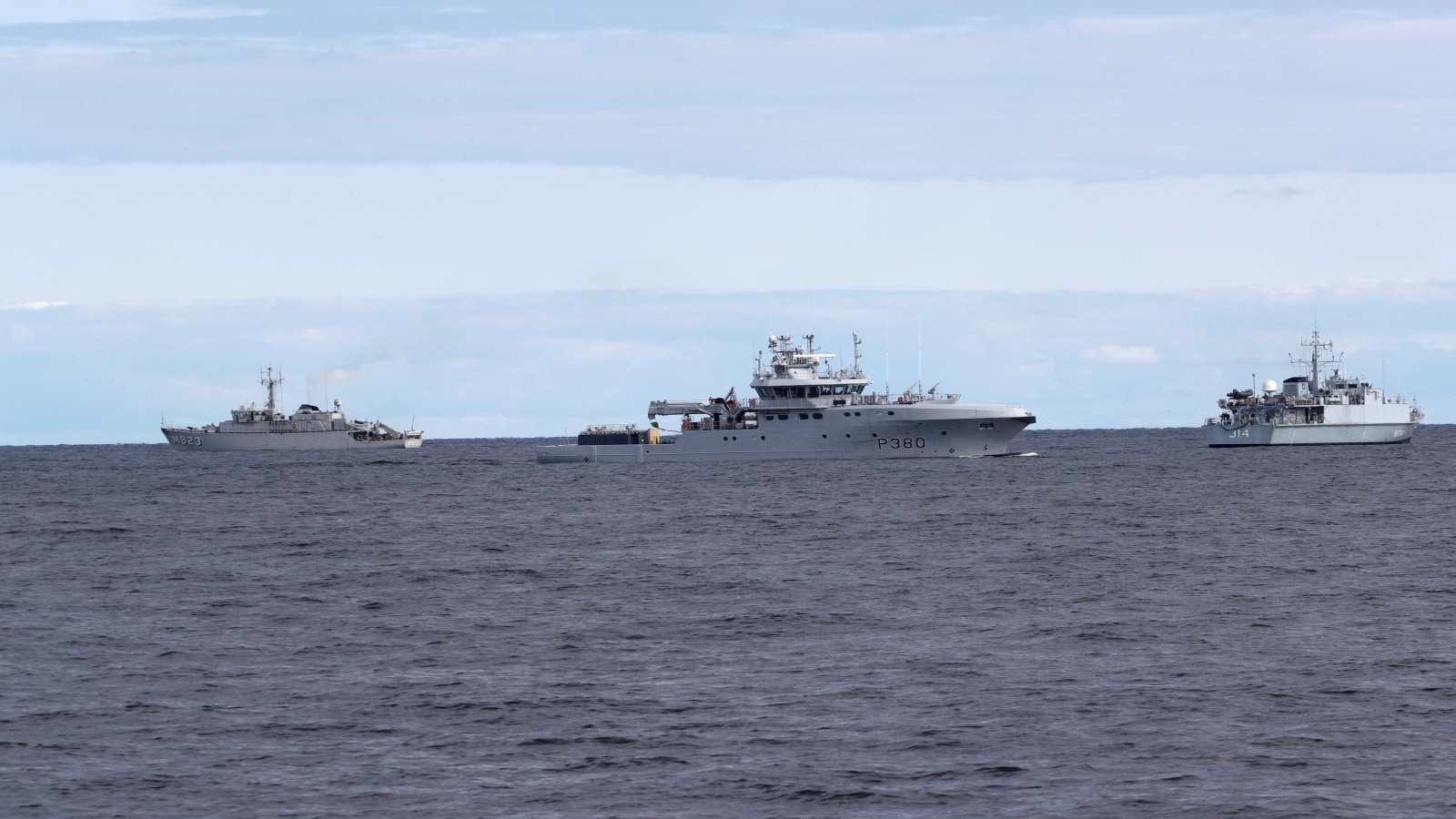
The death of eighteen-year-old Nolan Wells off the northwest tip of Horn Island, Mississippi, presents a complex intersection of maritime mechanics, contradictory witness testimonies, and delayed data transparency. Standard media reporting frequently reduces such incidents to emotional narratives or speculative friction. A rigorous analysis requires breaking down the known operational, physical, and digital variables to understand the structural gaps between the initial timeline and the physical reality of the recovery site.
By analyzing the telemetry of the vessel, the hydrodynamics of the Mississippi Sound, and the chronological data handoffs between municipal agencies, a clear framework emerges. This framework exposes where systemic assumptions deviated from verifiable facts.
The Hydrodynamic Risk Profile of the Horn Island Pass
The physical geography of the recovery site dictates the baseline probability of an accidental maritime casualty. Horn Island is a barrier island situated approximately ten miles off the Mississippi Gulf Coast. The northwest tip of the island constitutes a highly volatile marine microenvironment governed by predictable fluid dynamics that are frequently underestimated by recreational swimmers.
The area forms a natural pass between two adjacent bodies of water, creating a bottleneck for tidal volume. The mechanics of this zone operate via three specific environmental vectors:
- Tidal Surge Acceleration: During standard diurnal or semidiurnal tide changes, immense volumes of water must transition between the Mississippi Sound and the open Gulf of Mexico. Because the pass constricts this flow, water velocity increases exponentially according to the Venturi effect.
- The Bathymetric Drop-Off: The underwater topography of the northwest tip features a radical gradient change. A swimmer can transition from a shallow sandbar depth of three feet to a trench depth of twenty feet within a single lateral step.
- Thermal Shock and Fatigue Escalation: With water temperatures in the mid-80s Fahrenheit, prolonged exposure induces rapid dehydration, while unexpected immersion in a deep current trench triggers an immediate metabolic spike.
When a swimmer transitions unexpectedly over the bathymetric drop-off, the vertical change immediately couples with a high-velocity lateral current. A strong swimmer, even one with collegiate athletic conditioning, faces immediate mechanical disadvantage when fighting a tidal surge accelerating through a restricted pass. The current operates as a constant force vector, while human physical output decays exponentially due to lactic acid accumulation.
Telemetry vs. Testimony: The Vessel Timeline Conflict
The primary operational bottleneck in reconciling the events of July 4 revolves around the divergence between human recollection and recorded GPS data. The Mississippi Department of Marine Resources (MSDMR) extracted data from the vessel that transported Wells to the island. This telemetry establishes a rigid hardware-validated timeline that constrains the window of occurrence.
The Telemetric Timeline
The spatial tracking data outlines a highly specific operational sequence for the vessel on July 4:
- 09:56 AM: The vessel departs the mainland dock.
- 11:14 AM: The vessel arrives at Horn Island, establishing a baseline transit time of 1 hour and 18 minutes.
- 04:31 PM: The vessel departs Horn Island, notably leaving Wells behind.
- 06:06 PM: The vessel returns to its original private departure dock on the mainland.
- 07:19 PM: The vessel transits to the Fort Bayou boat launch, where it is removed from the water and towed overland to a private residence in Biloxi.
[09:56 AM] Departure ---> [11:14 AM] Arrival at Horn Island
                                   |
                                   v
[06:06 PM] Return to Dock <--- [04:31 PM] Departure from Island (Wells Left Behind)
The Testimonial Variance
The logic applied by the vessel’s occupants introduces variables that clash with standard risk-mitigation behaviors. According to statements provided by the occupants and their legal representatives, the vessel’s bilge pump failed, causing the boat to take on water and forcing an immediate return to the mainland. A recorded distress call from the group confirms they reported sinking conditions near the west tip of the island.
The critical logical disconnect occurs in the explanation of why Wells remained on the island. The occupants allege that Wells voluntarily chose to stay behind to socialize and intended to secure a return transit with a separate, unverified group of acquaintances.
From an analytical standpoint, this explanation introduces a high-consequence operational anomaly. The vessel operators left an individual on a remote barrier island ten miles offshore while managing a mechanical emergency involving a sinking hull. This decision bypassed the standard maritime protocol of maintaining a precise passenger manifest, especially during an active equipment failure.
Digital Forensics and the Chain of Custody Delayed Response
The investigation features a profound delay between the realization of the disappearance and the deployment of official search and rescue assets. This gap highlights a flaw in recreational maritime communication structures.
The timeline demonstrates a multi-hour lag in reporting:
- 03:00 PM – 04:00 PM: Wells is last seen alive on the island.
- 04:31 PM: The vessel departs without Wells.
- 11:00 PM: An acquaintance makes the initial distress contact with the United States Coast Guard (USCG).
- 12:00 AM (July 5): The family files a formal missing persons report with the Jackson County Sheriff’s Department.
This seven-hour gap between the vessel’s departure and the first law enforcement notification degraded the utility of immediate surface searches. During this interval, tidal cycles shifted twice, fundamentally altering the potential drift pattern of any object or person in the water.
Furthermore, the recovery of Wells’ mobile phone introduces a digital chain-of-custody problem. The phone was returned to the family by the occupants of the boat, rather than being recovered from the island or from Wells' person.
The occupants state that group members routinely left their phones on the boat's dashboard to prevent water damage while swimming. However, the analytical value of the device relies entirely on reconciling its internal hardware logging—such as localized Wi-Fi handshakes, GPS location history, and automated biometric timestamps—with the external Snapchat network activity questioned by forensic analysts. Any asymmetry between localized device logs and network-side data packet transmissions indicates either a timeline error or manual intervention.
Multi-Agency Transition Friction
The structural handling of the investigation highlights the friction that occurs during multi-jurisdictional handoffs. The incident began in a geographic zone where ownership is split between federal, state, and county entities.
The initial response involved the MSDMR, the National Park Service (Gulf Islands National Seashore), the USCG, and volunteer organizations like the United Cajun Navy. Each entity operates under distinct statutory mandates. The MSDMR focuses on marine conservation and state water tracking; the National Park Service manages the terrestrial landmass of the barrier island; the USCG handles deep-water search and rescue; and the local sheriff handles criminal investigations.
The formal handoff occurred on July 5, when the Jackson County Sheriff’s Office assumed the lead investigative role, truncating the MSDMR’s active tracking reports. When a case transitions from a marine search-and-rescue operation to a county-level death investigation, data silos naturally form.
The requirement to present the completed file to a grand jury—as outlined by the Jackson County District Attorney’s office—is a standard operating procedure for unnatural or suspicious deaths in this jurisdiction. This mechanism is designed to remove local political or social bias from the equation. It acts as an independent auditing system to determine whether the evidentiary threshold for criminality has been met, independent of the initial sheriff's department classification of accidental drowning.
The strategic resolution of this case relies on three independent validation vectors: the completion of the independent dual-microscopy autopsy conducted in Washington, D.C., to check for signs of trauma versus asphyxiation via freshwater/saltwater inhalation; the forensic extraction and cross-verification of the cell phone's raw physical image file; and the grand jury subpoena of all secondary vessel operators present on the northwest end of Horn Island on July 4. Only the alignment of these three vectors will resolve the variance between the physical mechanics of the pass and the timeline provided by the witnesses.
United Cajun Navy search analysis This video provides an operational overview from an active search team member detailing the physical terrain and conditions encountered on Horn Island during the recovery window.
http://googleusercontent.com/youtube_content/1